Olubukola Ayodele, Breast Cancer Lead at University Hospitals of Leicester NHS Trust, shared on LinkedIn:
“Psycho – oncology.
One of the most overlooked parts of cancer care.
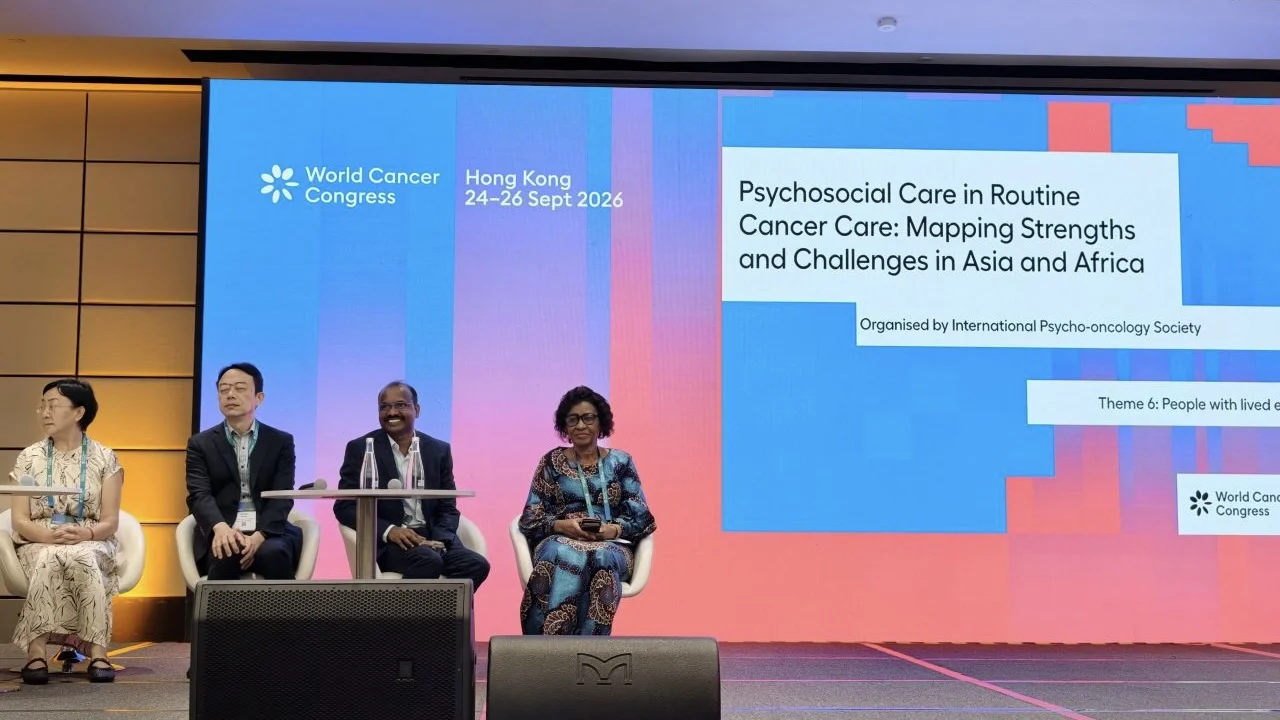
At the World Cancer Congress in Hong Kong, I attended a session on integrating psychosocial care into cancer care, and it reinforced something I have believed for a long time.
‘You cannot treat the cancer properly without treating the whole person.’
I am a big believer in holistic cancer care. Not as a nice addition, but as an essential part of good oncology.
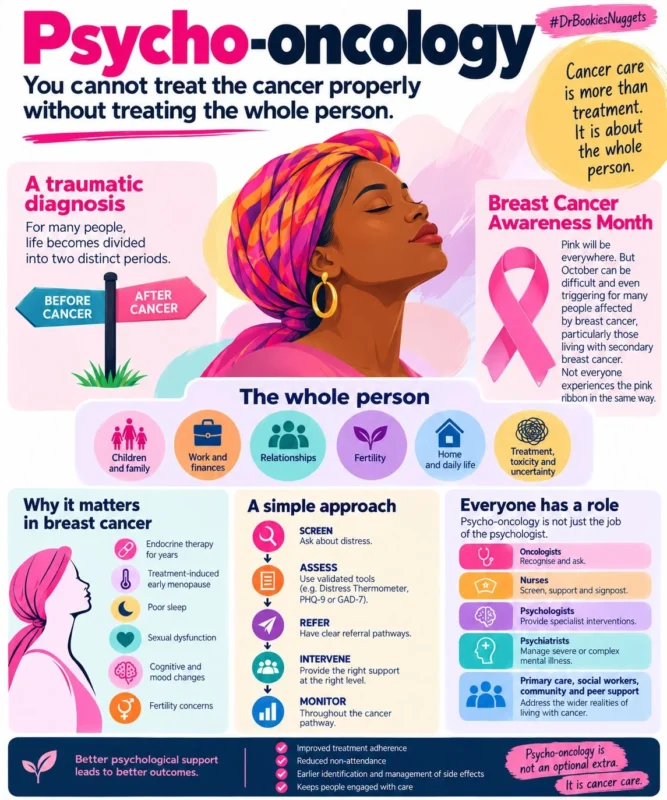
Cancer is a traumatic diagnosis. For many people, life becomes divided into two distinct periods: before cancer and after cancer.
Even when treatment is successful, you cannot simply return someone to the person they were before their diagnosis. Cancer care therefore needs to be trauma – informed.
As we enter Breast Cancer Awareness Month, this feels particularly relevant.
Pink will be everywhere. However, October can be difficult and even triggering for people affected by breast cancer, particularly those living with secondary breast cancer. Awareness is important, but not everyone experiences the pink ribbon in the same way.
I see the need for better psychological support every day in breast cancer care.
Depression and psychological distress are common, yet how routinely are we assessing for them?
Hormone receptor – positive breast cancer is the most common subtype. Many women will take endocrine therapy for years. For younger women, chemotherapy and endocrine treatments can also bring an early and sometimes abrupt menopause.
Poor sleep. Sexual dysfunction. Fertility concerns. Cognitive and mood changes.
All while processing a cancer diagnosis. Yet we monitor physical toxicity far more systematically than psychological distress.
One practical message from the session was:
Screen – Assess – Refer – Intervene – Monitor
This needs to happen throughout the pathway: diagnosis, treatment, survivorship, recurrence, advanced disease and palliative care.
Not everyone needs a psycho – oncologist. But everyone should have their psychological wellbeing assessed and access to the right level of support.
Psycho – oncology is not just the job of the psychologist. Everyone has a role.
Oncologists recognise and ask. Nurses screen, support and signpost. Psychologists provide specialist interventions. Psychiatrists manage severe or complex mental illness. Primary care, social workers, community and peer support address the wider realities of living with cancer.
Holistic care is also about outcomes. Supporting the whole person can improve adherence, reduce non – attendance, identify side effects earlier and keep people engaged with care.
The best cancer treatment is not simply what we prescribe. It is treatment that the person in front of us is actually able to live with and complete.
Psycho – oncology is not an optional extra.
It is cancer care.”