





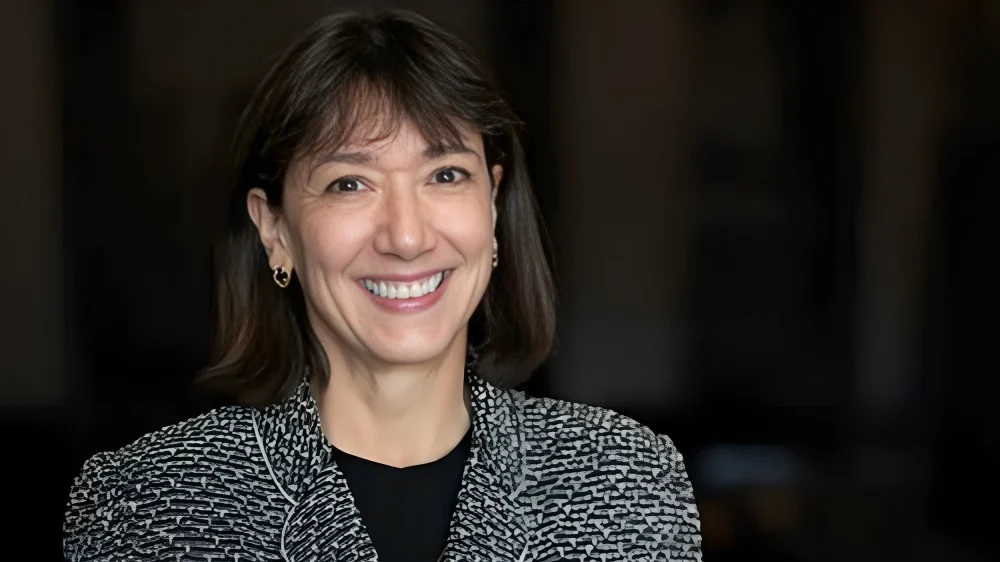
Monica Bertagnolli, President at National Academy of Medicine, shared on LinkedIn:
“Why the National Academy of Medicine is needed more today than ever?
As the newly inaugurated president of the NAM, I have often been asked what I plan to accomplish in this new role. Even better, I have received lots of advice from NAM members who are passionate about the work we do together. This led me to my topic today: What does it mean to be a member of the NAM, and what can the Academy do to support better health for all people?
A commitment to service
The NAM is an honorific organization that exists to serve society. Our members, currently numbering more than 2,400, are elected in recognition of outstanding professional achievement and service in fields related to health and medicine. That distinction comes with an obligation: volunteering time and expertise to support of the work of the NAM and the National Academies. This means serving on committees that assess scientific evidence and facilitating problem-solving dialogues to produce reliable guidance on critical issues for health, among many other contributions.
The most recently inducted class of NAM members at the National Academy of Sciences Building in Washington, DC
Getting the right people at the table.
The depth and complexity of our work requires that we elect members from a wide variety of backgrounds—ranging from biomedical science, clinical medicine, nursing, dentistry, pharmacy, and public health to engineering, computer and information science, social sciences, economics, health policy, law, ethics, education, and health system leadership.
We also work closely with members of our sister Academies (the National Academy of Sciences and the National Academy of Engineering)—and are supported by a tremendously talented staff. With this kind of people power, it’s hard to find a health challenge that the NAM isn’t prepared to tackle.
Multidisciplinary, multisector engagement is one of our greatest strengths. The first question we ask when we start a new project is, “Do we have the right people at the table?” Finding “the right people” means looking beyond our members alone to ensure we include the perspectives of patients, families, caregivers, clinicians, and communities with direct experience of the challenges we are trying to solve.
Evidence as a path through controversy
NAM convenings are neutral ground. The work we undertake sometimes involves controversy; therefore, open and spirited debate among informed people of good will is essential. We provide an independent forum where difficult issues can be examined with rigor and respect.
We examine the information available to us—in the form of data, research, and lived experience—to arrive at the best approach based on available evidence. When there isn’t enough evidence to support a course of action, we aren’t afraid to say so. Particularly in areas where there is disagreement concerning a course of action, it is our fundamental role to state clearly what the evidence does and does not support.
Controversy may seem especially prevalent these days, but it’s nothing new. The NAM has its roots in the turbulent 1960s, when federally-funded health care was a subject of intense debate (sound familiar?). Back then, physician groups feared government fee-setting would erode medical autonomy, and others worried that the government would control rising costs by rationing care. Physicians and public health experts who would go on to establish the NAM (initially called the Institute of Medicine) convened a neutral forum to gather leaders on all sides of the issue, analyze the available evidence, and make recommendations. Ultimately, their advice informed the 1965 Amendments to the Social Security Act that created Medicare and Medicaid, to the benefit of millions of Americans.
Founding member Irvine Page (right), a cardiologist, in his laboratory in the 1960s
Today, of course, health care reform remains a subject of fierce debate, and cost and access to care are still a tremendous challenge. And as its founders did 60 years ago, the NAM continues to provide an independent forum to discuss the most effective policy options from an evidence-based, nonpartisan perspective.
Three responsibilities for the NAM in this moment
For more than half a century, the NAM’s guidance has been uniquely effective because it is rooted in multisector dialogue and debate and because it adheres – without exception – to evidence over ideology. Given our history, and considering the challenges we face today, I believe we have three especially important responsibilities.
First, we must sustain and advance America’s biomedical and health research enterprise in a period of dangerous upheaval.
Our nation’s research ecosystem is in turmoil. Shifts in federal funding and policy have shuttered investigations, unseated career scientists, constrained opportunities for next-generation researchers, and impeded international collaboration. Earlier this month, the NAM issued formal public comments on the White House Office of Management and Budget’s (OMB’s) proposal to overhaul the federal grantmaking process and allow partisan politics to overrule objective scientific assessments.
As an organization of health and science leaders, we have an obligation to support the extraordinary engine of discovery that has delivered lifesaving innovation to the American public. But defending the status quo isn’t enough. We must anticipate the demands of the future and build a workforce and infrastructure that ensures the health, security, and economic strength of our nation in the decades to come.
Second, we must do all we can to ensure that every public dollar invested in science and health delivers the greatest possible benefit for the American people.
The NAM is not a government agency, political organization, or interest group. But it is our role to identify for the nation the policies that are most likely, as demonstrated by evidence, to deliver real results for health.
We evaluate what the available evidence supports, identify where uncertainty remains, and provide independent advice about the actions most likely to improve health and strengthen society. When a policy decision isn’t supported by evidence—or when evidence suggests it could harm the health or prosperity of our nation—it is imperative that we speak up. We must do so consistently, regardless of which political party or administration holds power.
Nonpartisanship does not mean silence. It means applying the same standards of evidence, integrity, and public benefit to every issue and every decision.
It also requires humility. None of us is free from bias, including scientific leaders who may feel removed from politics. We must continually test our assumptions, listen to perspectives different from our own, and remain open to changing course when the evidence requires it.
Third, we must establish a health system that more quickly translates research insights into benefits for all patients—one that promotes lifelong health in addition to treating disease.
The capacity of medicine to treat and even cure serious illness has increased exponentially in recent years, and that is something to be celebrated. But it isn’t nearly enough.
Research is generating insights every day that could improve treatments and preventive services, reduce costs and inefficiencies, and deliver care more tailored to the specific needs of individuals and communities. But translating these insights into systemic change for all Americans remains a monumental challenge.
We need a nationwide infrastructure – a “learning health system”—that can make much faster progress for everyone. This will require national infrastructural changes to advance data sharing and research participation and concerted investment in community engagement and trust building, among other needs. This long-term area of work for the NAM is rapidly gathering momentum as new technologies enabling data sharing and application are transforming the way we all work together.
Be a voice for progress
No single person, organization, or sector has all the answers—but together, we can make meaningful progress. The priorities I’ve outlined are a starting point, and they will continue to evolve as I listen and learn from NAM members, partners, the broader biomedical and health communities—and, most importantly, the people we serve.
Today, I invite you all to share your thinking with me. Which issues should be our priority? How can the NAM have the most impact?
The NAM has long been the place where important and difficult conversations happen, and where evidence can show us all the best path forward. I hope you will join us and be a voice for progress.”
Other articles about National Academy of Medicine on OncoDaily.