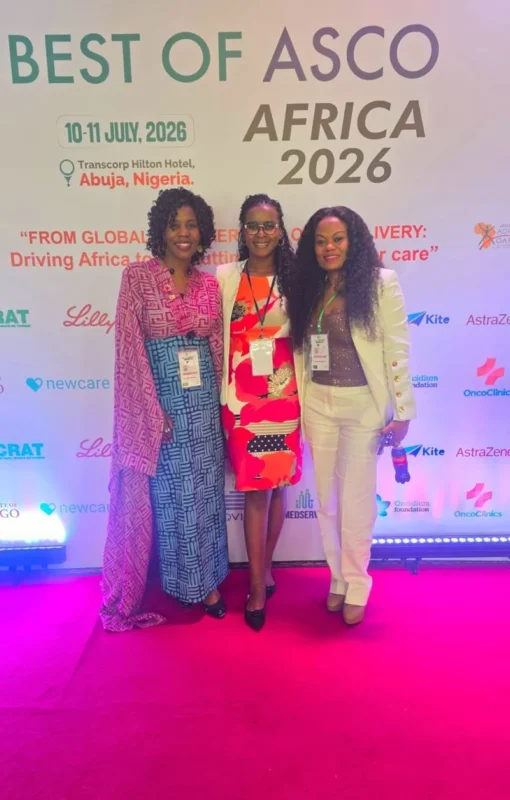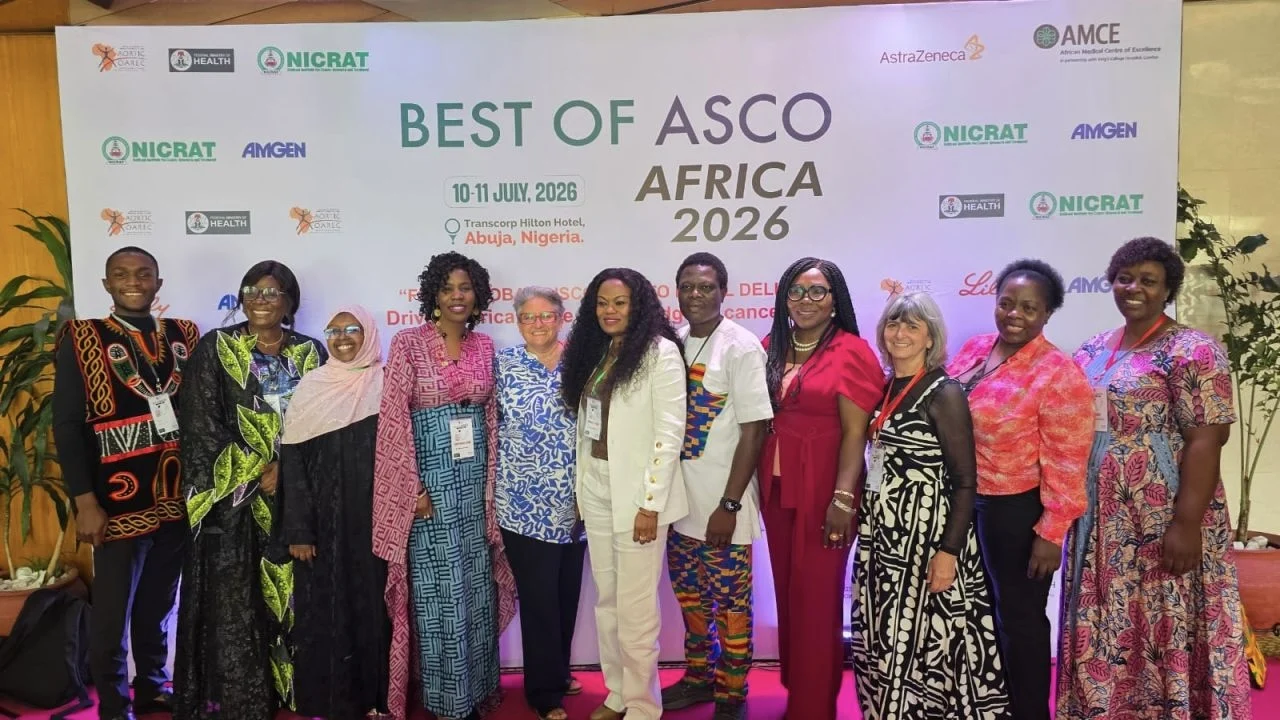
Miriam Mutebi, Consultant Breast Surgical Oncologist, shared on LinkedIn:
“One of the most important reframes I’ve been making recently is this:
Africa is not poor in expertise or will when it comes to cancer care.
What we lack is coordination.
I was recently interviewed on NTA International on the sidelines of the Best of ASCO Africa meeting in Abuja, and that was the thread running through everything I said.
We have the knowledge. We have the people. What we have too much of is fragmentation, organisations, regions, and institutions operating in silos when the problems we face require all of us working together.
Some of what came out of Abuja gives me genuine optimism:
Patients in Africa have been paying three to four times more for cancer drugs than patients in comparable low- and middle-income countries. That is not inevitable; it is a systems failure with a systems solution.
Through pooled procurement and negotiating as a bloc through agencies like the African Medicines Agency and Africa CDC, we could start to change that. More agents are becoming available. Costs are starting to move.
But no single country, no single region, no single industry can do this alone.
On the question of translating research into outcomes, I think about it across three levels:
The government must fund it. Where we have seen national health insurance schemes support patients through their treatment journey, completion rates improve.
Political will is not optional, it is the infrastructure everything else rests on.
Healthcare providers must be educated.
On average, a cancer patient in Africa sees four to six healthcare providers before receiving a definitive diagnosis. That is not a patient problem. That is a provider education problem, and it is one we can solve.
Systems must support the full continuum.
From early detection through treatment to survivorship. Not just picking up the disease early but having the financial architecture to support patients all the way through.
That is a goal that is achievable in our lifetime. But only if we stop working in silos and start working as one.”