





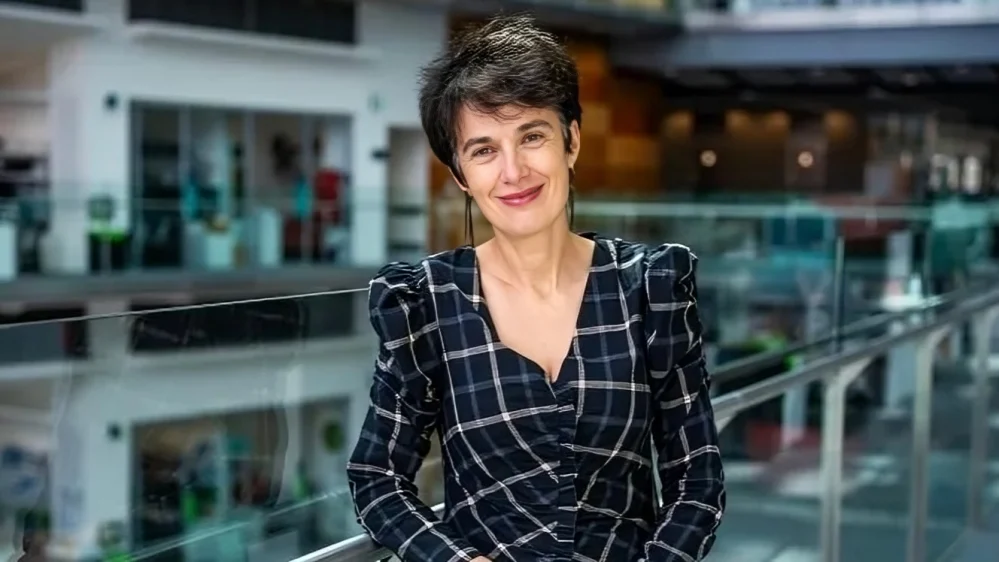
Mihaela van der Schaar, Chief AI Scientist at The Francis Crick Institute, shared a post on LinkedIn:
“I am delighted to share our new Perspective, ‘Causal inference and digital twins: a roadmap for the future of clinical trials,’ published in npj Digital Medicine Nature Portfolio.
The paper explores how causal inference and digital twins could support more adaptive, efficient and patient-centred clinical trials, from improving the characterisation of treatment effects and identifying responsive patient groups to informing trial design and translating evidence into clinical practice.
This work brings together several areas that my team and I have pursued for many years, alongside the expertise of collaborators across academia, clinical research and pharmaceutical R&D, including contributors from GSK, AstraZeneca, Takeda, Sanofi, Accenture, and QuantumBlack, AI by McKinsey – organisations that also support Cambridge Centre for AI in Medicine (CCAIM) as funders and partners. That breadth of perspective and collaboration is imperative to ensure that advances in AI address the scientific, operational and regulatory realities of developing new medicines.
The publication builds on our earlier manifesto and takes the next step towards a rigorous and responsible framework for the future of clinical trials, which you can read.
I am very grateful to the entire team and all our collaborators who contributed to this work.
Read more on the van der Schaar Lab website.”
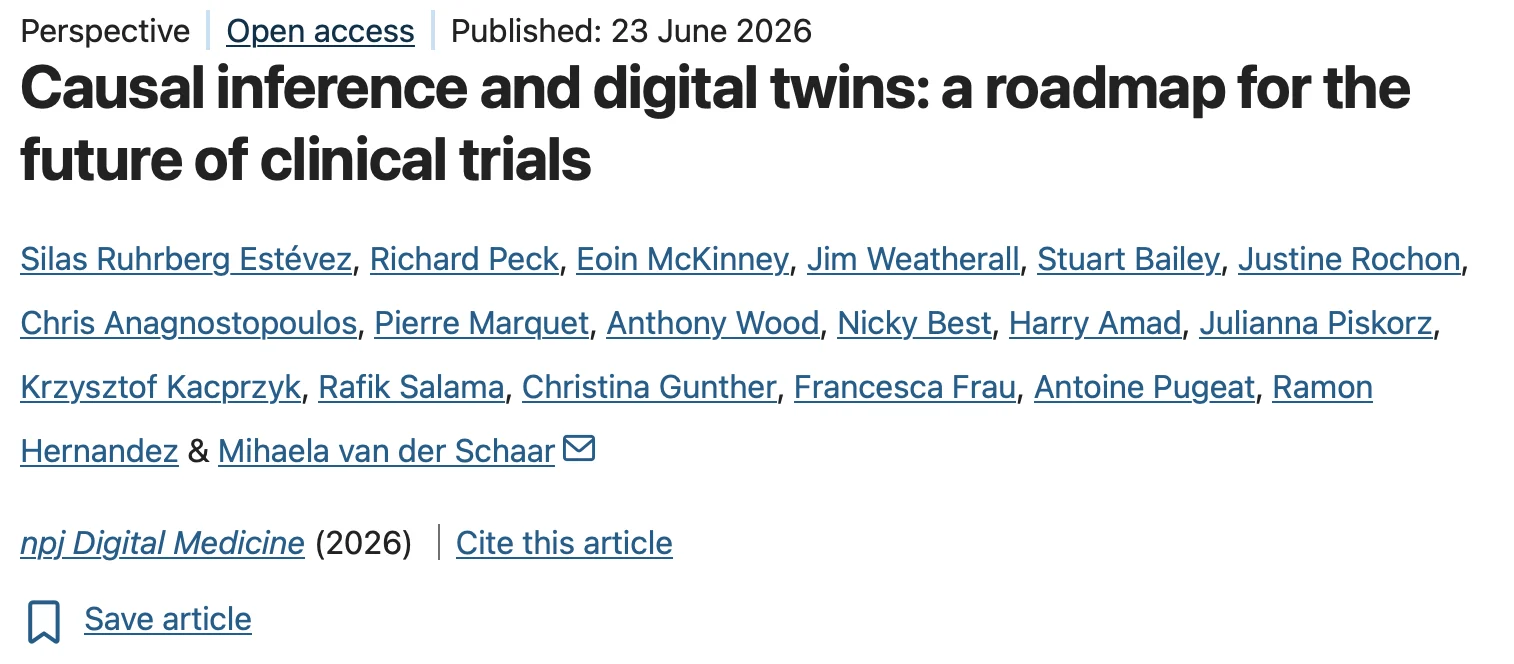
Title: Causal inference and digital twins: a roadmap for the future of clinical trials
Authors: Silas Ruhrberg Estévez, Richard Peck, Eoin McKinney, Jim Weatherall, Stuart Bailey, Justine Rochon, Chris Anagnostopoulos, Pierre Marquet, Anthony Wood, Nicky Best, Harry Amad, Julianna Piskorz, Krzysztof Kacprzyk, Rafik Salama, Christina Gunther, Francesca Frau, Antoine Pugeat, Ramon Hernandez, Mihaela van der Schaar
Read the Full Article on npj Digital Medicine
Other posts featuring Mihaela van der Schaar on OncoDaily.