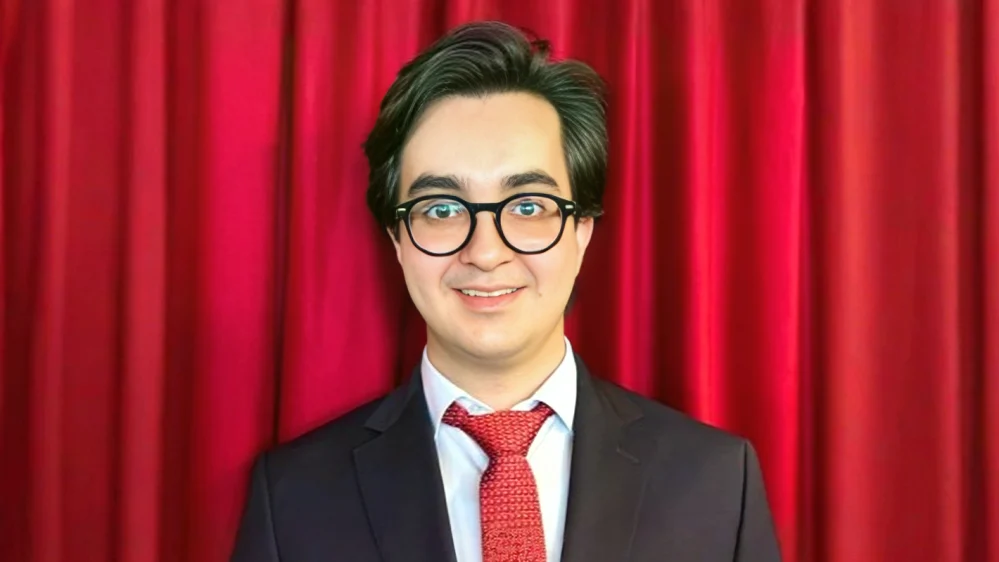
For Kaan Furkan Hamarat, a final-year medical student at Sakarya University Faculty of Medicine in Türkiye, oncology has never been just another medical specialty-it has been a journey that began in the laboratory long before entering clinical rotations.
Since his first year of medical school, Hamarat has been conducting cancer research at the Experimental Medicine Research and Application Center, Sakarya University Faculty of Medicine (SÜDETAM). His work has focused primarily on solid tumors, particularly triple-negative breast cancer and metastatic castration-resistant prostate cancer, with research centered on drug resistance mechanisms and DNA damage response pathways. Through years of laboratory experience, he has developed a strong interest in translational oncology and the challenge of bringing discoveries from the bench closer to patients.
This commitment to oncology led him to be selected, with a full scholarship, for the ESMO Course in Medical Oncology for Medical Students 2026. Among nearly 600 applicants, he was selected within the top 15% of candidates and became one of only two medical students representing Türkiye at the programme, held in Valencia, Spain, from 24–28 July 2026.
The annual four-day ESMO course brings together selected fourth- and fifth-year medical students from across Europe to explore the rapidly evolving field of medical oncology through state-of-the-art lectures, clinical case discussions, and highly interactive workshops. Beyond scientific education, the programme encourages future physicians to consider careers dedicated to improving the lives of patients with cancer.
During the course, Hamarat actively presented a clinical case in the Interactive Workshop on Colorectal Cancer, contributing to discussions alongside fellow medical students and internationally recognized oncology experts. Equally valuable was the opportunity to exchange ideas with peers from different countries, forming new academic friendships and opening doors for future international collaborations.
Reflecting on the experience, Hamarat expressed his sincere gratitude to the Course Co-Chairs, Dr. Andrés Cervantes and Dr. Rodrigo Sánchez Bayona, the Faculty of Medicine of the University of Valencia, and the ESMO Education Committee for creating such an inspiring educational environment.
“This course was much more than an educational programme. It reminded me why I chose oncology in the first place. Meeting passionate students and mentors from around the world strengthened my belief that science has no borders, and that meaningful collaborations can begin with a single conversation.”
As he continues his research in cancer biology and translational oncology, Hamarat hopes to contribute to international collaborations addressing one of the greatest challenges in cancer treatment: overcoming therapeutic resistance and translating laboratory discoveries into better outcomes for patients.
“Every opportunity to learn, collaborate, and ask new scientific questions brings us one step closer to better care for people living with cancer. I hope this journey inspires more medical students to step into research early and become part of the future of oncology.”
You can also read:
Top Growing Medical Universities in Asia: 2026 Edition by BIGR