





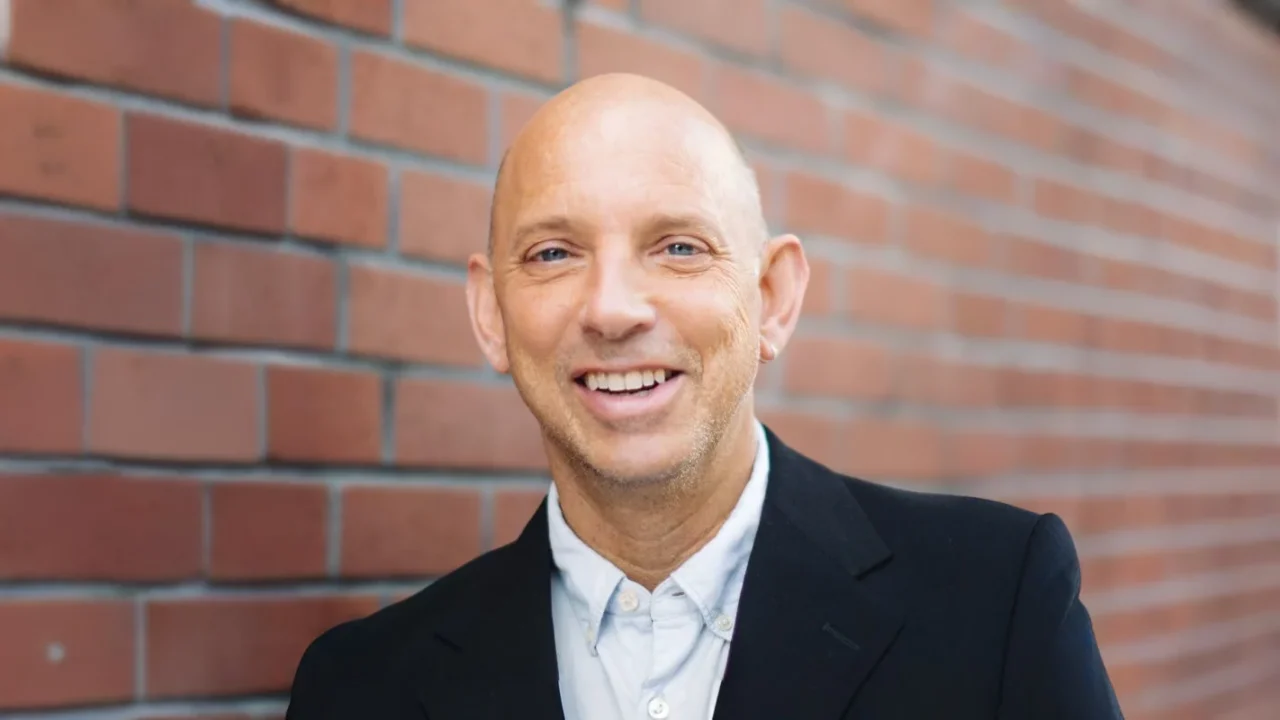
Max Krummel, PhD, Molecular Biologist and Immunologist, shared on Substack:
“I can still see the moment so clearly, it’s like I’m standing there now, relieved and amazed by the data on the cytometer’s display screen:
It is near midnight and I am alone in the lab. The stark white of the benchtops – smaller tools and equipment like centrifuges, mixers, incubators that sit on a laboratory countertop – perfectly contrast the blackness outside. The bright fluorescent lights that hang from the ceiling reflect brightly in the mirror-like obsidian of the nighttime window panes. In them, I can see my own image. Despite years of failure and any number of doubts about what I was doing with my life, I am achieving something I am proud of. After years of lackluster results, it is finally real: my PhD research is not a complete waste. Scientifically, what I’m doing may even hold real promise.
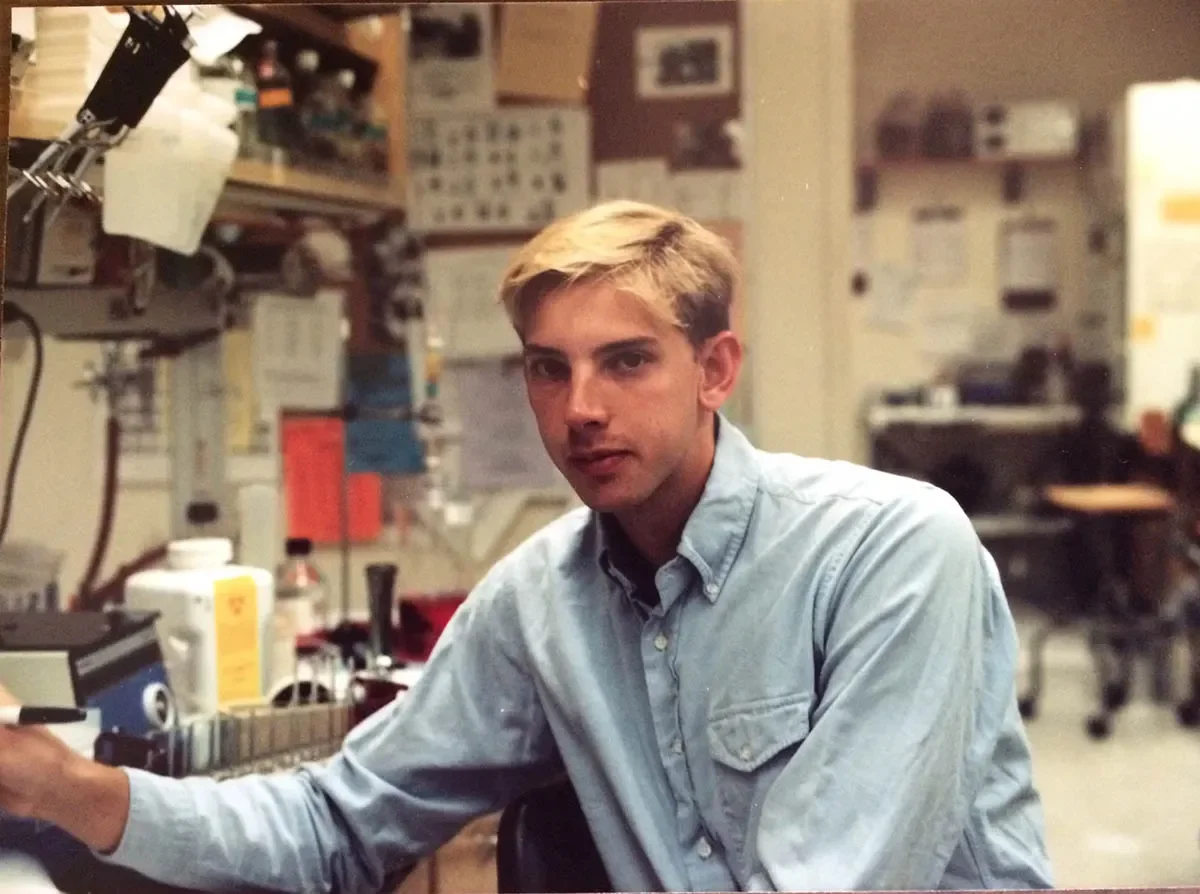
Four years prior, in 1989, I’d joined Jim Allison’s lab at UC Berkeley, intrigued by his Texan swagger and laissez-faire leadership style. At the outset, he’d shown me a few projects I could choose from, despite my background, which was steeped more in chemistry than the biology his lab studied. My joining his team was a somewhat risky bet for us both; he was hedging some of his resources on me as a PhD candidate, and I, in pursuing a study of the obscure immune system, which was not considered cool, or even entirely worthwhile, at the time. Most of my fellow students were vying for spots in the larger molecular biology labs pursuing a deeper understanding of DNA, a field that had won the Nobel Prize in the 1960s. But I now realize that I’ve always had a penchant for looking for something different, and Jim Allison’s lab seemed like the perfect spot to do something interesting, maybe even something important.
The project that captured me and brought me into the lab involved a molecule called CTLA-4, which was essentially a ghost at the time. A lab in France had discovered its DNA sequence. During our initial meeting, Jim had had a piece of paper lying on his desk, listing the molecule’s long alphabetical code. We’d discussed it and I’d bought into the idea that it might do something interesting. Really, though, I was gambling a long period of time, and my chance for an early reputation as a budding scientist, on a molecule I couldn’t definitively prove even existed. I trusted Jim that he wouldn’t propose a molecule that had no purpose and the data seemed compatible with that. Months would roll into years before I’d realize just how Sisyphean my choice of research projects really was.
But then suddenly I was standing alone in the lab that night in the summer of 1994, smiling. After a seemingly endless round robin of trial and error, I’d successfully used the CTLA-4 DNA sequence, along with other newer, harder-won knowledge and resources, to create a small molecular tool that specifically bound to CTLA-4. With this in hand, I could finally do some real experiments and see whether CTLA-4 was in any way important as part of the inner workings of the immune system.
During the year that followed, I scoured the literature and tried new experiments and in so doing found all kinds of ways to use my molecular tool to push and pull on CTLA-4. All the results pointed to the idea that it acted as a kind of brake lever, helping to determine the strength of the immune system’s response. CTLA-4 could be manipulated – ‘pressed,’ so to speak, to make the immune system go slower/be less forceful. Or, I could use the molecular tool I’d made to block access to this braking system to enable the immune system to work faster/stronger. Other scientists had already concluded that CTLA-4 wasn’t very important, but my data said otherwise. With molecular tool that bound CTLA-4 in hand, we could ‘play’ the immune system the way a musician plays an instrument.
For months following that night, I’d find myself back in the lab late at night staring at cool new data that showed this in another way, or showed it in another setting where the immune system was thought to be important. I found myself scheming with the lab and Jim to test CTLA-4 on any diseased mouse I could find. Not only could I change the course of a disease, I could make something as simple as a vaccine more effective. It affected a lot of things and I collaborated with almost everyone in the lab and we became bolder together, using it in increasingly odd settings. We built a small quiver of publications we hoped to submit to, and I shared my molecular tool, or reagent, with most of Jim’s lab to collaborate and try increasing numbers of diseases to see what would happen.
Then Jim joined us at the whiteboard one day and mentioned almost off-handedly that we could try it in cancer. Giving mice tumors was simply a case of injecting them with a cancerous cell line that would grow over time. The immune system wasn’t thought to be very important in cancer, but given how quickly we were producing interesting data in all these other mice, why not try? I’d optimized a dosing scheme to give my molecular tool to mice by injection and augment their immune systems. Why not try it?
I set out tubes, some containing my molecular tool, others filled with a control drug, then marked the tubes with letters and numbers that created a code that I then wrote into my lab notebook. This created a double-blind study, the gold standard of scientific research, in which the person watching the mice wouldn’t know which mice had gotten which drug. About twelve days into that experiment, Dana, the lab mate whose job it was to physically handle the mice in this experiment, returned from his latest visit to the mouse house. He looked puzzled. The malignant tumors that had initially been growing in all of the mice had been steadily shrinking in about half of the mice over the past few days. A week later, the trend had continued; the tumors in those same mice had continued to shrink. We ended the study soon afterward, once the mice whose tumors continued to grow were too large to ethically proceed with the experiment. Then we all gathered inside the lab as I read out the code that had ‘blinded’ the study.
That was the first example of what is now called ‘checkpoint blockade’ immunotherapy of cancer: the mice whose tumors had essentially melted had all received my molecular tool, a CTLA-4 treatment, and those whose tumors had grown had been given a placebo. CTLA-4 based drugs and their similar offshoots now cure hundreds of thousands of people each year. Most every patient and absolutely every oncologist on the planet now understands that CTLA-4 is one of a handful of what we call ‘checkpoint’ molecules in the immune system and that these are powerful options that can cure cancer. At the time though, it was just us, investigating how this new CTLA-4 treatment was impacting cancer and other diseases.
Well into the early 2000s, this major breakthrough that we first published in scientific journals in 1995 essentially met a series of brick walls. Initially there was excitement in the popular and scientific press. But soon that died, and few people seemed to care. Just a few months after the discovery, Jim Allison and I pitched the concept to several biotechs, hoping they would invest and transform our CTLA-4 finding into a cancer drug protocol. Although they expressed interest in our lab results, none committed the critical resources needed to complete the clinical trial process. I thought at the time that this might be how science worked – lots of work, lots of excitement, and then you move on. I moved on to new questions, open terrain.
Looking back, I have sometimes been tempted to blame myself for not figuring out the next step on my own. I have stopped short of that, since it was not possible for me as just a graduate student to do so and still build a career as a scientist. I’m still not entirely clear why the process of turning CTLA-4 into a cancer treatment stalled for as long as it did. Maybe the goal of curing cancer had been glorified for so long, people had decided it wasn’t possible. There had been many, many false starts, including a few that came from other immunologists like Jim.
- Maybe biotech had invested in other bets and their resources were tied up?
- Maybe investors struggled to wrap their minds around the science, which was unusual at the time?
Up until that point, the focus had been on directly removing or attacking cancer cells, typically through surgery and chemotherapy. Checkpoint blockade was different; instead of opting into this more conventional search-and-destroy method, it activated the immune system to eradicate the cancer itself. The results of our approach had been extremely encouraging, but were also new. Perhaps there were too few who believed that the immune system even had the capability to cure a disease like cancer. In such a socially-constructed belief system, maybe it was really an unproven way of conquering disease.
Finally, in 2011, the work we’d done in the lab in 1995 was replicated in patients through the clinical trial process and received FDA approval. In the years since, I’ve had the honor of speaking to a small handful of the many thousands of cancer patients whose lives have been saved by our drug protocol. They’re conversations I’ll never forget, conversations that keep me and my team inspired and committed to moving scientific research forward, no matter the obstacles. I don’t think any of us knew how important this would be when I saw that sequence in Jim’s office, chose to stay there to study it for a PhD project, or kept at it when many years had gone by without success.
By the point it got to patients, the story of the days of its discovery was pretty much forgotten or at least turned into a footnote. No one knew of the dark reflection in the lab windows or the coded tubes that allowed us to first witness the potential of CTLA-4. By then, I was no longer part of the process – my work and research had expanded well beyond CTLA-4. There are new questions and curiosities and I still sometimes find myself in the darkened lab at the end of a long day excited by the data I’m seeing. Somewhere amongst all the studies we do to understand the basic principles of life, there are more cures waiting to be discovered, to emerge from that darkness. If anyone ever asks, this is why we do science.”