





Matt Sherer, Director of Oncology Service Line at UMC Health System, shared on LinkedIn:
“Everyone Is Talking About Building Bigger Cancer Centers. That Is Not Always the Right Answer.
I’ve noticed something over the years. Whenever oncology volumes start growing, the conversation quickly turns to real estate.
- Build a bigger building.
- Add more infusion space.
- Expand the cancer center.
I’ve helped open multiple cancer centers in my career. I’ve also seen organizations build remarkable oncology facilities that never addressed the underlying challenges limiting growth.
A building does not create a cancer program. A cancer program creates a successful building.
Too often, health systems assume a new facility will generate the volume, physician engagement, market position, and reputation needed to justify the investment.
Those outcomes are usually determined long before the first shovel hits the ground. Too many organizations fall into an unspoken ‘if you build it, they will come’ mindset.
Patients do not choose a cancer program because of square footage.
Physicians do not change referral patterns because a new building opened.
Growth follows access, relationships, clinical capability, physician alignment, and trust.
Before approving a major oncology capital project, I would ask:
- Why are patients leaving the market?
- Where are physicians referring to and admitting today?
- How deep is the referral network?
- Are patients getting scheduled quickly enough to meet demand?
- Does access capacity support future growth?
In some cases, a new cancer center delays solving the real problem because leadership becomes focused on construction while access barriers, referral leakage, and physician alignment remain unchanged.
One of the best decisions we made at FirstHealth of the Carolinas was establishing the strategic and operational case before pursuing a roughly $70M investment in a cancer center in today’s capital environment.
The investment followed the strategy. The strategy did not follow the investment.
More often than not, the best oncology capital projects don’t create success.
They accelerate success that already exists.
A great cancer center is built twice.
- First in strategy.
- Then in concrete.
If you had $100M to invest in oncology tomorrow, what would you fund first?”
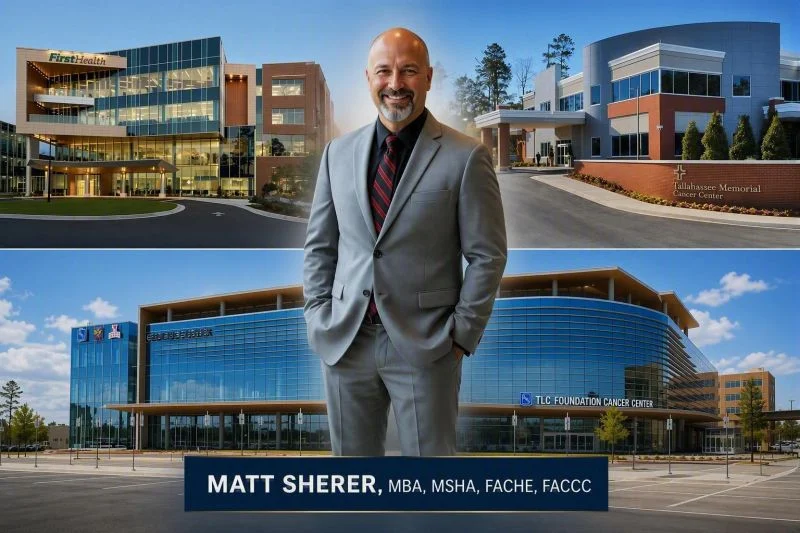
Other articles featuring Matt Sherer on OncoDaily.