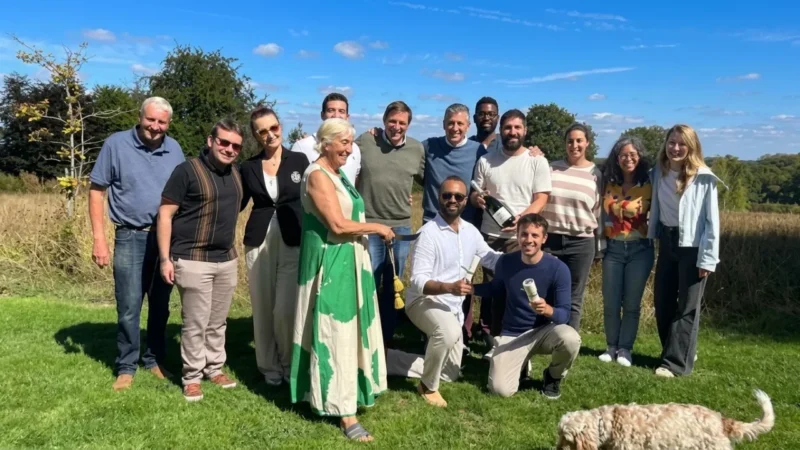
The International Urology Cancer Summit (IUCS26) recently took place in Guildford, UK.
María Natalia Gandur Quiroga, Chief of the Division of Genitourinary Medical Oncology at the Angel H. Roffo Oncology Institute, shared key takeaways and highlights from the meeting on X.
In her posts, she summarized major advances in bladder, kidney, and prostate cancer care-focusing on precision oncology, novel biomarker-driven strategies, perioperative systemic therapies, and personalized approaches for older adults.
“Opening IUCS26 – More than a meeting a growing global GU oncology community
One of the things that struck me most from the opening session was the clarity of the vision behind IUCS: to build a truly international, multidisciplinary community around better care for patients with GU cancers.
With the creation of IUCS CIC, that vision now has a formal non-profit structure focused on:
- multidisciplinary care
- translational and investigator-led research
- evidence-based innovation
- education and global collaboration
- connecting science with everyday clinical practice
What makes this especially meaningful is the diversity of perspectives brought together across countries, specialties and healthcare systems – all around one shared goal: better outcomes for our patients.
A great way to begin two days of science, discussion and collaboration in Guildford.
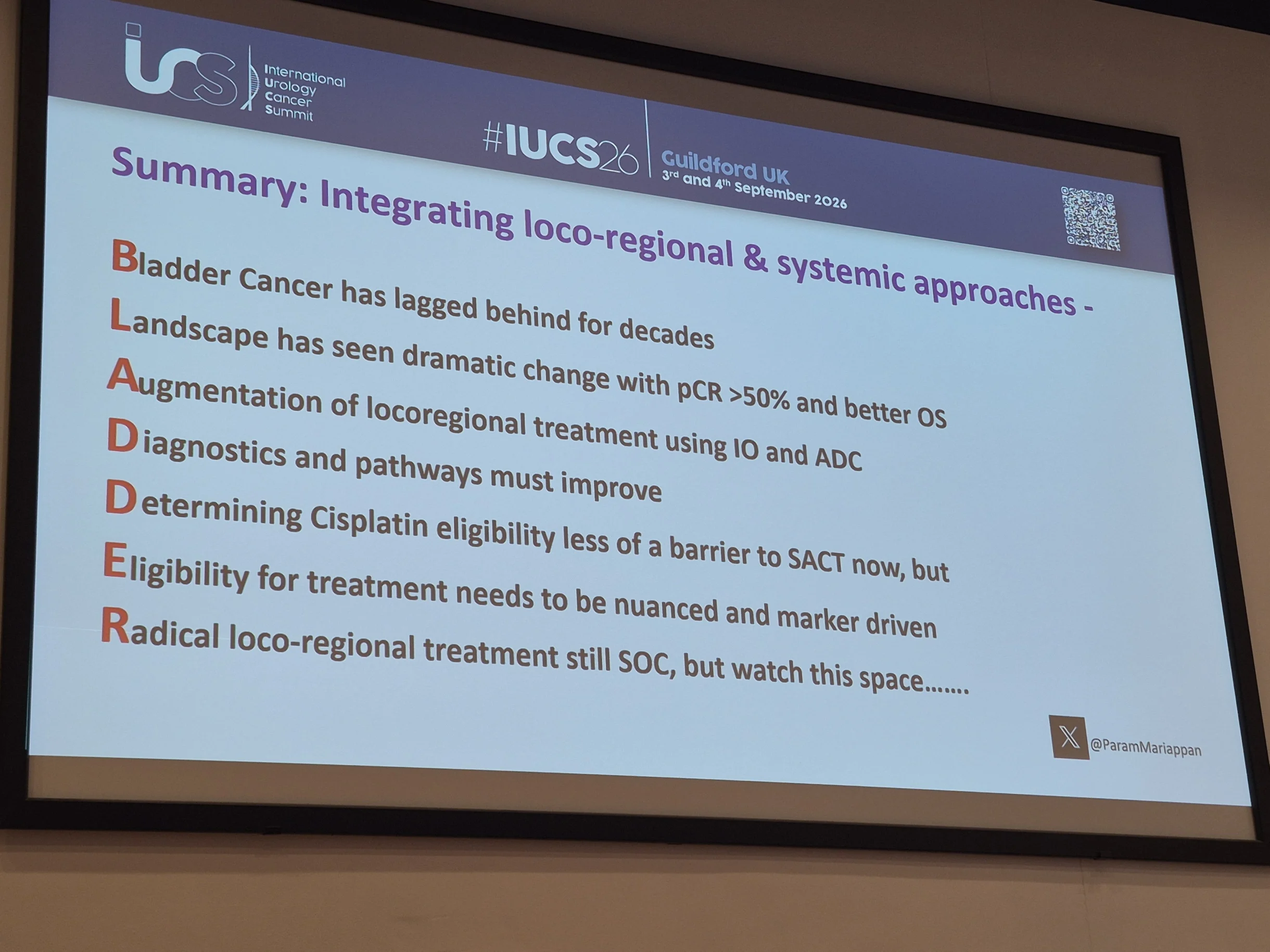
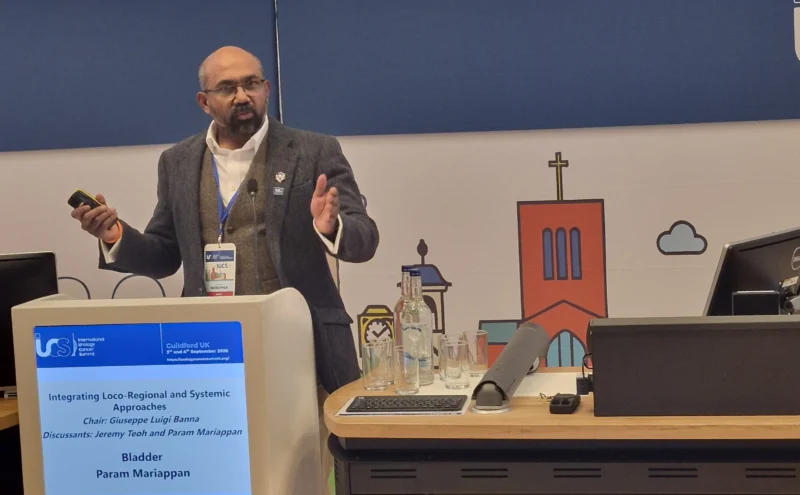
Integrating Loco-Regional and Systemic Approaches – Bladder, Param Mariappan at IUCS26
- In cisplatin-fit MIBC, perioperative treatment has clearly evolved. NIAGARA and KEYNOTE-B15/EV-304 both show meaningful event-free survival improvement with intensified perioperative strategies.
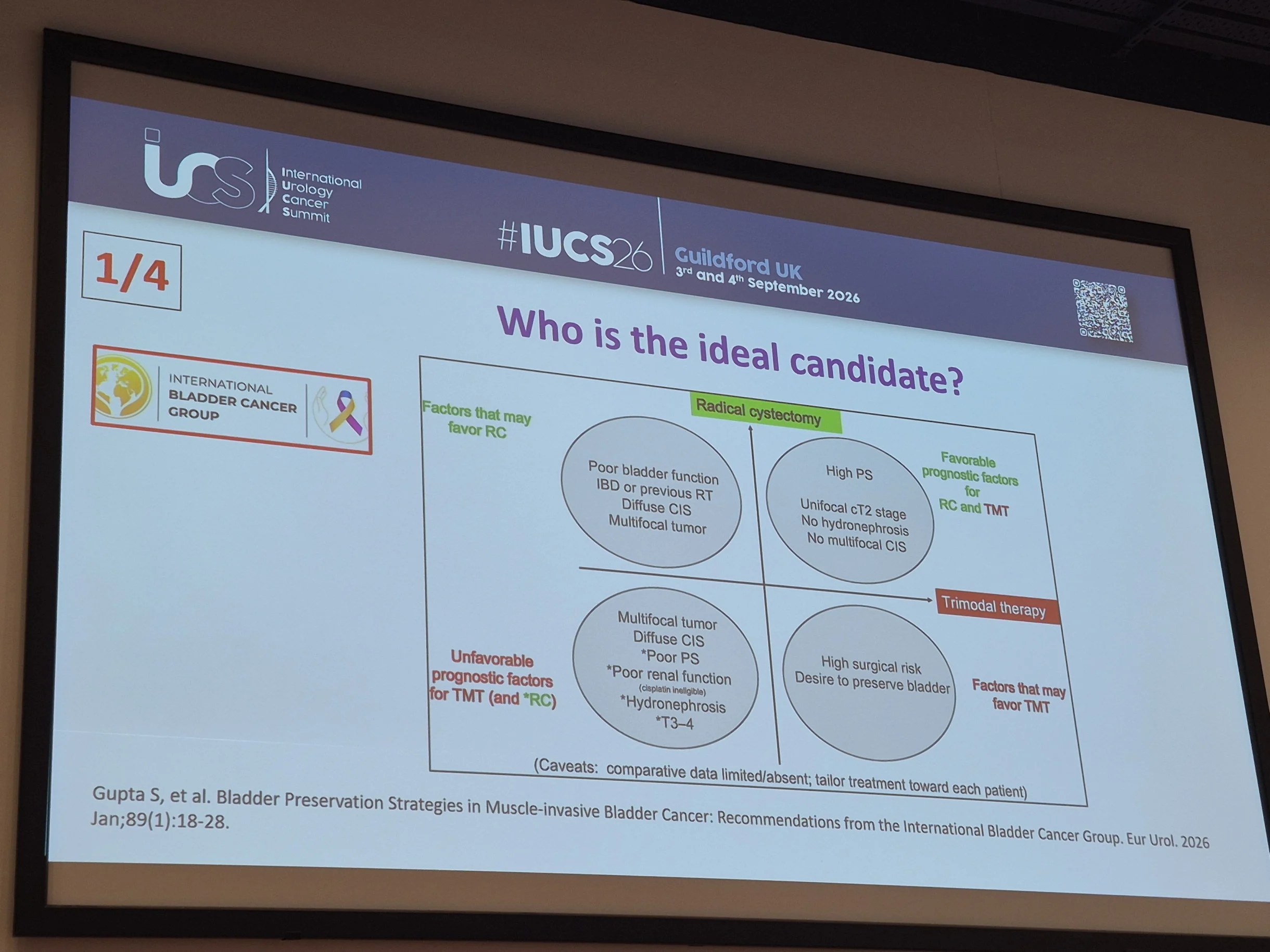
- The question is increasingly not only which systemic regimen, but also who is the ideal candidate for bladder preservation versus radical cystectomy.
- Favorable features for trimodality therapy include: unifocal cT2 disease, no hydronephrosis, no multifocal CIS, high surgical risk or a strong desire for bladder preservation
- Factors that may favor radical cystectomy include poor bladder function, prior pelvic RT, diffuse CIS and multifocal disease.
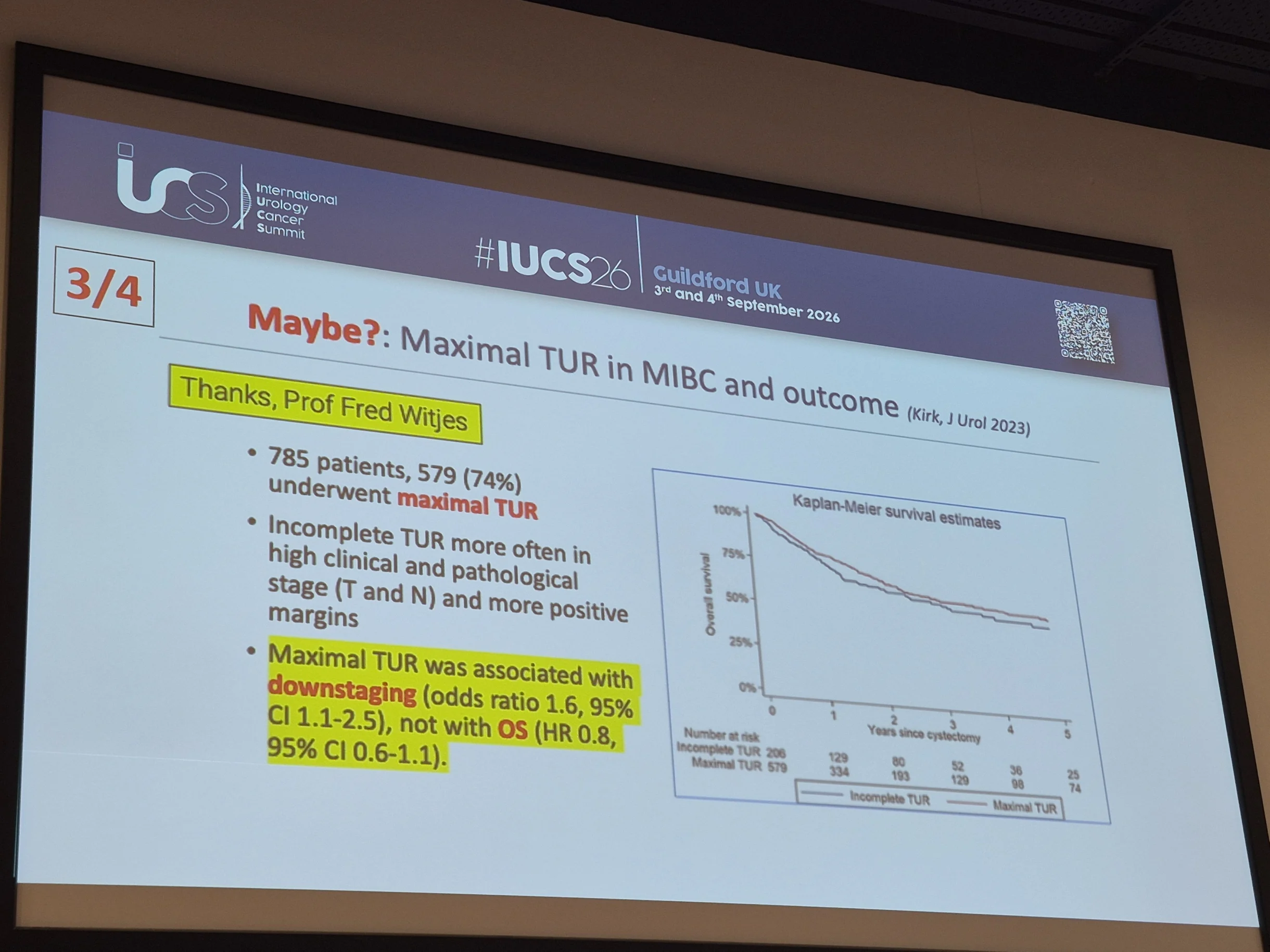
- Maximal TURBT matters, particularly for downstaging, but retrospective data shown here suggest that maximal TUR was associated with downstaging rather than a clear OS advantage.
- Clinical complete response remains difficult to define with certainty. Current assessment combines cystoscopy, TURBT/biopsy, urine cytology and imaging, but sampling error, interobserver variability and treatment-related tissue changes remain important limitations.
- Future refinement will likely require standardized MRI, AI-based tools, urine tumor DNA, ctDNA and molecular biomarkers to improve confidence in response assessment. Quality of life also matters. Data from CISTO reinforce that bladder-sparing therapy and cystectomy may each offer different QoL advantages, underlining the importance of shared decision-making rather than a one-size-fits-all approach.
- Key summary from the session: bladder cancer has lagged behind for decades, but the landscape is now changing rapidly through IO, ADCs, better diagnostics and more nuanced treatment selection.
- Clinical takeaway: radical loco-regional treatment remains standard of care, but the future is increasingly marker-driven, response-adapted and personalized, with bladder preservation becoming a more sophisticated option for selected patients.
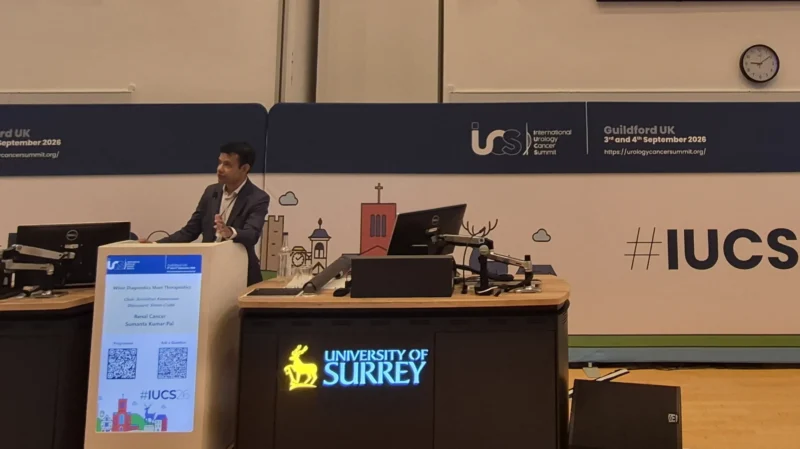
When diagnostics meet therapeutics in RCC
At IUCS26, Sumanta K. Pal takes us through an exciting new landscape in Kidney Cancer, where molecular and biological characterization may increasingly guide emerging therapeutic strategies.
- CD70 stands out as a particularly attractive target in clear-cell RCC
- Several investigational CD70-directed cellular approaches are being explored, including CTX130, CTX131 and ALLO-316
- With ALLO-316, among patients with CD70 TPS ≥50%, 44% (7/16) achieved >30% reduction in baseline target-lesion diameter
- An encouraging early signal – but these approaches remain investigational
The key question is no longer simply whether CD70 is an interesting tumour-associated antigen.
Can CD70 expression identify patients who achieve reproducible, durable clinical benefit with an acceptable toxicity profile? A powerful example of the direction precision oncology is moving: diagnostic – biological target – patient selection – therapeutic strategy Promising biology is only the beginning. A promising target becomes a treatment strategy when activity, durability, patient selection and safety are reproducible.
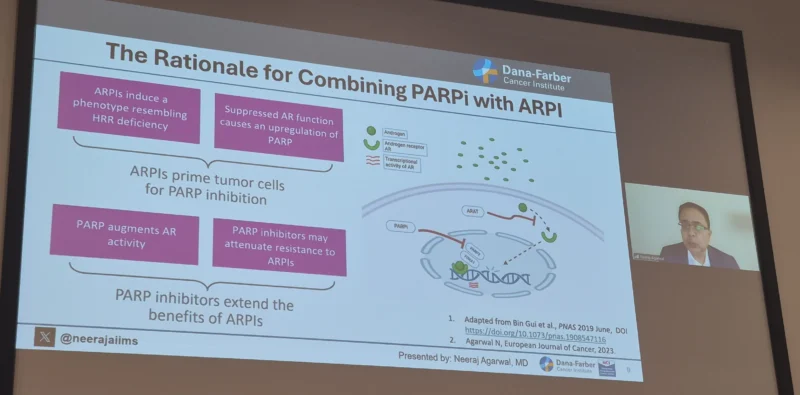
At IUCS26, Neeraj Agarwal delivered a comprehensive view of how genomic, molecular and imaging biomarkers are reshaping prostate cancer care.
- HRR / PARP: benefit is strongest in biologically enriched populations, while activity beyond BRCA requires careful interpretation alongside toxicity and value
- PSMA-directed radioligand therapy: clearly moving earlier, but sequencing still depends on disease phenotype, tempo, PSMA expression and access
- PTEN: CAPItello-281 reinforces the importance of selecting the right biomarker – with IHC capturing the therapeutic phenotype and genomics adding complementary information
- MSI / TMB: clinically meaningful biomarkers that may identify patients who can benefit from immune checkpoint inhibition
- Emerging strategies: CAR-T cells, bispecific T-cell engagers and ADCs continue to expand the therapeutic landscape
- Implementation remains a challenge: having an effective biomarker is not enough if testing is unavailable or arrives too late to influence a treatment decision Perhaps the most important take-home:
Precision oncology is not about ordering more tests. It is about using the right biomarker, at the right time, to select the right treatment for the right patient.
Pluvicto moves earlier in Prostate Cancer
New FDA-era data from PSMAddition bring radioligand therapy into PSMA+ mHSPC, well before the VISION mCRPC setting.
Key points
- rPFS HR 0.72 (95% CI 0.58–0.90)
- Median rPFS not reached in either arm
- Six 7.4 GBq doses q6w
- Combined with investigator-choice ARPI + ADT
- PSMA PET–selected population
- OS remains immature
Important nuance: use the label HR 0.72, not earlier press-release estimates. A meaningful step toward earlier integration of radioligand therapy in advanced prostate cancer.
49% chose enzalutamide + radium-223
In HRR-proficient, bone-only mCRPC, the discussion highlighted an important principle: sometimes the best decision is driven more by disease phenotype than by simply adding more treatment. Precision medicine is not always about intensification – sometimes it is about choosing more precisely. Excellent case by Akash Maniam at IUCS26.
Special thanks to my dear friend Yuksel Urun or the thoughtful exchange and always-generous insights, and grateful to share these discussions with Maria, Giuseppe Banna, Ravindran Kanesvaran.
Would stable rheumatoid arthritis stop you from using EV + pembrolizumab in metastatic Bladder Cancer?
At IUCS26, 78% chose EV + pembrolizumab with close monitoring.
I was delighted to discuss this real-world case alongside Akash Maniam
and Maria, a great example of how comorbidities should inform treatment decisions without automatically excluding highly effective therapy.
Special thanks to my dear friend Yuksel Urun for the thoughtful exchange and generous insights, and to Giuseppe Banna, Ravindran Kanesvaran for such an interactive, practical discussion.
From predicting toxicity to preventing harm
Excellent IUCS26 discussion by Dr. Xue-Yan Jiang on immunological vulnerability and personalised immunotherapy.
The message went far beyond a single biomarker:
- Clinical risk: age, frailty, sex, autoimmune disease, polypharmacy, performance status
- Laboratory signals: NLR, CRP, LDH, eosinophils, autoantibodies
- Tumour biology: PD-L1, TMB, neoantigen load, immune signatures, TME
- Emerging tools: microbiome, multi-omics, TCR sequencing and AI-based risk models
But the most important message was clinical:
- Stratify risk
- Monitor more closely
- Detect toxicity earlier
- Intervene sooner
- Involve specialists when needed.
AI may help us recognise vulnerability, but it should augment clinical judgment-not replace it. And ultimately, success is not only helping patients survive cancer. It is curing when possible, preserving quality of life, and minimising the long-term consequences of both cancer and its treatment.
Maximum benefit. Minimum harm. For every patient.
OLD IS NOT FRAIL. SCREEN IS NOT ASSESS
Excellent and highly practical IUCS26 talk by Vanita Noronha, on moving beyond chronological age toward physiological reserve and truly right-sized treatment in GU oncology.
Key messages:
- G8 / Mini-Cog help identify who needs deeper geriatric assessment
- Frailty, function, cognition, comorbidities, nutrition and polypharmacy all matter
- Geriatric assessment can change treatment decisions in both directions: escalation or de-intensification
- GA-driven interventions can reduce severe treatment toxicity
- Even highly effective regimens such as EV + pembrolizumab require careful assessment of vulnerability and tolerability
- Patient priorities matter: cure, QoL, symptom control and survival are not always weighted equally
The goal is neither over-treatment nor under-treatment.
Assess – Optimise – Personalise.
Treat the patient, not the birth certificate. Outstanding discussion on making geriatric assessment part of routine GU cancer care.
Age tells us how long someone has lived not how well they can tolerate treatment
Older adults with GU cancers remain underrepresented in clinical trials, despite representing an increasing proportion of the patients we care for. At IUCS26, Vanita Noronha, delivered an excellent reminder:
Treatment decisions should reflect:
- Physiological reserve
- Comorbidities
- Cognition
- Nutrition
- Functional status
- Patient goals
The right question is not simply
‘How old is the patient?’
but
‘How fit is the patient for this treatment?’
Outstanding, highly practical discussion on bringing geriatric thinking into everyday GU Oncology care.
In your practice, what matters most when deciding whether to intensify, de-intensify, or modify treatment in an older patient with GU cancer: age, frailty assessment, comorbidities, or patient goals?
Is surgery alone enough for today’s highest-risk Prostate Cancer patients?
A contemporary PROTEUS-like cohort of 1,392 men treated with radical prostatectomy without neoadjuvant hormonal therapy shows how substantial the residual risk remains.
Biochemical recurrence-free survival
- 60% at 3 years
- 22% at 10 years
Metastasis-free survival
- 56% at 10 years
Cancer-specific survival remained comparatively high, but the recurrence and progression burden is difficult to ignore. These data reinforce a key question for the perioperative era: Should treatment intensification begin earlier in carefully selected high-risk patients? Prospective trials evaluating strategies such as apalutamide + ADT are therefore highly relevant.
For a PROTEUS-like patient today, would you still favor surgery alone-or already think in terms of multimodal perioperative therapy?
In bladder cancer, biomarkers are starting to change treatment-not just describe risk
Excellent IUCS26 session with Petros Grivas on how molecular tools are moving into real clinical decision-making across the urothelial cancer continuum.
- ctDNA / MRD: serial testing separates very different post-cystectomy risk groups
- Dynamics matter: persistence, clearance, timing and burden may be more informative than a single positive/negative result
- NIAGARA: ctDNA clearance after neoadjuvant therapy correlated with better outcomes
- Adjuvant setting: ctDNA may help enrich for patients most likely to benefit from treatment
- Bladder preservation: ctDNA can refine systemic risk, but cannot reliably exclude residual bladder disease or local recurrence
- Actionable biology: FGFR and HER2 continue to expand biomarker-driven treatment options
Clinical takeaway: Use biomarkers to refine systemic risk-but not to replace local disease assessment.
Excellent, highly practical discussion by Petros Grivas.
Perioperative EV + pembrolizumab is now a major new option in cisplatin-eligible MIBC
KEYNOTE-B15 / EV-304 | N=808
- EFS: NR vs 48.5 mo with gem/cis HR 0.53
- OS: NR vs NR HR 0.65
- pCR: 55.8% vs 32.5%
This phase 3 trial moves EV + pembrolizumab firmly into the curative-intent perioperative setting and challenges neoadjuvant cisplatin-based chemotherapy as the default approach for eligible patients.
Clinical takeaway: better disease control and deeper pathological response-but integration into practice will require careful attention to toxicity, patient selection, and sequencing.
Bladder preservation in MIBC is entering a new era
Excellent IUCS26 discussion by Darren Poon on integrating systemic and loco-regional therapy.
- EV + pembrolizumab is reshaping perioperative MIBC
- KEYNOTE-905/EV-303: pCR 57.1% vs 8.6% with surgery alone
- Deep responses raise a key question: can selected patients safely avoid immediate cystectomy?
But pCR ≠ clinical complete response. Safe preservation will require:
- rigorous restaging
- maximal TURBT
- cystoscopy/biopsy + imaging
- ctDNA/utDNA and molecular biomarkers
- immediate definitive therapy if response is inadequate
- strict surveillance in selected complete responders
Clinical takeaway: the real question is not cystectomy vs preservation – it is who can preserve the bladder without compromising cure.
Excellent IUCS26 discussion by Alison Tree on integrating loco-regional and systemic approaches.
STAMPEDE / abiraterone and ENZARAD / enzalutamide reinforce the role of systemic intensification in selected higher-risk patients, including cN1 disease.
In PROTEUS, perioperative apalutamide + ADT improved pathological response:
- pCR/MRD: 8.9% vs 1.0%
- Fewer positive surgical margins
- 5-year MFS: 78.2% vs 73.5% in the data presented But the message is not ‘more treatment for everyone.’
The real questions are:
- Who can avoid ADT?
- Who needs standard or longer-course ADT?
- Who derives enough absolute benefit to justify AR-pathway intensification?
Clinical takeaway: localized high-risk prostate cancer is moving toward risk-adapted selective intensification, balancing disease control against the long-term burden of systemic therapy.
The future of prostate cancer care is not simply more treatment – it is smarter integration.
- Right radiotherapy.
- Right systemic therapy.
- Right patient.
- Right timing.
Excellent IUCS26 talk by Alison Tree on how risk-adapted combinations of local and systemic therapy are reshaping high-risk prostate cancer care. Precision is not just about what we give – but to whom, when, and for how long.
Precision Oncology through Biomarkers – Bladder Cancer at IUCS26
Excellent discussion by Syed A. Hussain on what really matters in biomarker-driven urothelial cancer.
- EV + pembrolizumab has reset the first-line benchmark, but resistance remains a major challenge: • ~50% progress within 12 months • ~10% have primary resistance • toxicity can limit EV exposure
- ADC resistance is likely multifactorial – involving target loss, impaired internalisation, lysosomal dysfunction, drug efflux and payload resistance.
- UC offers multiple actionable pathways, including NECTIN-4, TROP-2, HER2 and FGFR, but expression varies across histologic subtypes.
- For immunotherapy, biomarkers such as PD-L1, TMB, CD8+ TILs/IFNγ and TGFβ may reflect very different immune phenotypes.
Clinical takeaway: precision oncology is moving beyond ‘Is the target present?’ toward: Which target matters, in which tumor subtype, at which disease stage – and how does resistance evolve under treatment?
Precision Oncology through Biomarkers – Renal Cancer at IUCS26.
Excellent discussion by Stefanie Zschäbitz on how biomarker use in RCC is becoming increasingly dynamic and clinically relevant. ctDNA is emerging as a strong prognostic tool, particularly when assessed serially before and after surgery rather than at a single time point.
- In KEYNOTE-564, ctDNA positivity identified patients with markedly poorer DFS, highlighting the promise of molecular residual disease for future risk stratification.
- KIM-1 is another promising marker for prognosis and treatment monitoring.
- PD-L1 alone is not enough to guide treatment selection in mRCC – and studies such as CARE-1 are testing whether biomarker-defined populations can better inform IO/IO vs IO/VEGF choices.
- The landscape is expanding further with belzutifan, FAP, CAIX, ROR2 and CD70.
Clinical takeaway: precision oncology in RCC is moving beyond static single biomarkers toward multimodal, longitudinal assessment – tissue, ctDNA, serum markers, imaging and tumor biology – matched to the right clinical question.
Excellent insights from my dear friend Yuksel Urun at IUCS26 on rare and variant GU cancers
These are exactly the cases where routine pathways often stop being enough – and where experience, multidisciplinary discussion, and the right clinical questions matter most. A thoughtful session bringing hidden uncertainties into the open and helping turn rare scenarios into more confident clinical decisions.
Grateful for the discussion and for sharing it with such an outstanding GU community.
Neeraj Agarwal keeps raising the bar with every talk
Excellent IUCS26 discussion on the latest advances helping us deliver better, more precise care for patients with Prostate Cancer.
And a very special moment to hear one of his first talks after joining Dana-Farber Lank Center for Genitourinary Oncology and Harvard Medical School – huge congratulations again on this exciting new chapter! A privilege to learn from such thoughtful, clinically relevant insights.
Award-winning researches at IUCS26
1. Could biological sex influence response to enfortumab vedotin in metastatic urothelial cancer
Dr. Tarek Taha presented an international real-world analysis exploring sex-based differences in EV outcomes and NECTIN-4 biology in mUC.
- EV outcomes differed between males and females
- NECTIN-4 expression was higher in male tumors
- Estrogen-response signaling and other molecular differences may help explain this heterogeneity
A fascinating precision-oncology question: Could sex eventually become part of how we understand-and predict-ADC sensitivity and resistance?
Important hypothesis-generating work opening a new window into EV biology. Congratulations to Tarek Taha and collaborators!
Sian Cooper presented prospective multicentre MOMENTUM registry data from 1,612 patients treated with SBRT or longer-fractionated RT.
- Prostate swelling was common, but generally modest
- Standard CTV–PTV margins remained adequate
- Baseline prostate volume was the strongest driver of variation
- Early volume changes may help identify patients at risk of more substantial later swelling, particularly during longer-fractionated RT
Clinical takeaway: adaptive imaging may help us personalize radiotherapy without simply increasing margins for everyone.
A highly practical study with clear implications for modern image-guided treatment. Congratulations to Sian Cooper and the MOMENTUM investigators!
3.Can a clinical risk model also reveal the biology driving metastatic RCC?
Nick Salgia presented an integrated analysis linking MEET-URO risk groups, transcriptomics, and clinical outcomes in mRCC.
Group 1: angiogenic/stromal phenotype – greater sensitivity to VEGF-directed therapy. More advanced groups: increasingly immune/myeloid-inflamed biology – potential susceptibility to ICI-based strategies .
Clinical takeaway: risk stratification may eventually help us do more than estimate prognosis-it may help guide treatment selection.
An exciting step toward biologically informed precision medicine in kidney cancer. Congratulations to Nick Salgia and the MEET-URO investigators!
What a wonderful IUCS26 at International Urology Cancer Summit in England
Grateful for the outstanding scientific program, stellar speakers, and the excellent leadership of Giuseppe Banna and Ravindran Kanesvaran.
Beyond the discussions across all GU cancers, one of the best parts was reconnecting with dear friends and colleagues from around the world – sharing ideas, learning from each other, and strengthening collaborations. So happy to have shared these days with Vadim Koshkin, Deborah Mukherji, Vanita Noronha, Yüksel Ürün, Pas Rescigno.
Excellent science, meaningful conversations, and even better company. Looking forward to the next one.
Absolutely – that is exactly what made IUCS26 so special
A very high academic level, but also genuine friendship, closeness, and camaraderie among the faculty. Thank you so much for joining us virtually from Italy 🇮🇹 and for sharing the experience with us. We hope to have you with us in person at IUCS27!
Absolutely! One of the things I valued most at IUCS26 was being part of such a genuinely international and multidisciplinary faculty. The discussion between Param Mariappan, Alison Tree and Darren Poon was a great example of what these meetings can do best: bring different specialties together around the same patient and challenge us to think beyond our own discipline.
For me, those exchanges are often as valuable as the formal presentations – they sharpen clinical judgment, expose different perspectives, and translate evidence into better real-world decisions in Prostate Cancer and Bladder Cancer.
Huge credit to Giuseppe Banna and Ravindran Kanesvaran for creating such a high-level, collaborative atmosphere.
One of the things I enjoyed most about Deborah Mukherji’s IUCS26 talk was how clearly she connected precision oncology with real clinical decision-making. In prostate cancer, better biomarkers only matter if they help us choose better for the individual patient.
- PCWG4 moves beyond the simple hormone-sensitive/castration-resistant framework toward an androgen-pathway modulation continuum: APM-naïve, APM-sensitive and APM-resistant disease.
- Yet a major real-world gap remains: despite strong evidence for intensification, ADT monotherapy still accounted for >50% of mHSPC treatment in a dataset of nearly 70,000 men.
- Treatment decisions should integrate:
- disease biology
- symptoms and comorbidities
- patient preferences
- access and sustainability
- genomic and germline testing
- PSMA imaging
- dynamic markers such as ctDNA/CTCs
ctDNA may further refine prognosis, particularly when interpreted together with PSA and evolving disease biology.
Clinical takeaway: precision oncology is not about testing more. It is about testing with purpose, integrating intelligently, acting on what matters-and reassessing over time.
What a fantastic way to close IUCS26!
Community-voted clinical cases, practical discussion, shared learning, and great camaraderie with Akash Maniam, Maria and an outstanding GU community. Grateful to Ravindran Kanesvaran, International Urology Cancer Summit, ONCOassist for creating such an engaging and high-level meeting.
A perfect wrap-up to a memorable IUCS26.”
You can also read:
Giuseppe Banna: IUCS26 Advances Innovation and Collaboration in Urological Cancer