Maria Babak, Head of The Babak Lab and Assistant Professor at City University of Hong Kong, shared a post on LinkedIn by The Babak Lab, adding:
“24% response rate might look modest at first glance, but for patients who have already failed anti-PD-1, options are extremely limited. The 14.1-month median DOR shows that when this combination works, it offers durable control.
Critical to see if confirmatory trials back this up.”
Quoting The Babak Lab’s post:
“Clinical Mondays
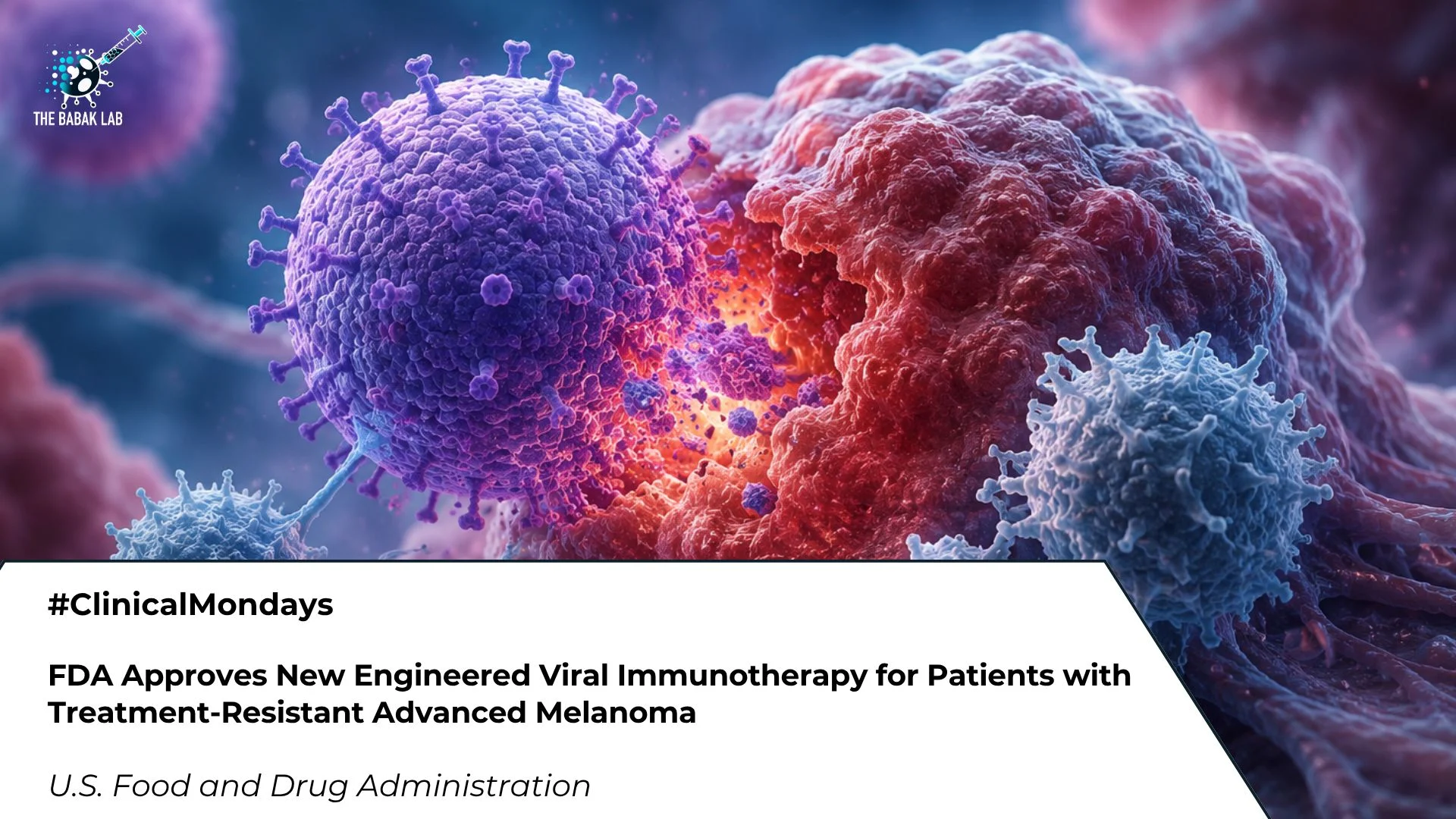
FDA Grants Accelerated Approval to Tudriqev (vusolimogene oderparepvec) for Anti-PD-1 Refractory Melanoma
The FDA has approved Tudriqev in combination with nivolumab for adults with unresectable or metastatic cutaneous melanoma that progressed following prior anti-PD-1 therapy.
Tudriqev is an engineered HSV-1-based oncolytic virus administered directly into lesions. It selectively infects and lyses tumor cells, releasing tumor antigens and stimulating an intratumoral immune response, which nivolumab further amplifies via PD-1 blockade.
Highlights (IGNYTE Trial):
- 140 adults with Stage IIIB–IV unresectable melanoma progressing after ≥8 weeks of prior anti-PD-1 therapy
- Out of 91 efficacy-evaluable patients, ORR was 24% (24.2%)
- mDOR reached 14.1 months
- Tudriqev is injected intratumorally every 2 weeks (up to 8 initial doses, with continuation possible based on clinical benefit), with IV nivolumab added at week 3
- The most frequent adverse reactions (>10%) included fatigue, pyrexia, chills, nausea, diarrhea, and injection-site reactions.
Takeaway:
Overcoming resistance to anti-PD-1 therapy remains a major hurdle in advanced melanoma. Combining direct viral oncolysis with systemic immune checkpoint inhibition offers a rationale-driven alternative for this hard-to-treat population. As an accelerated approval, full status will depend on verification of clinical benefit in confirmatory Phase 3 trials.
You can also read Third Time’s the Charm: FDA Approves Replimune’s Tudriqev (RP1) for Advanced Melanoma on OncoDaily.