






Mamtha Balla, Transplant Oncology-ID fellow at MD Anderson Cancer Center and Hematology oncology Fellow at The University of Toledo, shared a post on X:
“Metastatic NSCLC – ITE / Boards Pearls (Follow ASCO/NCCN guidelines for latest updates)
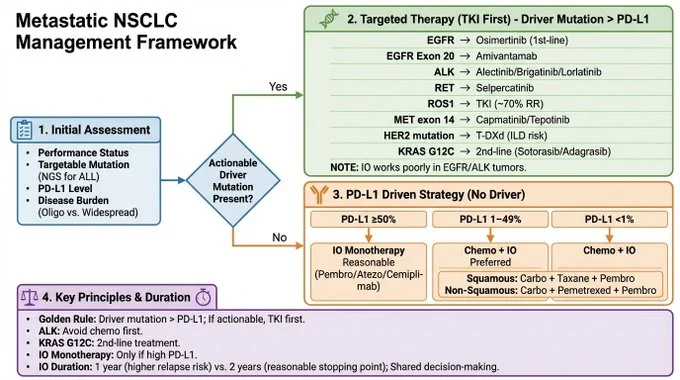
Always Ask First:
- Performance Status
- Targetable Mutation (NGS for ALL NSCLC)
- PD-L1 Level
- Disease Burden (oligo vs widespread)
GOLDEN RULE
- Driver mutation > PD-L1
- If actionable mutation → TKI first
Targetable Drivers (Know These Cold)
- EGFR – Osimertinib (1st-line)
- EGFR Exon 20 – Amivantamab
- ALK – Alectinib / Brigatinib / Lorlatinib
- RET – Selpercatinib
- ROS1 – TKI (≈70% RR)
- MET exon 14 – Capmatinib / Tepotinib
- HER2 mutation – T-DXd (ILD risk )
- KRAS G12C – 2nd-line (Sotorasib / Adagrasib)
- BRAF V 600 Mutation-Debrafenib+Trametinib – 2nd line-lots of side effects
IO works poorly in EGFR/ALK tumors.
No Driver? – PD-L1 Driven Strategy
- PD-L1 ≥50%- IO monotherapy reasonable (Pembro / Atezo / Cemiplimab)
- PD-L1 1–49%- Chemo + IO preferred
- PD-L1 <1%- Chemo + IO
Squamous – Carbo + Taxane + Pembro
Non-Squamous – Carbo + Pemetrexed + Pembro
IO Duration
- 1 year → higher relapse risk
- 2 years → reasonable stopping point Shared decision-making.
Rapid Recall
- Test ALL histologies
- EGFR → Osimertinib
- Exon 20 ≠ T790M
- ALK → avoid chemo first
- KRAS G12C = 2nd line
- IO monotherapy only if high PD-L1 .
- ALWAYS test for drivers (ALL histologies).
- Driver > PD-L1.
- EGFR – Osimertinib
- ALK – Alectinib/Brigatinib/Lorlatinib
- RET – Selpercatinib
- METex14 – Capmatinib
- HER2 mut – T-DXd
- KRAS G12C – 2nd-line
IO works poorly in EGFR/ALK.
No driver? Use PD-L1:
- ≥50% – IO alone
- 1–49% – Chemo + IO
- <1% – Chemo + IO
Non-sq backbone – Carbo/Pem
Squamous – Carbo/Taxane
IO duration: ~2 yrs reasonable.”
Other articles featuring NSCLC on OncoDaily.