Lung Cancer Europe shared a post on LinkedIn:
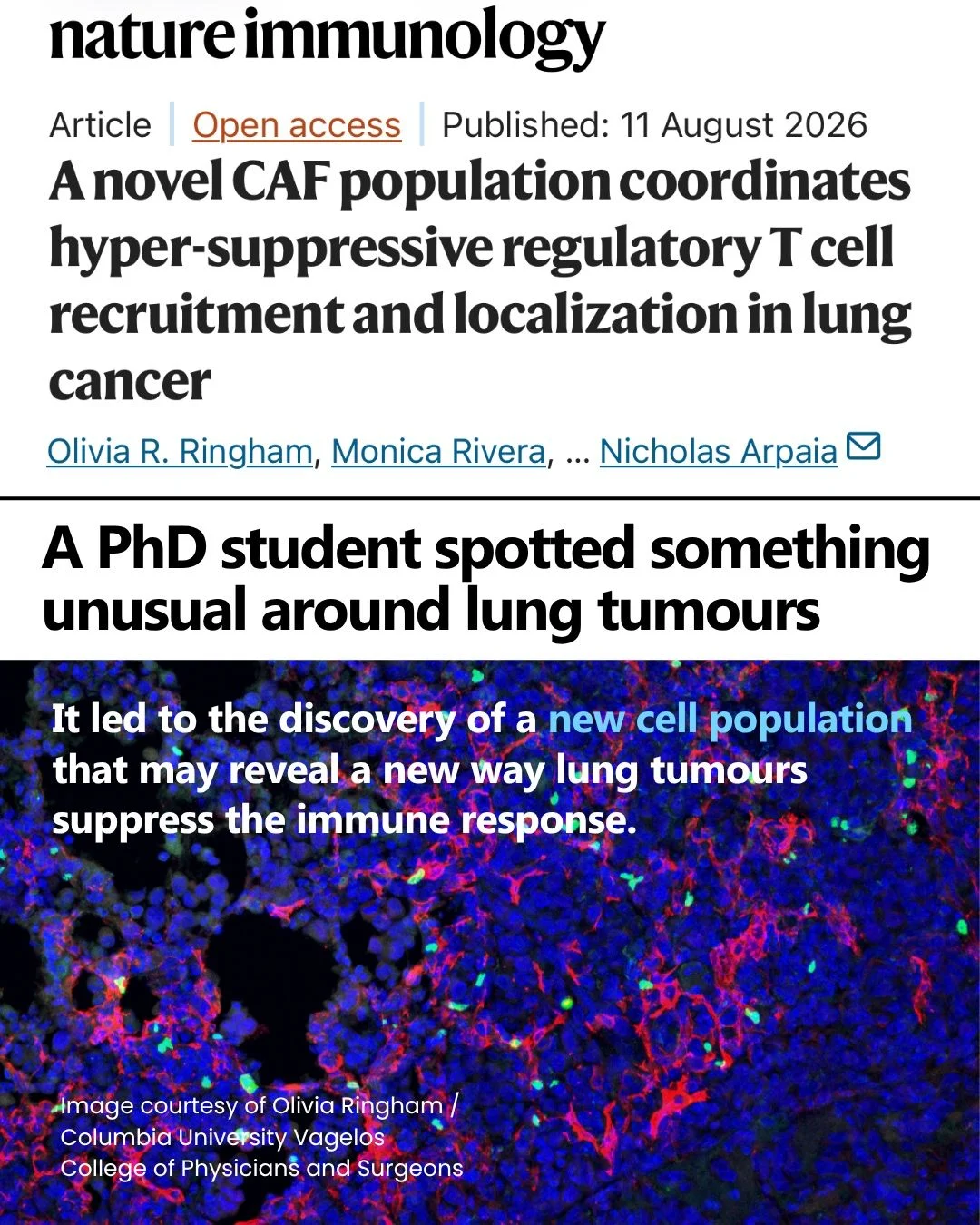
“A PhD student spotted something unusual around lung tumours. It led to a new discovery.
During her PhD at Columbia University, Olivia Ringham noticed regulatory T cells repeatedly gathering around fibroblasts at the edge of lung tumours.
That observation helped lead to the identification of a previously unrecognised population of CHL1-positive cancer-associated fibroblasts.
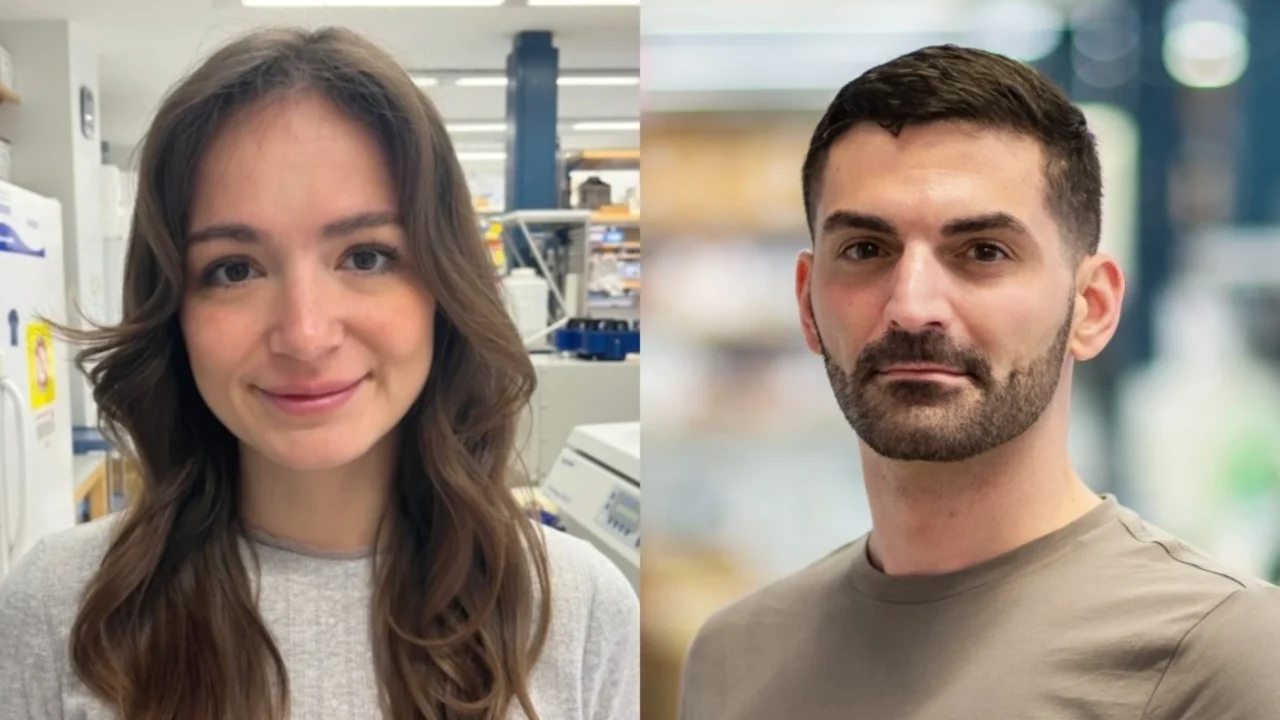
The new Nature Immunology study, led by Olivia with Nicholas Arpaia and colleagues, found that these fibroblasts produce CXCL9, which attracts a highly suppressive group of regulatory T cells to the tumour border. Olivia Ring.pdf
The team also found a similar fibroblast population in human NSCLC. Higher CHL1 expression was associated with lower anti-cancer immune activity and shorter progression-free survival.
The research identifies a specific pathway that could now be explored as a future treatment target in lung cancer.
Congratulations to Olivia, Nicholas and the wider Arpaia Lab team.”
Title: A novel CAF population coordinates hyper-suppressive regulatory T cell recruitment and localization in lung cancer
Authors: Olivia R. Ringham, Monica Rivera, Lucas F. Loffredo, Melih Arda Ozsoy, Christina M. Healy, Maye F. Cheng, Yinuo Jin, Noah Chen, Kenia de los Santos-Alexis, Elham Azizi, Anjali Saqi, Matthew B. Buechler, Carla P. Concepcion-Crisol, Nicholas Arpaia.
Read the Full Article on Nature Immunology
Other posts about Lung Cancer Europe on OncoDaily.