





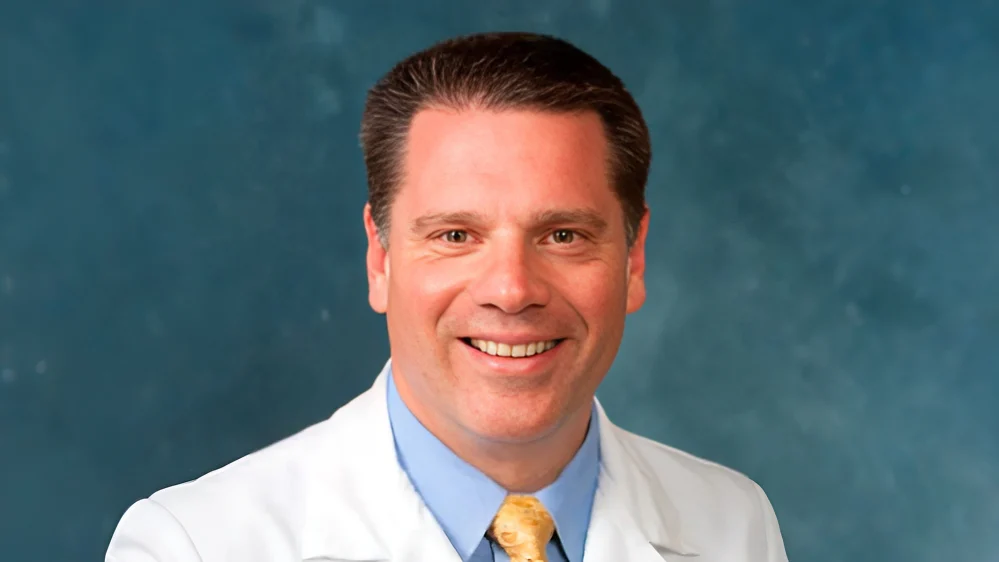
Ken Pienta, Donald S. Coffey Professor of Urology and a Professor of Oncology at the Johns Hopkins School of Medicine, shared a post on Substack:
“A bacterium in contaminated groundwater can ‘breathe‘ the same chemicals that give us cancer. The difference is not that we are more fragile. It is that we lost the pathways that would have made them safe while keeping the ones that turn them into poison.
In the last post I argued that your individual cancer risk is a combinatorial flux problem, i.e., a lifetime of exposures processed through a network of enzymes that varies from person to person, and that the variation is far larger than population averages let on. I want to push on a question that sits underneath all of that, one that the risk model assumes but does not explain: why are these particular chemicals dangerous to human cells in the first place?
It is easy to treat carcinogenicity as a brute fact. Benzene causes leukemia. Hexavalent chromium causes lung cancer. Arsenic causes cancer almost everywhere it touches. But “this chemical is a carcinogen” is not a property of the chemical alone. It is a property of the chemical meeting biology. Change the biology and the same molecule can become a nutrient, a fuel, a respiratory substrate. There are organisms on this planet for which several of our worst carcinogens are simply something to eat!
That fact turns out to be the key to understanding why we are vulnerable.
The organisms that breathe our poisons
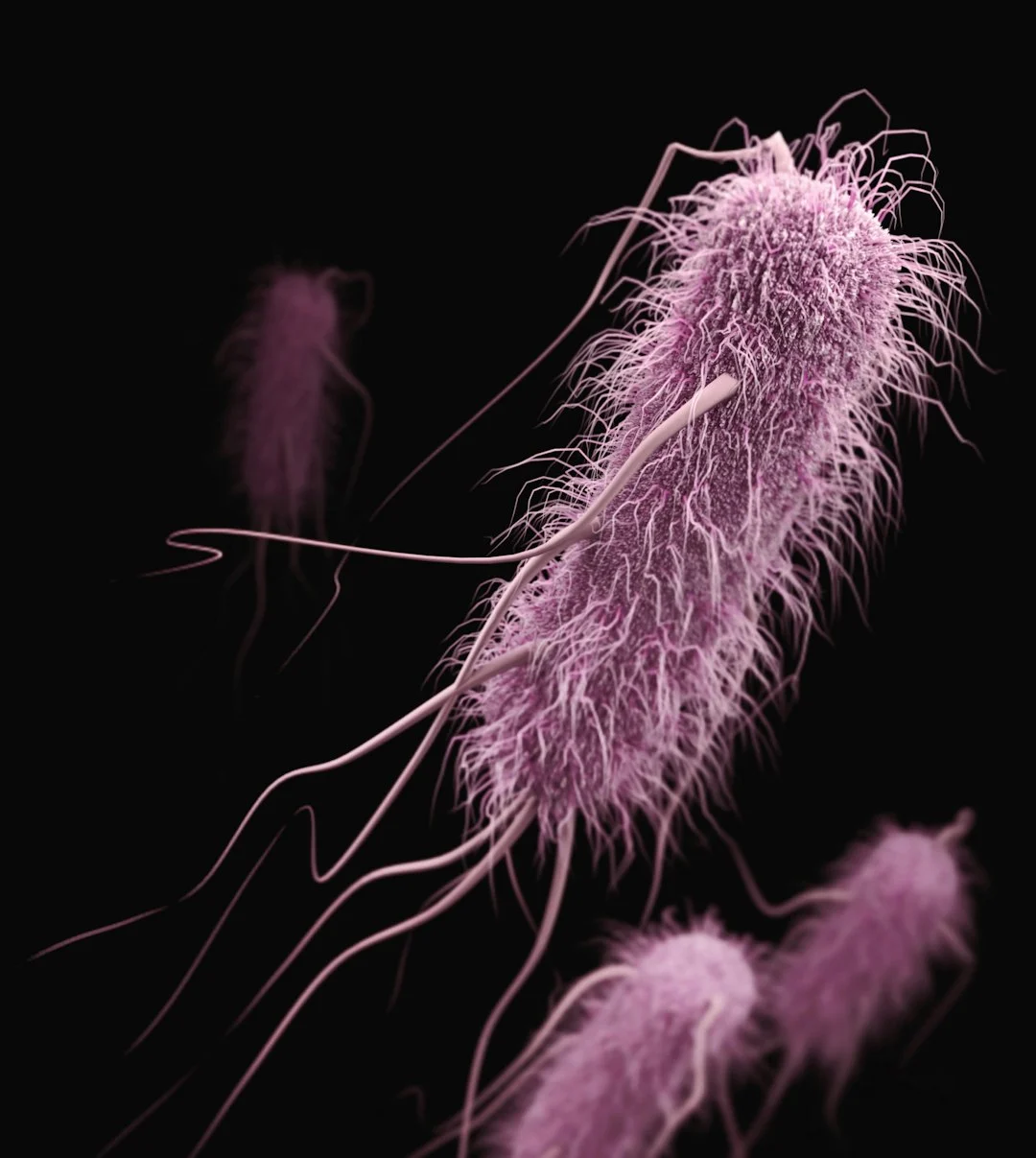
Consider Geobacter and its relatives, anaerobic bacteria that live in soils and sediments and contaminated aquifers, in exactly the places where industrial chemistry has leached into the ground. They encounter the same rogues’ gallery of chemicals we do: arsenic and chromium in groundwater, polycyclic aromatic hydrocarbons from combustion, chlorinated solvents from degreasing operations, cadmium and mercury from industrial outflow.
The chemistry they meet is the same chemistry we meet. What they do with it is not.
These microbes can use metals and chlorinated compounds as the terminal step of their respiration (the role oxygen plays for us). Where we breathe oxygen at the end of our electron transport chain, Geobacter can breathe hexavalent chromium, or uranium, or a chlorinated solvent, reducing those compounds to harvest energy. They run aromatic hydrocarbons through a dedicated anaerobic pathway, the benzoyl-CoA route, that breaks the benzene ring apart in the absence of oxygen, a chemical feat human biochemistry cannot perform at all. To these organisms, a contaminated aquifer is not a hazard. It is a pantry.
Human cells have none of this. We cannot respire on chromium or dechlorinate a solvent or dearomatize a benzene ring anaerobically. When one of these chemicals enters a human cell, it is met by an entirely different toolkit: cytochrome P450 oxidation, glutathione conjugation, methylation, metallothionein induction, and efflux pumps. Failure of this toolkit leads to DNA damage and tissue injury. We do not process these chemicals for energy. We try to detoxify them and excrete them, and sometimes, in the attempt, we make them worse.
Mapping the divergence
An interesting exercise in evolutionary contrast is to take a panel of chemicals that both microbes and humans encounter, and map, compound by compound, how the two lineages handle them, i.e., where the chemistry is conserved, where the biology diverges, and, most importantly, where humans have “lost” a capability that the microbial world retains.
One can create a framework that sorts every chemical-handling relationship into one of six classes: conserved chemistry, analogous function, pathway loss, toxic inversion, host-shifted handling, and ecosystem-outsourced. Most of these are what they sound like. Two of them are where human cancer lives. The two classes that matter most for cancer are “pathway loss” and “toxic inversion.” They are the difference between a chemical that is food for a bacterium and a chemical that is a carcinogen for us.
Pathway loss: the route we no longer have
Pathway loss is the simpler of the two. It is what happens when microbes possess a catabolic or respiratory route for a chemical that humans lack entirely. Lacking the clean route, we are forced to handle the chemical through machinery that was built for something else, with worse results.
Chlorinated solvents are the clearest case. Compounds like trichloroethylene and perchloroethylene — TCE and PCE, the workhorses of twentieth-century degreasing and dry cleaning, and now among the most common groundwater contaminants in the industrialized world. These can be respired by anaerobic bacteria, which strip the chlorine atoms off one at a time and use the molecule as an electron acceptor. The bacterium gets energy; the solvent gets dechlorinated into progressively more benign products. It is a tidy, complete pathway.
Human cells cannot do this. We have no dechlorination respiration. When TCE enters a human cell, it gets shunted instead into the only machinery we have for foreign organic molecules, cytochrome P450 oxidation and glutathione conjugation. This machinery, applied to a chlorinated solvent, does not detoxify it. It bioactivates it, producing reactive epoxide and conjugate intermediates that bind DNA and protein. The route that would have made the chemical safe is the route we lost. The route we kept turns it into a genotoxin.
This is the deep point hiding in the phrase “pathway loss.” We are not vulnerable to these chemicals because we are delicate. We are vulnerable because evolution, in building the lineage that became us, discarded metabolic capabilities our microbial ancestors had. These capabilities, had we kept them, would have rendered several modern carcinogens harmless. The toxic landscape we face is, quite literally, a map of what we gave up.
Toxic inversion: the same reaction, run backwards
Toxic inversion is subtler and, to me, the more striking of the two. It is the case where the same chemical undergoes the same general transformation in microbes and in humans, but with opposite biological consequences, because of where and how the reaction happens.
Hexavalent chromium is the canonical example. Both Geobacter and human cells reduce Cr(VI) to Cr(III); chemically, it is the same reduction in both. But the bacterium does it ‘outside’ the cell, as a respiratory reaction, converting soluble, mobile Cr(VI) into insoluble, immobilized Cr(III), leading to detoxification and resulting in an energy source at the same time. The chromium is locked down, made unavailable, rendered safe. The reaction is protective.
Human cells reduce the very same Cr(VI), but they do it ‘inside’ the cell, after the chromium has been taken up. And the intracellular reduction does not lock the chromium away harmlessly. It generates a cascade of reactive oxygen species and reactive chromium intermediates that form chromium-DNA adducts and drive oxidative DNA damage. The identical chemical transformation — Cr(VI) to Cr(III) — is a detoxifying respiratory reaction in the microbe and a DNA-damaging event in the human. Same reaction, inverted outcome. The location and the context are everything.
Toxic inversion is the reason you cannot reason about carcinogenicity from chemistry alone. A reductionist would look at “Cr(VI) gets reduced to Cr(III)” and conclude the chemical is being neutralized, which is exactly correct for the bacterium and exactly wrong for us. Carcinogenicity is not in the molecule. It is in the molecule meeting a particular cellular geography.
Why this belongs in a series about cancer ecology
I have spent the previous posts arguing that a tumor is a bounded ecological community and that cancer is an evolutionary process. To understand a cancer you have to understand the selective environment that produced it.
The carcinogen-flux landscape I described in the last post, the network of enzymes that decides who gets cancer, is not arbitrary. It is the product of an evolutionary history of pathway loss and pathway retention stretching back to our divergence from microbial life. We carry the enzymes we carry, and lack the ones we lack, because of choices natural selection made in lineages that had no concept of trichloroethylene. The vulnerabilities those ancient choices left behind are now being probed, at industrial scale, by chemicals that did not exist in meaningful quantities until the last century or two.
That is a genuinely ecological and evolutionary story. The ‘environment’ in cancer is not only the tumor’s microenvironment, and not only the patient’s exposome. It is also the four-billion-year metabolic history that determined which chemicals our cells can handle and which ones they convert into poison.
What I am asking you to take from this
The practical upshot is a reframing, and it is one I think changes how we ought to reason about chemical risk.
When we ask ‘is this chemical a carcinogen’ we are really asking a question with a hidden second half: a carcinogen to whom, processed how, in which cellular context. The same molecule that a bacterium respires for a living can be, in a human cell that lost the respiratory route, a generator of DNA damage. Carcinogenicity is relational. It lives in the gap between the chemistry a chemical invites and the biology a given organism brings to meet it.
For human cancer specifically, the lesson is that our most dangerous exposures tend to cluster in exactly the places where we suffer pathway loss or toxic inversion. Where we lack the clean route the microbial world kept, or where we run a protective reaction in a destructive location. If you wanted to predict which novel chemicals will turn out to be human carcinogens, this is where I would look first: not at the chemicals microbes cannot handle, but at the ones they handle “well’“ and we handle “badly”, because that gap is the signature of a pathway we lost.
We need to develop cheap and easy methods to measure and read the cumulative effect of multiple carcinogens in a living person.
Subscribe to *Cancer Ecology Notes* if you want the rest of the series, one post a week, no padding, no jargon I do not explain.
Kenneth J. Pienta, MD, is the Donald S. Coffey Professor and Director of Strategy and Innovation at the Brady Urological Institute at Johns Hopkins University School of Medicine and co-leads the Cancer Ecology Center and Cancer Ecology Consortium.”
More posts about Ken Pienta.