






Kashyap Patel, Medical Director and Consultant at Blue Cross Blue Shields of South Carolina, Past President at Community Oncology Alliance, shared on LinkedIn:
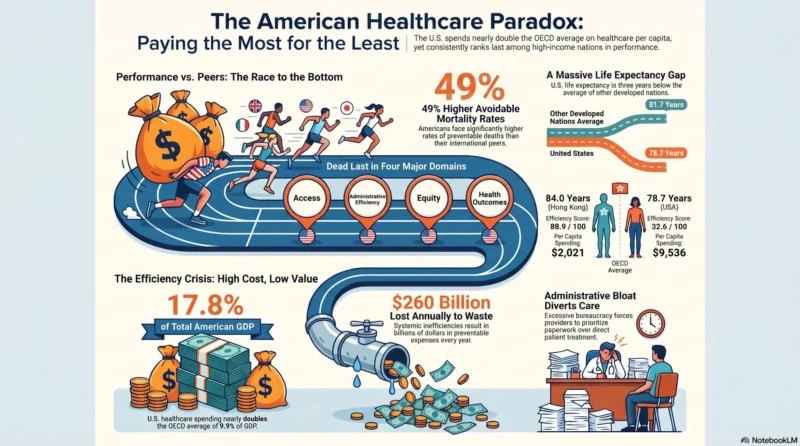
“America spends more on healthcare than any nation on Earth, yet we rank dead last among most developed countries. This is not an exaggeration — it’s the finding of the Commonwealth Fund’s 2024 Mirror, Mirror report, which compared the U.S. to nine other high-income countries across five performance domains. We came in last place in four of them: access to care, administrative efficiency, equity, and health outcomes.
Some numbers worth considering:
- The U.S. spends 17.8% of GDP on healthcare — nearly double the OECD average of 9.9%
- Average life expectancy here trails the OECD average by 3 years
- Avoidable mortality runs 49% higher than our international peers
- We waste an estimated $260 billion a year in preventable costs
- Hong Kong spends a quarter of what we do per capita — and its citizens live longer
I see the human cost of this every day in my own practice. Patients ration medication because a co-pay competes with rent. Diagnoses are caught late because a visit was postponed one too many times. None of that is a failure of American medicine — our physicians, our science, our technology are the best in the world. It’s a failure of design: a system built to generate revenue first and protect health second. Consolidation, Site of care Fee difference in payments and 340B programs are some of them
This is the first post in a series I’m calling “Failing Grades, Ailing Health: How Can We Fix U.S. Healthcare?” Over the coming weeks, I’ll dig into what the data actually shows, where the money goes, and – most importantly – what other countries are doing differently that we can learn from.
The evidence is clear that this isn’t a call for incremental tweaks. It’s a call for structural change.
I’d genuinely like to hear from you: where do you think the American healthcare system is failing patients the most?”
Other articles about health outcomes on Oncodaily.