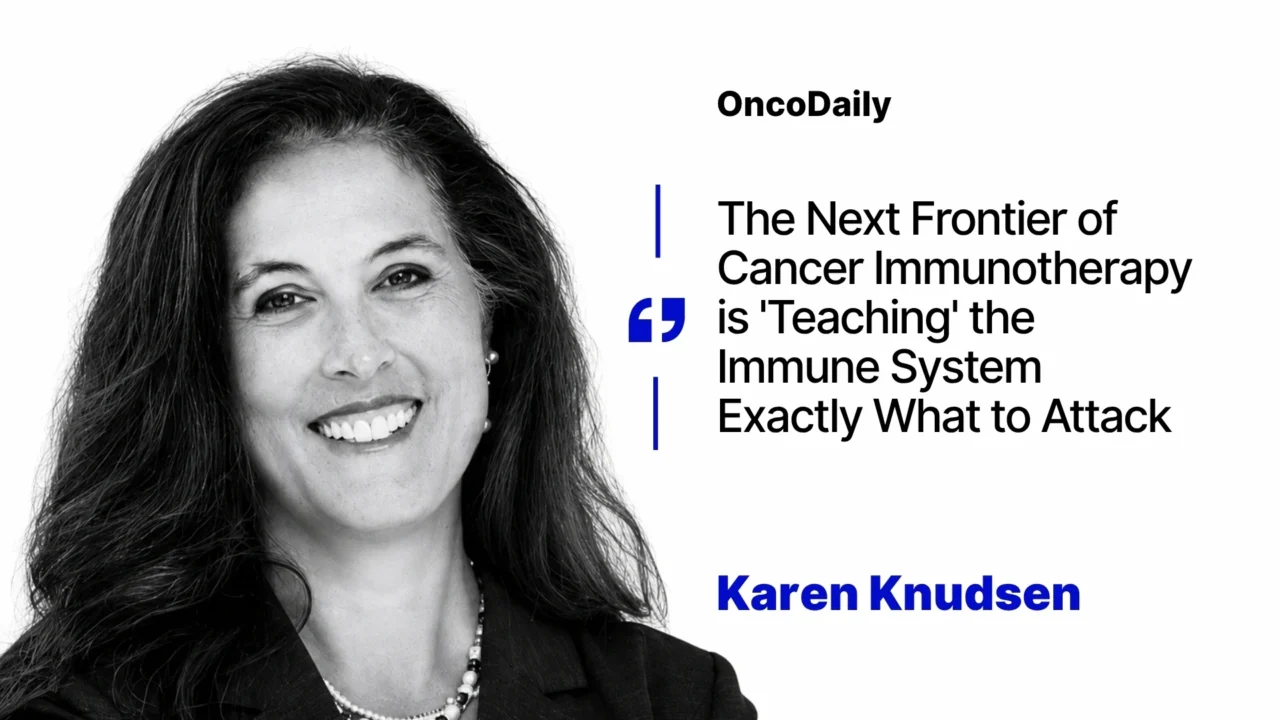
Karen Knudsen, CEO of the Parker Institute for Cancer Immunotherapy, commented on Moderna’s personalized cancer vaccine
The INTerpath-001 study addresses an area of significant clinical need. Patients with high-risk melanoma remain at significant risk that microscopic disease persists after surgical intervention, leading to recurrence. In this cancer type, recurrences most often occur within the first few years and are more often metastatic than localized.
The goal of the study is relatively unique: to intervene when no visible disease is present and prevent recurrence. By identifying mutations unique to each patient’s tumor and using mRNA technology to create a bespoke, personalized therapy, this approach is designed to train the immune system to recognize each individual cancer and enhance the effect of checkpoint immunotherapy.
To my knowledge, this is among the first evidence from a phase 3 trial that an individualized neoantigen therapy improved both recurrence-free and distant metastasis-free survival versus standard immunotherapy alone. The study provides important clinical validation for combining tumor-specific immune priming with checkpoint blockade therapy.
This is representative of the next frontier of cancer immunotherapy: not simply activating the immune system, but ‘teaching’ it what to attack.
Questions still remain, including the absolute benefit and overall survival data.
Longer follow-up will be important to determine whether enhanced tumor-specific immunity translates into durable prevention of recurrence and metastatic disease. If these results hold on longer-term evaluation, the study could have significant ramifications for the use of neoantigen-driven, mRNA-based therapies to prevent recurrence in other cancer types.
You can also read: