






Joshua Omale, Research and Programs Associate at Slum and Rural Health Initiative Network, shared on LinkedIn:
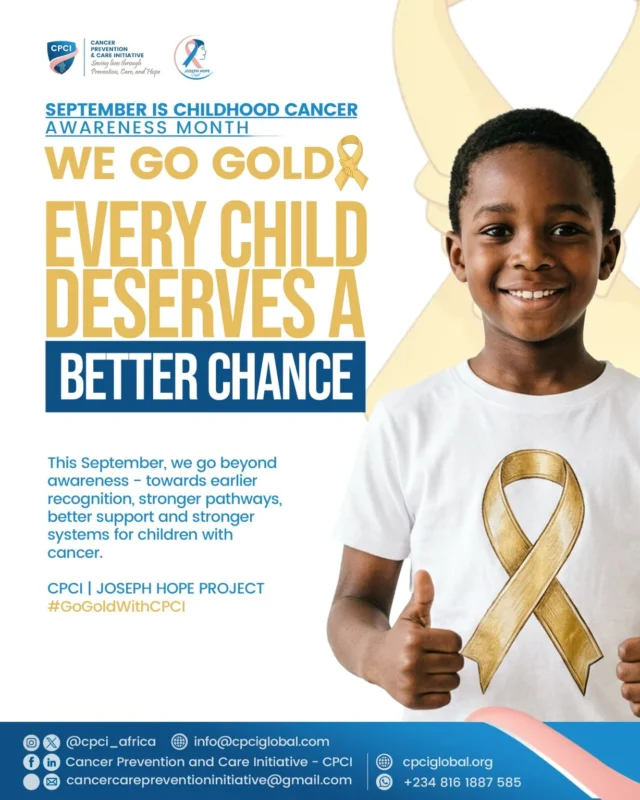
“September turns gold again.
And with it will come the ribbons, awareness campaigns, advocacy walks, survivor stories and conversations about childhood cancer. All of these matter.
But increasingly, I find myself thinking about what must happen after awareness has done its job.
Because a family can recognize that childhood cancer exists and still live hours from appropriate diagnostic care.
A health worker can suspect cancer and still have no functional referral pathway.
A child can receive the correct diagnosis and still encounter interrupted treatment, unavailable medicines or financial barriers.
And a country can run excellent awareness campaigns while still lacking the data required to understand how many children develop cancer, reach care, complete treatment or survive.
Perhaps that is where the conversation must now go further.
Awareness should not be the destination. It should create demand for systems capable of responding to what awareness reveals. That distinction matters enormously in Africa.
The survival gap in childhood cancer is not simply a gap in knowledge. It reflects differences in timely diagnosis, access to treatment, continuity of care, medicines, data and the strength of the systems surrounding a child.
This is precisely why the World Health Organization’s Global Initiative for Childhood Cancer’s goal of achieving at least 60% survival globally by 2030 is fundamentally a systems question, not an awareness target alone.
So this September, I am thinking beyond how brightly we can turn our timelines gold.
I am thinking about whether the child whose symptoms are recognized can reach the right care.
- Whether diagnosis leads reliably to treatment.
- Whether treatment is something families can complete.
- Whether survival includes the childhood that continues after cancer.
- Whether the lessons from every child become knowledge strong enough to improve the system for the next.
Maybe that is what Gold September should increasingly represent:
not less awareness, but awareness that has learned to ask for more.
Recognition that leads to diagnosis.
Diagnosis that leads to care.
Care that children can complete.
Survival that becomes an expectation rather than an accident of geography.
For me, that is where the gold ribbon becomes more than a symbol. It becomes a question of what we are prepared to build around every child it represents.
Welcome to Childhood Cancer Awareness Month.”
Joshua Omale was recognized among OncoDaily’s Top 100 Xfluencers in Pediatric Hematology/Oncology: Key Opinion Leaders to follow on X (Twitter) in 2024, highlighting his contributions to the field of oncology.
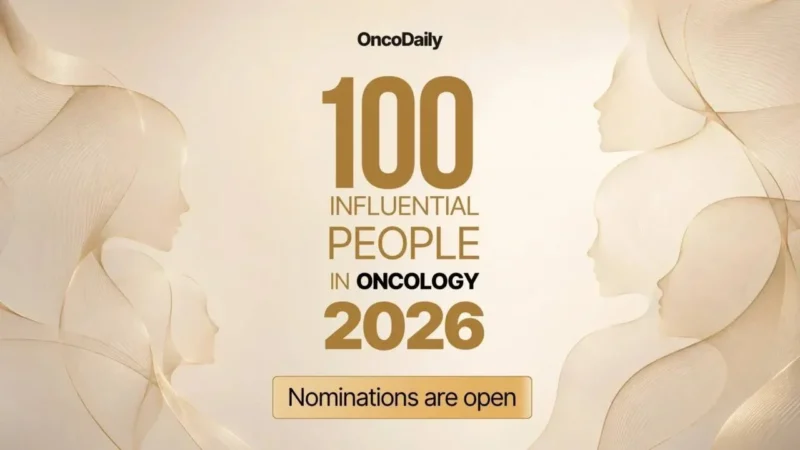
Nominations for 100 Influential People in Oncology 2026 are now open, recognizing leaders, researchers, clinicians, innovators, advocates, and other individuals making a meaningful impact on oncology and cancer care.
Don’t miss the opportunity to nominate yourself, a colleague, or someone whose contributions deserve to be recognized.
Submit your nomination by September 15: 100 Influential People in Oncology 2026 – Nominations are Open!
Other articles featuring Joshua Omale on OncoDaily.