





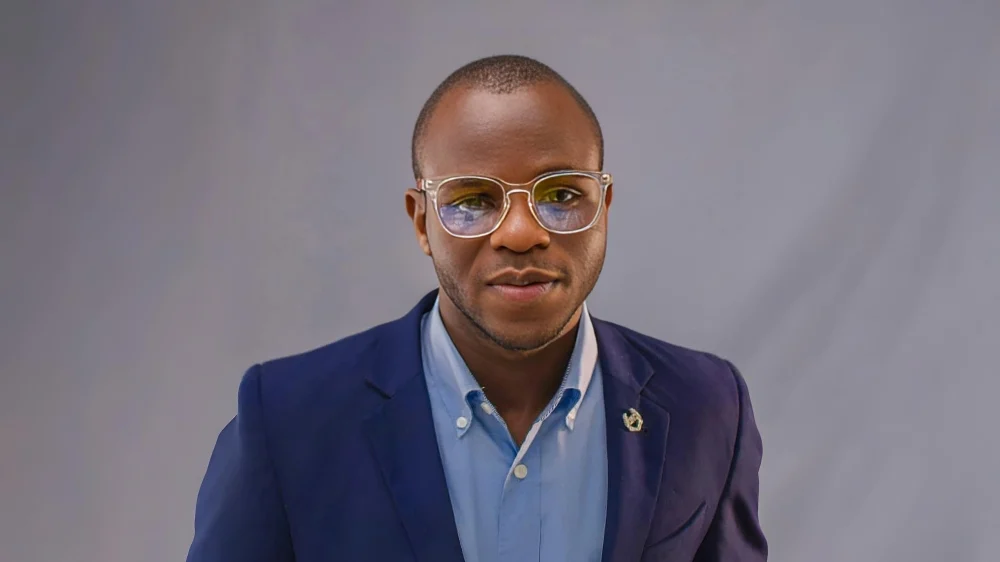
Joshua Omale, Research and Programs Associate at Slum and Rural Health Initiative Network, shared on LinkedIn:
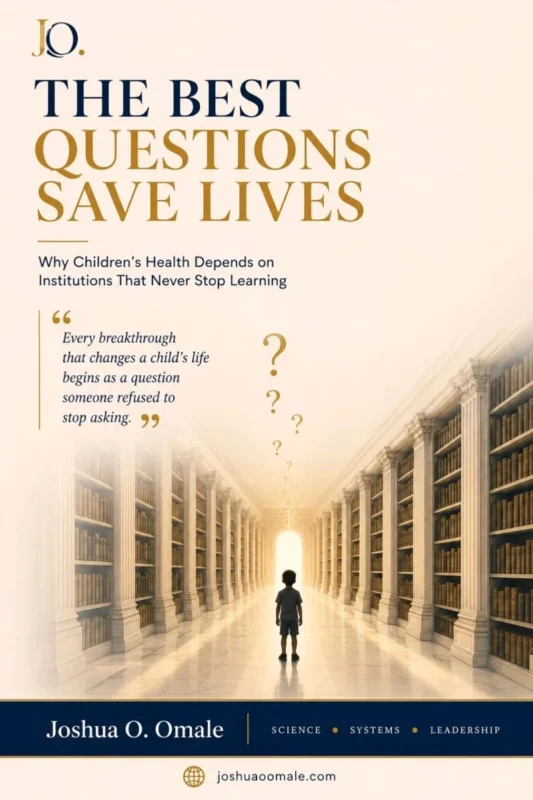
“Chapter 17
The best questions saves lives before the best answers do
Why Children’s Health depends on Institutions that never stop Learning One of the greatest misconceptions about scientific progress is that it begins with answers.
It does not. It begins with better questions.
- Long before a child survived leukemia, someone asked why it remained fatal.
- Long before vaccines transformed childhood, someone questioned whether devastating diseases could be prevented rather than simply treated.
- Long before genomic medicine entered paediatric care, someone refused to accept that biology had revealed all its secrets.
Every breakthrough that has changed the lives of children was once nothing more than a question that refused to disappear.
That is why the future of children’s health will never be determined only by the knowledge we possess. It will be determined by the questions we continue to ask.
This has profound implications for Africa.
Too often, conversations about strengthening health systems begin with infrastructure, financing, workforce or technology. These are essential.
But beneath all of them lies something even more fundamental: the intellectual culture of our institutions.
Great institutions do not become great because they know everything. They become great because they never behave as though they do.
They cultivate an environment where uncertainty is investigated rather than ignored.
- Where evidence is allowed to challenge tradition.
- Where difficult questions are welcomed instead of postponed.
- Where every child teaches the institution something new.
For Africa, this may be one of the most important institutional cultures we can build.
Our greatest contribution to children’s health will not come from reproducing questions already answered elsewhere.
It will come from asking questions that emerge from African realities.
- Questions about delayed diagnosis.
- Questions about environmental exposures.
- Questions about childhood cancers that remain poorly understood.
- Questions about health systems designed for communities rather than hospitals alone.
- Questions that only our experiences, our populations and our children can teach the world to ask.
Children benefit because institutions have the courage to follow dissatisfaction wherever the evidence leads.
Perhaps this is why the future belongs not to the institutions that claim certainty… but to those disciplined enough to keep learning.
The future of children’s health will be written by institutions that never stop asking.Building at the intersection of science, systems and leadership for the future of children’s health in Africa.”
Other articles featuring leukemia on OncoDaily.