





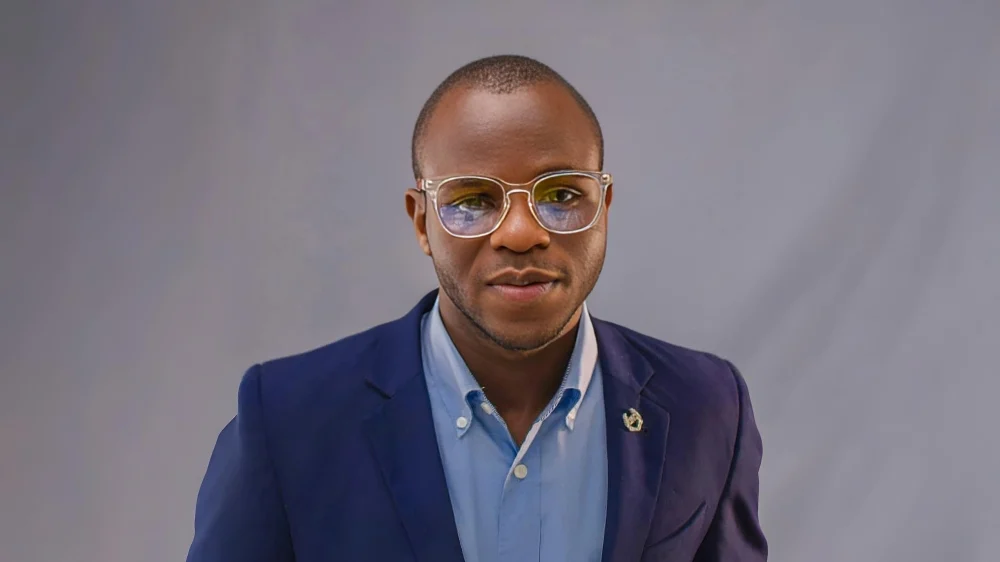
Joshua Omale, Pediatric Oncology Advocate, Innovation Council Member at Coalition Against Childhood Cancer (CAC2), shared a post on LinkedIn:
“CHAPTER 4
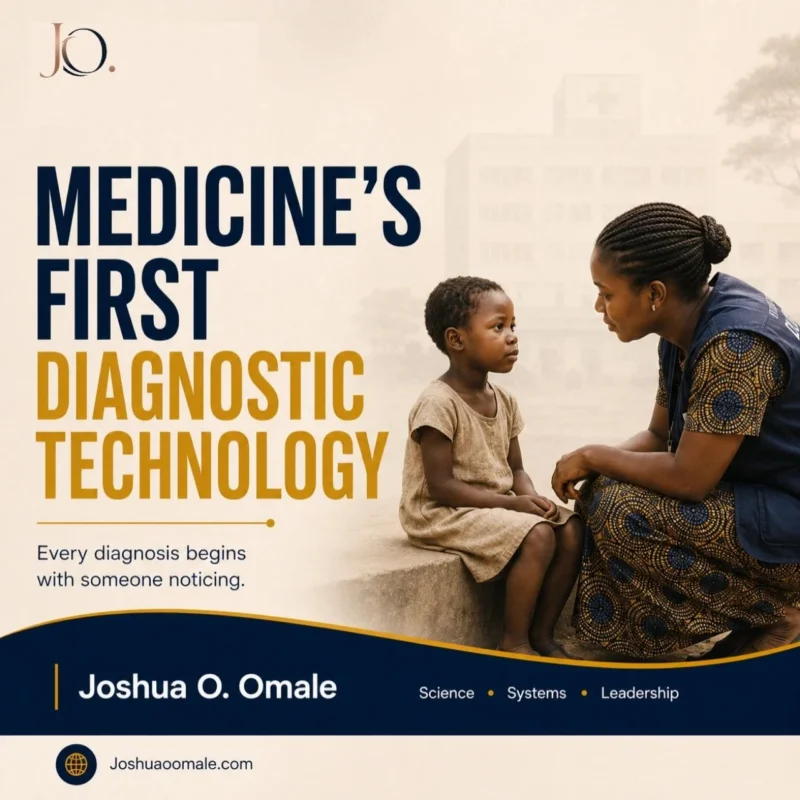
Medicine’s first Diagnostic Technology : Why every diagnosis begins long before a Hospital
We often associate diagnosis with technology.
- A microscope.
- A CT scanner.
- A pathology laboratory.
- Genomic sequencing.
- Flow cytometry.
- Artificial intelligence.
These innovations have transformed modern medicine and continue to redefine what is scientifically possible.
Yet long before any laboratory confirms a diagnosis, something else happens.
Someone notices.
A mother senses that her child’s behaviour has changed. A father realizes the swelling has not disappeared. A teacher observes that a once energetic pupil is becoming unusually withdrawn. A community health worker recognizes that repeated fever is no longer behaving like malaria.
These moments rarely appear in medical textbooks.
Yet they represent the first step in almost every diagnostic journey.
Perhaps the oldest diagnostic technology in medicine is not a machine.
It is recognition.
Every diagnosis begins as a human observation before it becomes a medical confirmation. The challenge is that biology does not wait while recognition is delayed. Cells continue to divide. Tumours continue to grow. Inflammation continues to spread.
Disease progresses according to biological time, not according to when health systems eventually respond. This is why strengthening children’s health cannot begin only inside hospitals.
It must also begin in homes. In classrooms. In communities. In primary healthcare.
Not because these places replace modern diagnostics. But because they determine when modern diagnostics become possible.
We often ask how Africa can improve early diagnosis. Perhaps we should begin with a different question. How do we build societies that recognize disease earlier?
Because recognition is not merely awareness.
- It is a public health capability.
- It is teachable.
- It is measurable.
- It is scalable.
And when connected to responsive health systems, it becomes one of the most powerful forms of diagnostic technology we possess.
Perhaps the future of children’s health will depend not only on inventing better diagnostic tools.
But on ensuring that more people know when those tools are needed. Because every laboratory diagnosis begins with a human observation. And every missed observation is time that biology never gives back.
Joshua Omale
Building at the intersection of science, systems, and leadership for the future of children’s health in Africa.”
Other articles featuring Joshua Omale on OncoDaily.