Jan Geissler, Founder and CEO of Patvocates, shared a post on LinkedIn:
“Spending my week at EHA2026 in Stockholm: again a thrilling congress with cutting-edge science and amazing people. Yet patient advocates were once again excluded from the exhibition hall.
It happened last year in Milan. It is happening this year in Stockholm. It may happen again next year in Barcelona.
The official explanation is pharmaceutical advertising law. But after 16 years of looking at this issue, I think the real story is more complicated.
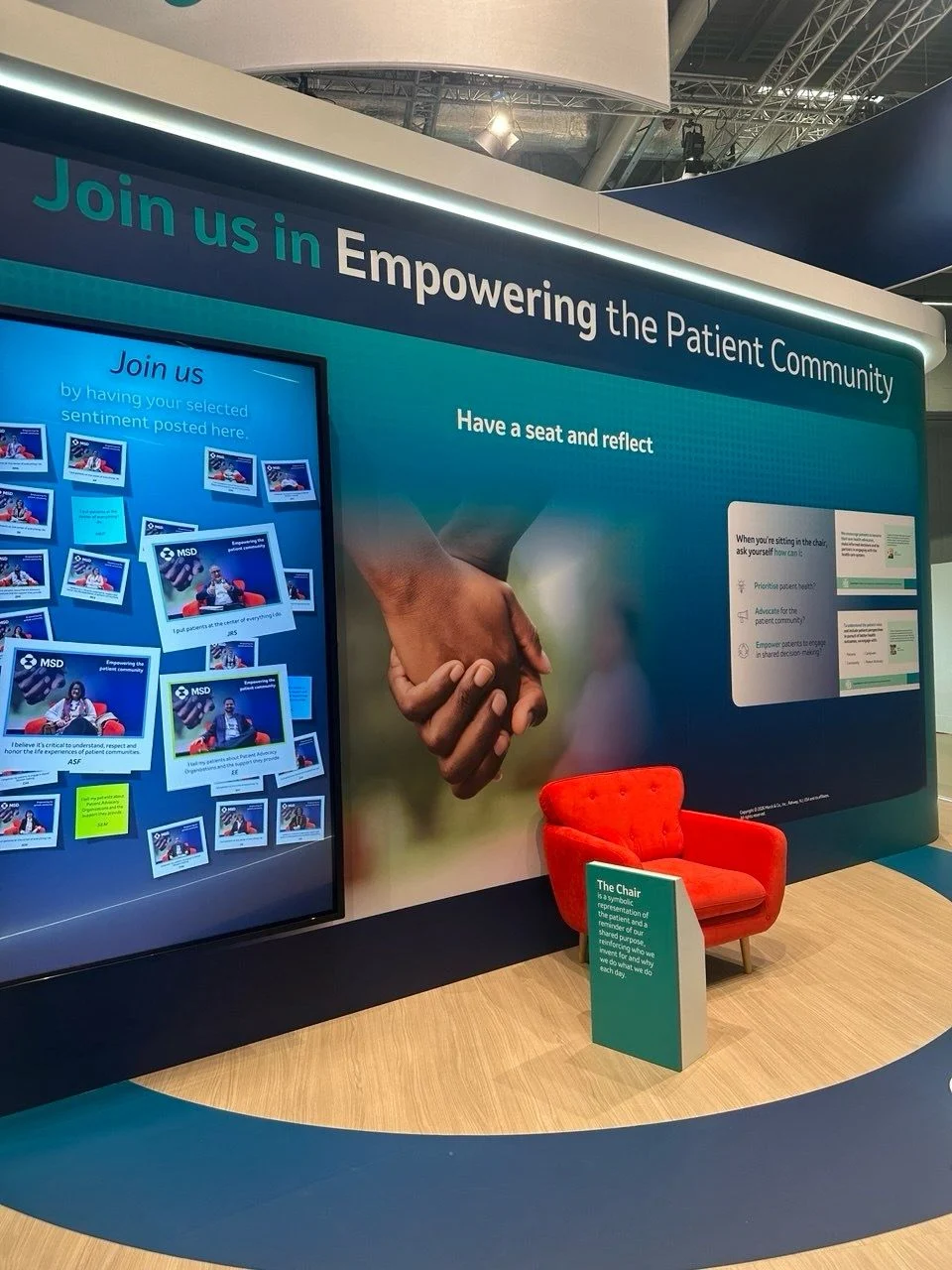
One moment captured it perfectly. In the exhibition, a pharma company invited visitors to “Empower the Patient Community”. At the centre of the stand was an empty red chair, described as a symbolic representation of the patient and a reminder of shared purpose.
I genuinely liked the idea. But the irony was hard to ignore.
The patient had a seat. The patient advocate did not. And despite two decades of demanding a seat at the table, this chair was red, comfortable and empty.
To be clear, this is not a criticism of EHA. I know no medical society more committed to patient involvement. For years, EHA has involved us across committees, taskforces, congress sessions and governance. EHA’s leadership and staff have tried hard on this access issue.
The problem is bigger than this congress. Everyone is caught in a regulatory and compliance framework that leaves little room for manoeuvre.
What we see is a chain of caution: EU law creates uncertainty, national laws transpose it, industry codes seek compliance, compliance officers interpret risk, congress organisers follow compliance advice, and nobody wants to be the first to take responsibility for a more permissive interpretation.
So the most restrictive interpretation wins.
Patient advocates have become collateral damage of rules designed to prevent direct-to-consumer advertising of medicines.
Unfortunately, we largely missed the opportunity to fix this in the revision of EU Pharmaceutical Legislation. It expands access beyond prescribers to clinical staff involved in administering medicines. But the law still recognises only two groups: HCPs and the general public.
The missing category barely existed in 2001: trained patient representatives contributing to research, regulation, HTA, ethics, guidelines and health policy.
The modern clinical team has been recognised. The modern patient advocate has not.
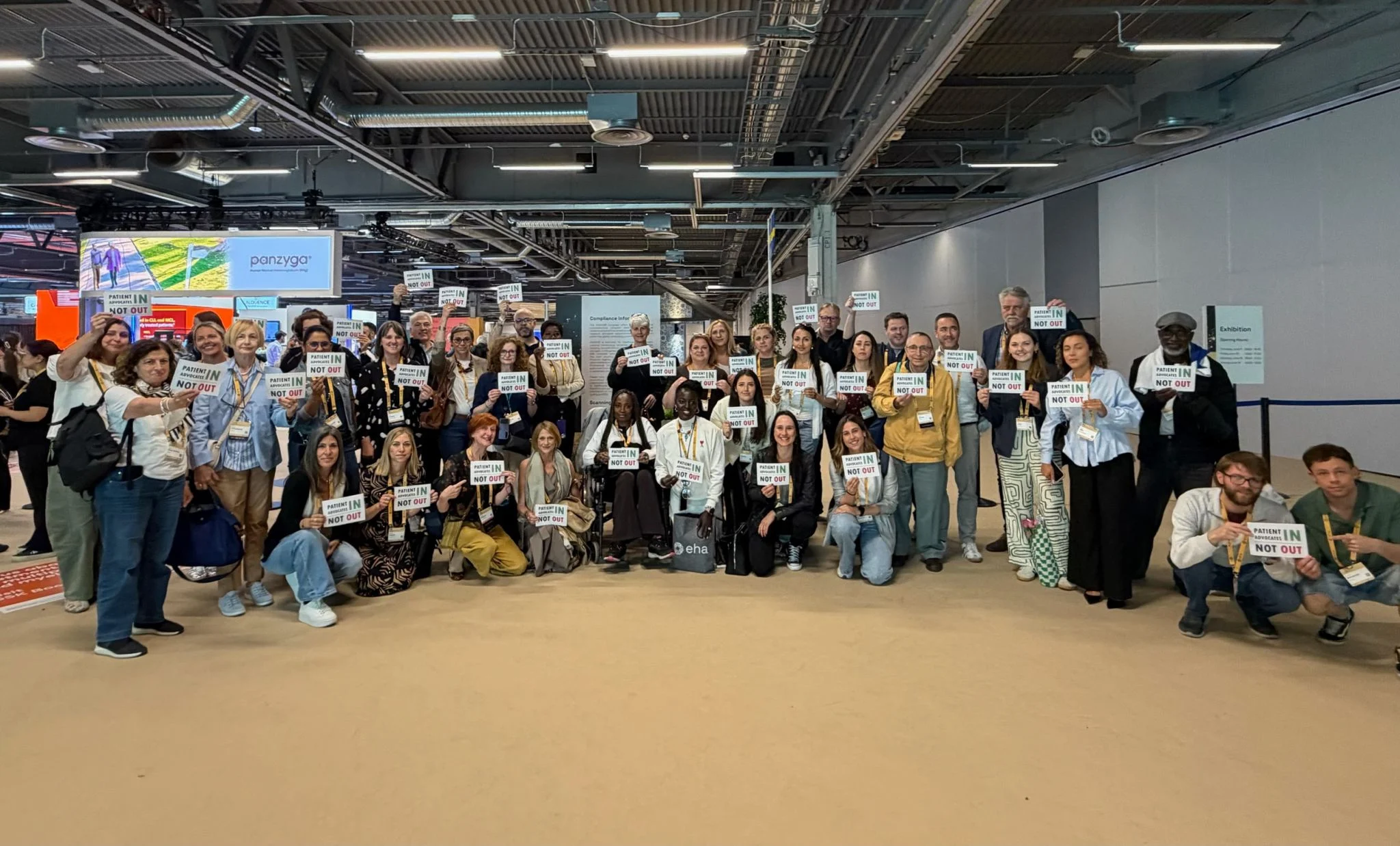
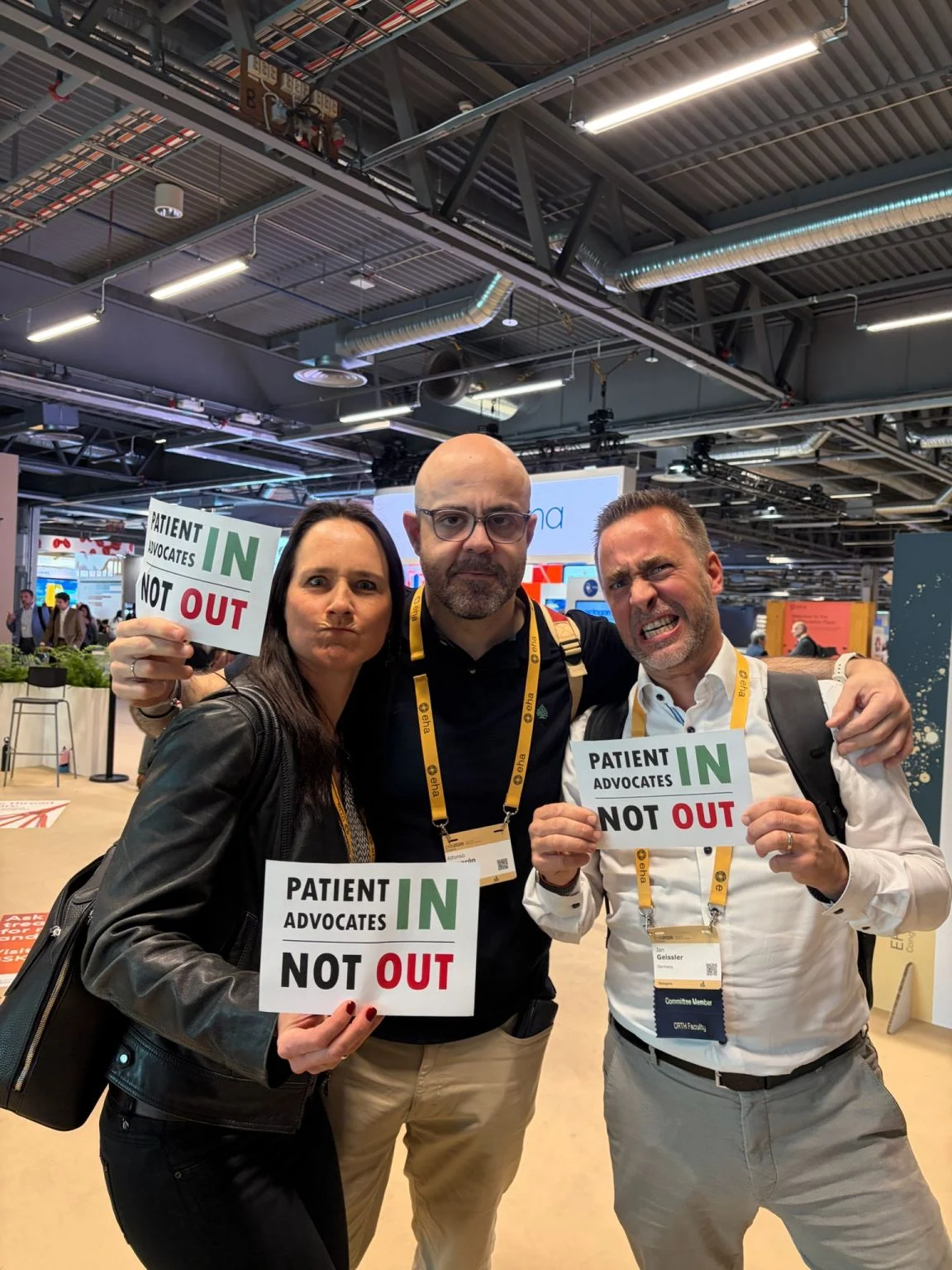
Yesterday, patient advocates gathered in front of the EHA exhibition with one message: “Patient Advocates IN, Not OUT.” We already did this at ESMO in 2015.
This was not directed against EHA, regulators, industry or compliance professionals. It was a reminder that healthcare has changed. Patients are partners in research, regulation, policy and care. Our legal and compliance frameworks need to catch up.
Otherwise, the empty chair may become more than a symbol: a voice everyone claims to value, but too often is still not allowed into the room.”