






Jame Abraham, Enterprise Chairman and Professor at the Department of Hematology and Medical Oncology at Cleveland Clinic, shared a post on LinkedIn:
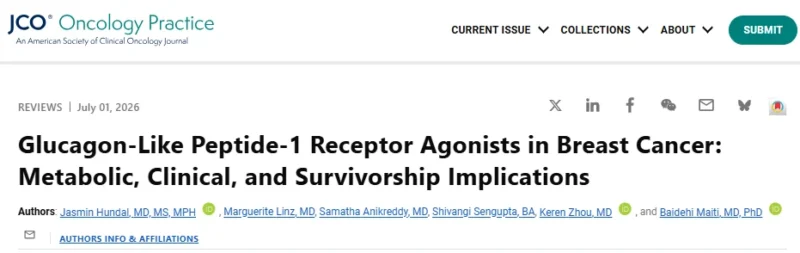
“Glucagon-Like Peptide-1 Receptor Agonists in Breast Cancer: Metabolic, Clinical, and Survivorship Implications – timely article by Jasmin Hunda!
Obesity is increasingly recognized as a key driver of breast cancer risk and outcomes, particularly in postmenopausal estrogen receptor–positive disease. This timely review explores the growing role of GLP-1 receptor agonists (such as semaglutide and tirzepatide) in breast cancer care and survivorship.
Key takeaways:
- GLP-1 therapies can promote meaningful weight loss, improve glycemic control, and reduce cardiovascular risk.
- Current breast cancer–specific data suggest no unique safety concerns, although careful monitoring of nutrition, hydration, and lean muscle mass is important.
- Potential benefits may extend beyond weight management, including survivorship and cardio-oncology outcomes.
- Important questions remain regarding optimal timing, patient selection, interaction with endocrine therapy, and long-term oncologic outcomes.
As obesity continues to influence breast cancer incidence, treatment tolerance, and survivorship, integrating evidence-based metabolic health strategies into oncology practice will become increasingly important.”
Title: Glucagon-Like Peptide-1 Receptor Agonists in Breast Cancer: Metabolic, Clinical, and Survivorship Implications
Authors: Jasmin Hundal, Marguerite Linz, Samatha Anikreddy, Shivangi Sengupta, Keren Zhou, Baidehi Maiti
Read the Full Article.
Other articles about breast cancer on OncoDaily.