Jack Shuang Hou, Former Scientific Director at Jtests, shared on LinkedIn:
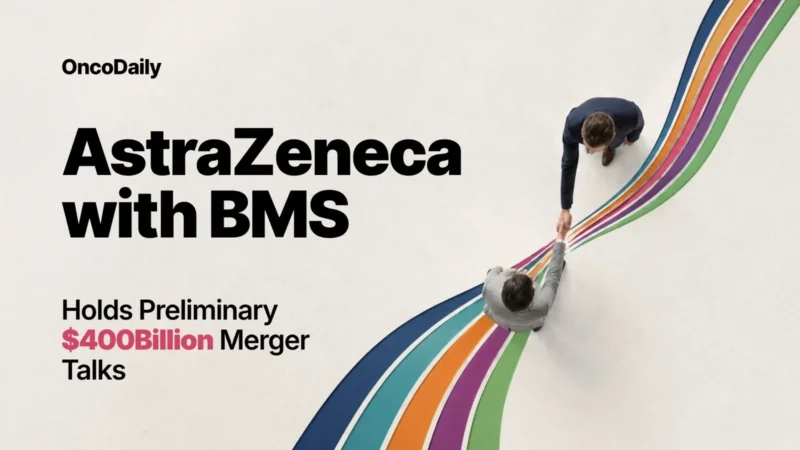
“Breaking News: AstraZeneca Explores Potential $400 Billion Merger with Bristol Myers Squibb, Reshaping Global Pharma Landscape
AstraZeneca has reportedly held preliminary discussions with Bristol Myers Squibb regarding a potential merger that would create one of the world’s largest pharmaceutical companies, with a combined valuation approaching $400 billion. While no agreement has been reached and negotiations could still collapse, the proposed transaction would become one of the largest pharmaceutical mergers in history and the first mega-biopharma combination since 2020.
1. A Potential Pharma Giant with Complementary Global Strengths
The combination would unite AstraZeneca’s rapidly expanding oncology, rare disease, cardiovascular, and metabolic franchises with Bristol Myers Squibb’s leadership in immuno-oncology, hematology, and cardiovascular medicine. The merged company would become the world’s fourth-largest pharmaceutical company by market capitalization and significantly strengthen AstraZeneca’s U.S. commercial footprint.
2. Strategic Timing Reflects Diverging Growth Trajectories
AstraZeneca has more than quadrupled in value under CEO Sir Pascal Soriot, targeting $80 billion in annual revenue by 2030. Meanwhile, Bristol Myers Squibb continues managing upcoming patent expirations for blockbuster products including Opdivo and Eliquis while seeking new growth drivers following its acquisition of Celgene. A merger could provide substantial pipeline diversification and commercial scale across multiple therapeutic areas.
3. Regulatory and Political Challenges Could Be Significant
Despite potential strategic synergies, the transaction would likely receive intense scrutiny from both the FDA and U.S. antitrust regulators because both companies possess major oncology portfolios with overlapping immuno-oncology assets.
Leadership Perspective
Sir Pascal Soriot has previously stated that AstraZeneca does not require major acquisitions to achieve its 2030 growth ambitions, emphasizing confidence in the company’s internal pipeline. Neither AstraZeneca nor Bristol Myers Squibb has commented on the reported discussions, while Reuters noted it remains unclear whether negotiations are still ongoing.
My takeaway
If completed, this would represent the most significant pharmaceutical consolidation in years and fundamentally reshape global oncology competition. Beyond financial scale, the real value would lie in combining two of the industry’s strongest innovation engines across oncology, immunology, cardiovascular disease, and rare diseases.”
You can also explore:
AstraZeneca Holds Preliminary Talks with Bristol Myers Squibb on Potential $400 Billion Merger