





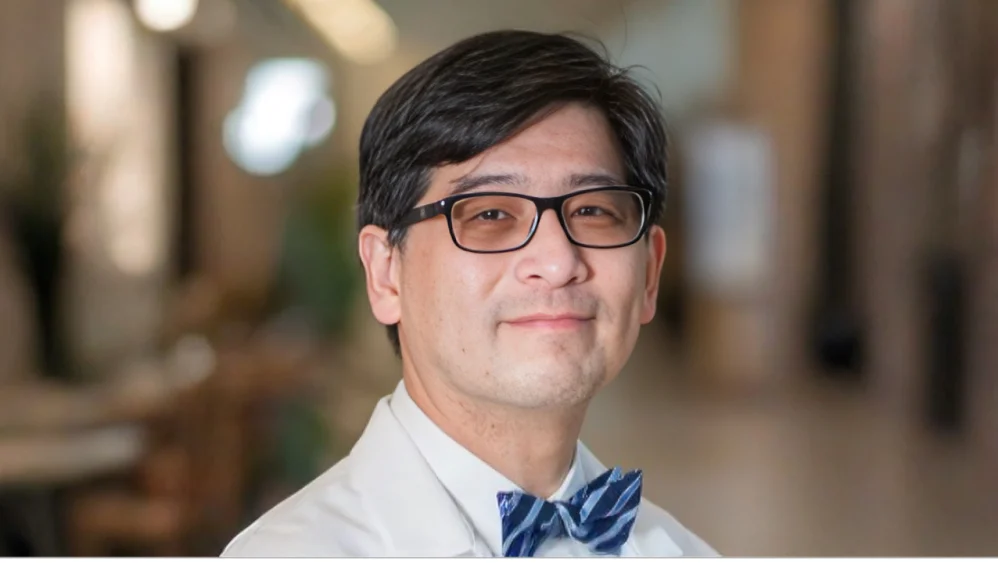
Henry C Fung, Chair and Professor, Department of Bone Marrow Transplant and Cellular Therapy at Fox Chase Cancer Center, shared a post on X:
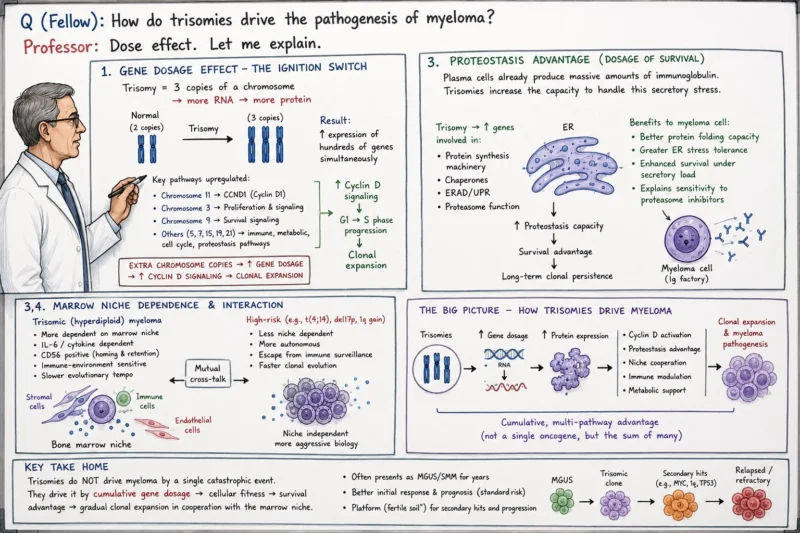
“We had talked about t(11;14), t(4;14), t(14;16) and even myc.
Today, it is time for the quiet architect of myeloma biology: TRISOMIES.
Not one dominant oncogene. Not genomic explosion. Just extra chromosomes – slowly turning up the volume of hundreds of survival genes at once.
Gene dosage. Cyclin D signaling. Proteostasis advantage. Marrow niche cooperation.
A biologic orchestra rather than a single guitar solo.
This may explain why many hyperdiploid myeloma patients can remain MGUS/SMM for years before evolutionary escape occurs. In biology we trust.”
While quoting one of the previous posts:
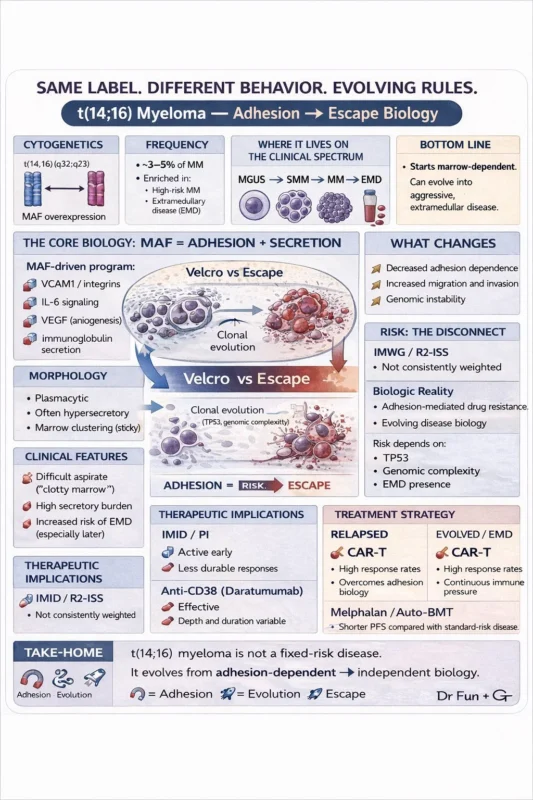
“We’ve talked about t(11;14). We’ve covered t(4;14). Today: t(14;16) myeloma.
Same disease label – Very different behavior.
Early phase (MAF-driven):
- Strong adhesion to bone marrow (VCAM1/integrins)
- ‘Stick’ -> difficult aspirate, clotty marrow
- Patchy involvement -> MRD can mislead
Niche-dependent biology.
-> IMiD / PI / Dara work well. But the story doesn’t end there.
With evolution:
- Loss of adhesion dependence
- Genomic complexity (TP53, etc.)
- Extramedullary disease (EMD)
Niche-independent biology:
-> IMiD / PI less effective
-> CAR-T & bispecifics make more sense
This is the paradox – ‘Sticky’ early… but prone to escape later.
t(14;16) isn’t just high-risk – it’s an evolving disease.
Adhesion – Evolution – Escape.
Dr. Fun + G”
Other articles featuring Henry C Fung on OncoDaily.