





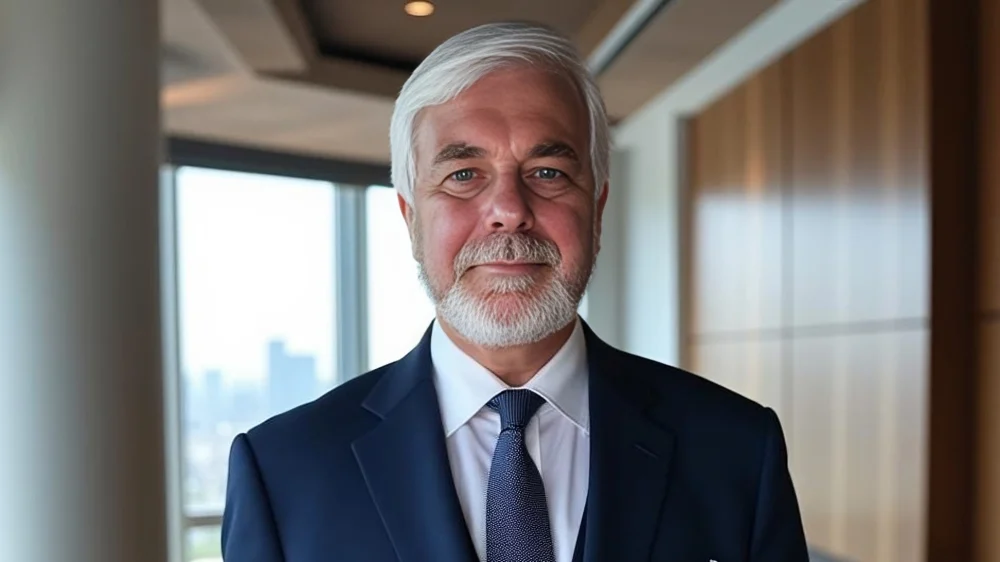
Hans Casteels, Cancer Survivor, shared a post on Substack:
“The Top Ten Things Cancer Patients Actually Struggle With
People often ask me what the hardest part of having cancer has been. It is a perfectly reasonable question, usually asked by perfectly decent people who secretly hope the answer will be something straightforward, like chemotherapy or surgery or needles. Those are comforting answers because they are visible. They fit neatly into the medical model. You can point to a tumour on a scan. You can point to an IV pole. You cannot point to uncertainty, loneliness, or the peculiar sensation that your entire identity has been quietly replaced by a hospital identification number.
The remarkable thing about cancer is that the tumour itself often becomes only a supporting actor in a much larger production. It turns out that the disease employs an astonishing number of assistants whose sole purpose appears to be making your life progressively more complicated. There is a Department of Waiting, a Bureau of Fatigue, an Office of Existential Questions, and, naturally, a Committee for People Who Feel Obliged to Tell You Everything Happens for a Reason. If there is an organizational chart, I suspect the Committee reports directly to Human Resources. I have come to the conclusion that cancer patients tend to struggle with the same handful of things over and over again. Curiously, the tumour itself rarely tops the list.
The greatest loss is control. Before cancer, you decide where to go next week, what to eat for dinner, and whether Tuesday belongs to you or to the lawn mower. After cancer, your calendar begins filling itself without your consent. Blood work appears on Monday, imaging on Wednesday, consultations on Friday, and somewhere in the middle you are expected to continue pretending you have a normal life. Your body suddenly belongs to radiologists, laboratory technicians, pharmacists, surgeons, radiation oncologists, medical oncologists, and a receptionist who somehow knows more about your whereabouts than your spouse. You eventually realize that your greatest ambition has become reclaiming ownership of a random Thursday afternoon.
Closely following control comes uncertainty, which may well be medicine’s least appreciated side effect. Human beings are surprisingly resilient when they know what is happening. What drives us quietly insane is not knowing. We wait for pathology reports, PSA results, MRI scans, CT scans, PET scans, and phone calls from physicians who inevitably begin every conversation with, ‘Do you have a minute?’ Of course we have a minute. We have had nothing but minutes for the past three weeks, each one occupied by imagining increasingly creative ways in which a scan report could ruin our afternoon.
Fatigue deserves special recognition because healthy people consistently underestimate it. They hear the word and imagine feeling sleepy after a busy day at work. Cancer fatigue is something altogether different. It feels as though someone entered your house overnight, removed half the electrical wiring, and departed without leaving a forwarding address. You wake up exhausted, showering requires strategic planning, and an afternoon nap becomes less a luxury than an essential life support system. Friends kindly suggest more exercise, which is roughly equivalent to advising someone whose boat has sunk to try rowing harder.
Then there is fear, which never quite leaves the room. It changes shape from week to week, but it remains an unwelcome companion nonetheless. Sometimes it is fear of progression. Sometimes it is fear of recurrence. Sometimes it is simply the conviction that every unfamiliar ache has arrived carrying terrible news. Eventually you become so accustomed to its presence that you stop noticing it until scan day arrives, at which point it suddenly remembers your address.
Cancer also performs a curious act of identity theft. You begin life as an accountant, teacher, carpenter, nurse, chef, engineer, parent, grandparent, or retired management consultant. Before long, however, introductions revolve around the disease rather than the person. Medical conversations become astonishingly interested in your bowel habits, your urinary function, your PSA, your blood counts, and your response to treatment, while the interesting parts of your personality quietly wait in the corner for somebody to ask about them. There are family reunions during which fewer people inquire about your digestive system than they do in an average oncology clinic.
Perhaps the saddest surprise is the isolation. Friends often disappear, not because they are uncaring, but because they are terrified of saying the wrong thing. Others overcompensate by becoming motivational speakers who assure you that positive thinking is half the battle, apparently believing cancer cells monitor your emotional outlook before deciding whether to divide. The consequence is that many cancer patients spend an extraordinary amount of time reassuring healthy people that everything is fine, even when it plainly is not.
Treatment itself naturally earns a place on the list because modern medicine has become extraordinarily successful at keeping people alive while simultaneously introducing them to side effects they never imagined possible. Surgery hurts, radiation irritates tissues that had been perfectly content until someone aimed a linear accelerator at them, hormone therapy has an unfortunate tendency to transform otherwise rational adults into overheated philosophers with unexpected breast tenderness, and chemotherapy occasionally convinces you that the sofa has become your most meaningful long term relationship. Medical science continues making astonishing progress. Tuesdays remain a work in progress.
Money enters the conversation with far less drama but no less importance. Parking, gasoline, hotels, medications, meals, insurance forms, lost income, and endless incidental expenses gradually accumulate until the accountants invent a wonderfully respectable phrase like ‘financial toxicity.’ Patients tend to use a rather shorter description. They call it expensive.
The disease also refuses to confine itself to the patient. Spouses develop scan anxiety almost as reliably as the person undergoing treatment. Children become amateur actors, insisting everything is perfectly normal while quietly worrying about the future. Friends rehearse cheerful voices before picking up the telephone. Cancer may originate in one body, but it spreads emotionally through an entire family.
Finally, there are the questions that no physician, no matter how brilliant, can answer.
- How much treatment is enough?
- How much quality of life should be exchanged for the possibility of living longer?
- What actually matters now?
- These are not medical questions at all.
They are philosophical questions disguised as clinic appointments, and every patient eventually discovers they must answer them personally.
The part that fascinates me most is that, years later, patients rarely remember the precise dosage of chemotherapy or the exact wording of a pathology report. They remember the oncologist who pulled up a chair instead of standing in the doorway. They remember the nurse who quietly held a hand without trying to fill the silence. They remember the physician who treated them like a person rather than an interesting collection of laboratory values. Unfortunately, they also remember the dismissive comment, the hurried consultation, the condescending explanation, and the day someone made them feel like an inconvenience rather than a human being.
Medicine understandably measures success in survival curves, laboratory values, and imaging reports because those are the things that fit into spreadsheets. Patients measure success rather differently. They remember kindness, respect, honesty, and whether the people entrusted with their care made them feel seen. The tumour may occupy only a few cubic centimetres, but the experience of cancer expands to fill an entire life. That, more than anything, explains why patients often remember how they were treated long after they have forgotten the treatment itself.
The essays will remain free. The bassinets, unfortunately, are not.”
Other articles featuring Hans Casteels on OncoDaily.