





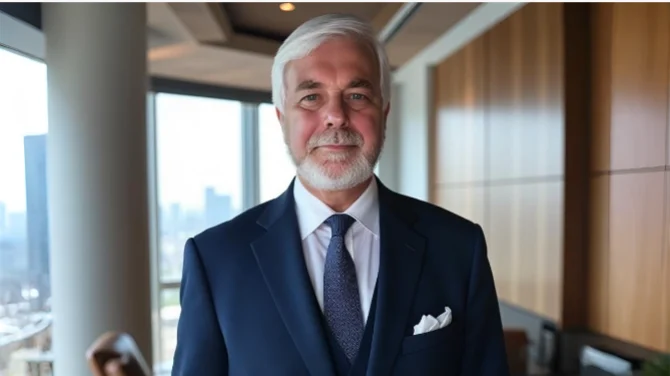
Hans Casteels, Principial at Kearney, Cancer survivor, shared a post on Substack:
” Oncology Saved My Life and Then Misplaced the Owner’s Manual
Oncology is very good at declaring war. It has uniforms, maps, targets, scans, acronyms, infusion chairs, radiation machines, tumor boards, clinical pathways, guidelines, staging systems, survival curves, and enough abbreviations to make NATO look like a Scrabble accident. The enemy is identified, photographed, biopsied, graded, staged, irradiated, chemically insulted, hormonally starved, surgically removed, frozen, burned, sequenced, and occasionally discussed by twelve very serious people in a conference room who have all forgotten that the patient is not technically a tumor with legs.
This is not a criticism of oncologists, who are often doing heroic work inside a system designed by people who believe that ‘patient centered care’ means putting a slightly nicer chair in the waiting room. Their focus is the cancer. Fair enough. If your house is on fire, you do want someone focused on the flames. But it would also be useful if, afterward, someone noticed that you are standing in the driveway in your underwear, holding a melted toaster, being told by a cheerful pamphlet that smoke inhalation is ‘manageable.’
Pharmaceutical companies, meanwhile, have performed their own miracle, which is to create drugs that can extend life, shrink tumors, slow progression, and generate commercials in which elderly couples ride bicycles through tulip fields while a voice calmly mentions side effects that sound like the final chapter of the Old Testament. The couple is always smiling.
Nobody in these commercials is bent over at three in the morning, negotiating with their intestines like a hostage mediator. Nobody is staring at their chest wondering when exactly hormone therapy decided to turn them into a Renaissance cherub. Nobody is explaining to their spouse that intimacy has been replaced by a weekly calendar entry called ‘discuss symptoms without crying.’ No, they are biking. Through tulips. Possibly in Ottawa, where tulips are used to distract people from the fact that government buildings look as if they were designed by a committee of damp Presbyterians.
The language is always the same. Side effects are ‘manageable.’ This is one of those words that sounds reassuring until you realize it can mean anything from ‘take two Tylenol’ to ‘you will now need a spreadsheet, a therapist, a support group, a heating pad, three specialists, and the emotional resilience of a Belgian customs officer during a surprise cheese inspection.‘ Manageable by whom? Managed how? Managed with what money, what time, what spouse, what transportation, what brain, what energy, what patience, and what remaining will to continue participating in the great human pageant known as ‘please call back during office hours’? The brochures never say.
They simply declare the side effects manageable, as if fatigue, pain, hot flashes, cognitive fog, diarrhea, urinary problems, depression, anxiety, sexual dysfunction, and financial panic are small clerical issues that can be solved by putting them in a beige folder and handing them to a nurse named Karen.
This is where the whole enterprise becomes morally interesting, which is another way of saying mildly nauseating. The parts of cancer care that can be billed, patented, infused, scanned, injected, coded, reimbursed, licensed, and advertised receive enormous attention. The parts that cannot be easily monetized are treated like unfortunate weather. Tumor shrinking has a business model. Human unraveling does not. There is a drug for the cancer, a scan for the tumor, a billing code for the infusion, a reimbursement pathway for the treatment, and a glossy brochure for the investor presentation. But when the patient says, ‘I no longer recognize my body, my marriage is strained, my brain feels like wet cardboard, I am exhausted beyond language, and I am terrified that every ache is the herald angel of recurrence,’ the system often responds with the medical equivalent of a shrug wearing a lanyard.
And so the patient becomes the unpaid project manager of his own aftermath. You are expected to coordinate your fatigue, urination, bowels, marriage, finances, insomnia, scanxiety, diet, exercise, supplements, blood work, appointment portal, pharmacy renewals, emotional collapse, and occasional desire to scream into a decorative pillow. You are told to ‘stay active,’ which is excellent advice unless you have reached the stage where putting on socks feels like an Olympic event judged by Scandinavians. You are told to ‘eat well,’ which is also fine, provided someone defines ‘well’ before the internet tells you that cancer can be cured by turmeric, fasting, apricot pits, alkaline water, and the suspiciously expensive wisdom of a man on YouTube who appears to live in a van but has very strong opinions about mitochondria.
The practical fix is not mysterious, which makes its absence even more irritating. Every cancer patient should leave treatment not merely with follow up appointments and a vague instruction to ‘call if anything changes,’ but with an actual survivorship plan that deals with the predictable wreckage: fatigue, pain, urinary and bowel issues, sexual function, mental health, exercise, nutrition, medication side effects, financial strain, and caregiver burnout.
Not a decorative PDF. Not a link to a website last updated when BlackBerry was still a thing. An actual plan, reviewed with an actual human, with names, phone numbers, referrals, timelines, warning signs, and someone responsible for checking whether the patient is coping or merely performing wellness theatre for the benefit of people in clean shoes. The plan should include access to pelvic floor physiotherapy when needed, oncology rehab, counselling, sexual health clinics, dietitian support, medication review, social work, exercise programming, peer support, and caregiver resources. In other words, the obvious things, which medicine often treats as bold innovations because apparently civilization moves slowly when compassion is not billable.
It would also help if the patient were not required to become a project manager, systems analyst, emotional support mammal, and part time medical librarian while recovering from treatment. A cancer centre could assign a survivorship navigator, nurse, or trained coordinator whose job is to make sure the patient does not disappear between departments like a misplaced Belgian suitcase at Pearson. At three months, six months, and one year after treatment, patients should be asked directly about fatigue, mood, sleep, relationships, sexual function, bowel and bladder problems, fear of recurrence, money worries, and whether their spouse is silently holding the household together with duct tape and resentment. These questions should not depend on the patient being brave, articulate, or annoying enough to raise them. The system should ask first. Then it should respond with something more useful than ‘that can happen.’ Because yes, that can happen. So can plumbing failures, heart attacks, and raccoons moving into your attic, but we generally consider it progress when someone shows up with tools.
The cruelty is not usually personal. That may be the most maddening part. Most oncologists are not sitting in dark rooms stroking white cats and plotting to ignore your hot flashes. Nurses are not secretly giggling behind the infusion pumps. Researchers are not monsters. Many of them are brilliant, overworked, and deeply committed. The problem is bigger and colder than individual cruelty. It is structural indifference wearing professional shoes. The system is built to measure what it can count, reimburse what it can bill, and prioritize what it can prove on a graph. Tumor response is countable. Progression free survival is countable. Overall survival is countable. The quiet destruction of a patient’s confidence, sexuality, sleep, humour, dignity, and sense of being at home in his own body is harder to count, so it becomes soft. And in modern medicine, ‘soft’ is often just another word for ‘not our department.’
This is why survivorship care so often feels like being discharged from a burning building and handed a coupon for mindfulness. There is a ringing of bells, sometimes literal, which is meant to signal victory, closure, and communal joy. Then the patient goes home and discovers that the war may be over on paper, but the occupation has just begun. The body has changed. The household has changed. The marriage has changed. The future has changed. Sex may be gone or altered beyond recognition. Energy may be rationed like butter in wartime Belgium. The mind may still be walking around with a clipboard, taking inventory of possible disasters. And everyone else, relieved that treatment is done, begins gently encouraging you to resume normal life, as if normal life has been patiently waiting in the driveway with the engine running.
The phrase ‘whole person care’ exists, naturally, because once humans fail to do something obvious they give it a title, a committee, and a conference. We have known for years that cancer patients need psychological support, rehabilitation, nutrition guidance, sexual health care, exercise support, caregiver support, financial navigation, and honest conversations about quality of life. None of this is exotic. It is not fringe medicine. It is not a scented candle rebellion against science. It is basic decency. Yet it remains strangely optional, unevenly available, and often dependent on whether the patient has the education, money, assertiveness, geography, spouse, or stubborn Antwerp wiring to demand it. The squeaky wheel gets the referral. The quiet wheel goes home and falls apart politely.
There is also a strange class system hidden inside cancer care. The ideal patient is organized, articulate, insured, digitally competent, medically literate, emotionally stable, supported by family, able to travel, comfortable asking questions, and capable of remembering seventeen instructions while wearing a hospital gown that has been engineered by people who hate the human spine. But many patients are none of these things. They are scared, tired, embarrassed, alone, broke, confused, elderly, depressed, rural, or simply overwhelmed. They do not know what to ask. They do not know what is normal. They do not know whether their suffering is a warning sign or merely one more delightful feature of the treatment plan. And because they do not ask, the system often assumes they are fine. This is medicine’s version of customer service, where silence is interpreted as satisfaction rather than collapse.
The pharmaceutical world, to its credit, has helped keep many of us alive. That sentence matters. It is easy, and intellectually lazy, to turn every drug company into a cigar smoking villain tying patients to railway tracks. Modern cancer drugs can be astonishing. Some are the reason people are still alive to complain about them, which is an achievement not to be dismissed. But gratitude should not require obedience. A drug can be life saving and still brutal. A treatment can be necessary and still leave wreckage. A company can produce something valuable and still operate inside a financial universe where the profitable parts of illness are cultivated like orchids while the unprofitable parts are left in the alley with a pamphlet and a phone number that goes to voicemail.
The real scandal is not that oncology focuses on tumors. It must. The scandal is that we pretend the tumor is the whole story. Cancer does not happen to a scan. It happens to a person. It happens to a marriage, a kitchen table, a bank account, a dog walk, a sex life, a calendar, a family, a future, a sense of self. It happens in waiting rooms and bathrooms and bedrooms and grocery stores where someone says, ‘You look great,’ and you briefly consider replying, ‘Thank you, I am internally hosting a medical conference.’ It happens long after the last radiation appointment, long after the infusion pump is unplugged, long after the oncologist says the numbers look good. It continues in the ordinary places, which is exactly where medicine is least organized to follow.
So yes, attack the tumor. Poison it, radiate it, starve it, cut it out, genetically interrogate it, send it strongly worded molecular correspondence. I am in favour of all of that. I am not anti science, anti oncology, or anti pharma. I am aggressively pro being alive, which remains one of my more inconvenient hobbies. But if the treatment leaves the patient standing in the ruins of his former body, former confidence, former routines, and former assumptions, then perhaps the civilized response should not be ‘good luck with that.’ Perhaps cancer care should include the aftermath as something more than a lifestyle issue. Perhaps survivorship should not mean that once the tumor is controlled, the patient is released into the wild like a confused raccoon wearing compression socks.
The tumor may be the target, but the patient is the terrain. Ignore the terrain long enough and even victory starts to look suspiciously like abandonment.”
Other articles about Cancer on OncoDaily.