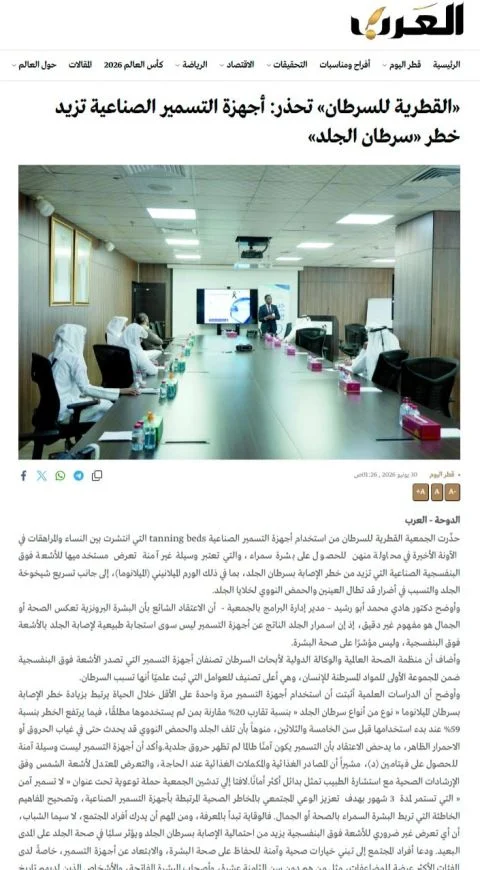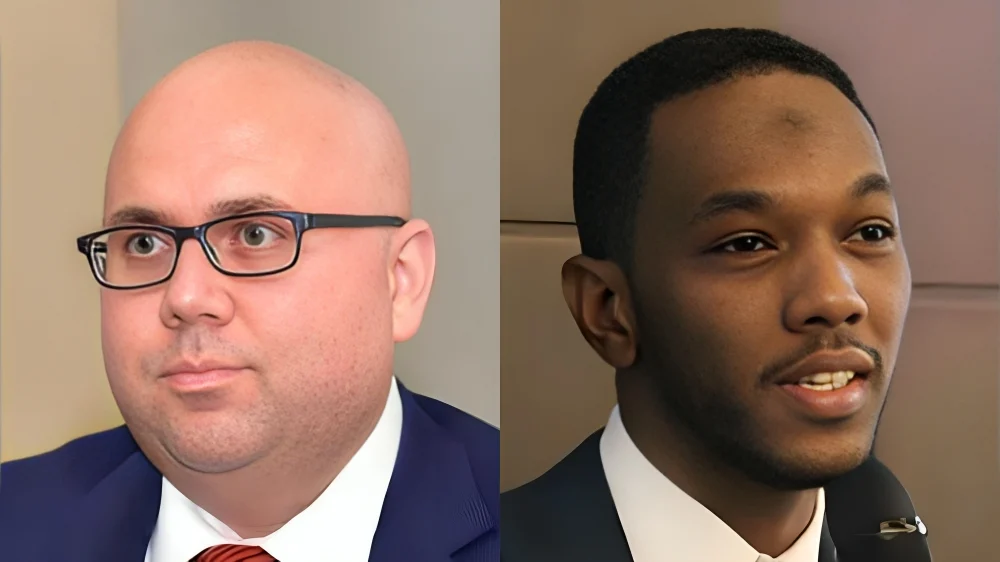
Hadi Mohamad Abu Rasheed, Scientific Advisor at the Qatar Cancer Society and Adjunct Lecturer at the University of Doha for Science and Technology, shared a post by Mohammed Faisal Eltagalawi, Development Researcher at Qatar Cancer Society, on LinkedIn:
“An important and timely reminder that cancer prevention must be approached not only through awareness, but also through policy and regulation.
Indoor Tanning devices expose users to artificial ultraviolet radiation and should be treated as a preventable carcinogenic risk, not as a routine beauty service. The evidence is clear, and the public health response should be equally clear.
Policy Makers, health institutions, educators, and community organizations all have a role in reducing exposure, correcting misconceptions, and protecting young people from avoidable cancer risks.
Effective prevention means combining public education with stronger safeguards, clearer health warnings, and responsible regulation.
I am proud to lead this advocacy campaign in the region.
There Is No Safe Tanning Bed – and preventable risk should never be normalized.”
Quoting Mohammed Faisal Eltagalawi’s post:
“Tanning beds are not a safe beauty practice. They are a carcinogenic exposure.
Indoor tanning devices, including tanning beds, sunbeds, and solariums, emit artificial ultraviolet radiation. This exposure is not harmless. The International Agency for Research on Cancer has classified UV-emitting tanning devices as Group 1 carcinogenic to humans, the same evidence category used when there is sufficient evidence that an exposure can cause cancer.
The numbers are concerning. Research shows that people who have used a sunbed at least once have a 20% higher risk of melanoma, and first use before the age of 35 increases melanoma risk by 59%. Indoor tanning has also been estimated to contribute to more than 3,400 melanoma cases each year in Europe and more than 170,000 non-melanoma skin cancer cases each year in the United States.
A tan from a tanning bed is not a sign of health. It is the skin’s response to ultraviolet injury. Misconceptions such as ‘pre-tanning protects the skin’, ‘tanning improves vitamin D’, or ‘it is safe if there is no burn’ continue to place people at unnecessary risk.
Indoor tanning should be treated as a preventable cancer risk, not as a cosmetic service. Stronger public awareness, clear health warnings, and protective regulations, especially for young people, are essential.
There is no safe tanning bed. Artificial UV exposure can cause real harm.”
Other articles featuring Hadi Mohamad Abu Rasheed and Mohammed Faisal Eltagalawi on OncoDaily.