





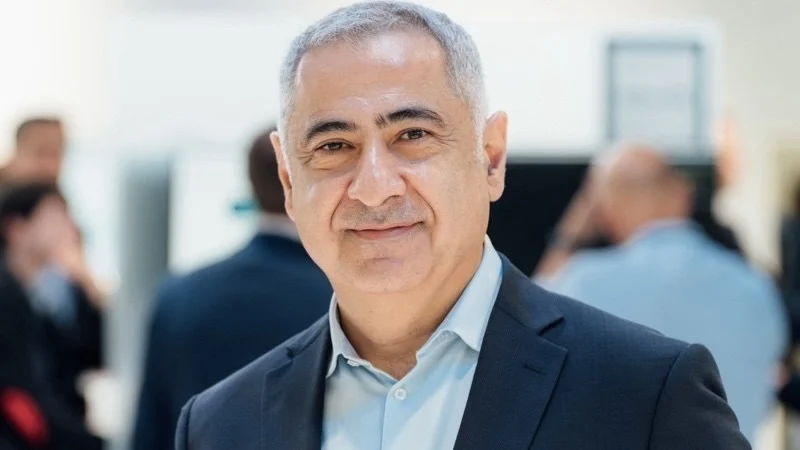
Habib Nehmé, Healthcare Growth and Transformation Executive, shared a post on LinkedIn:
“The $10 trillion healthcare economy- how is it spent
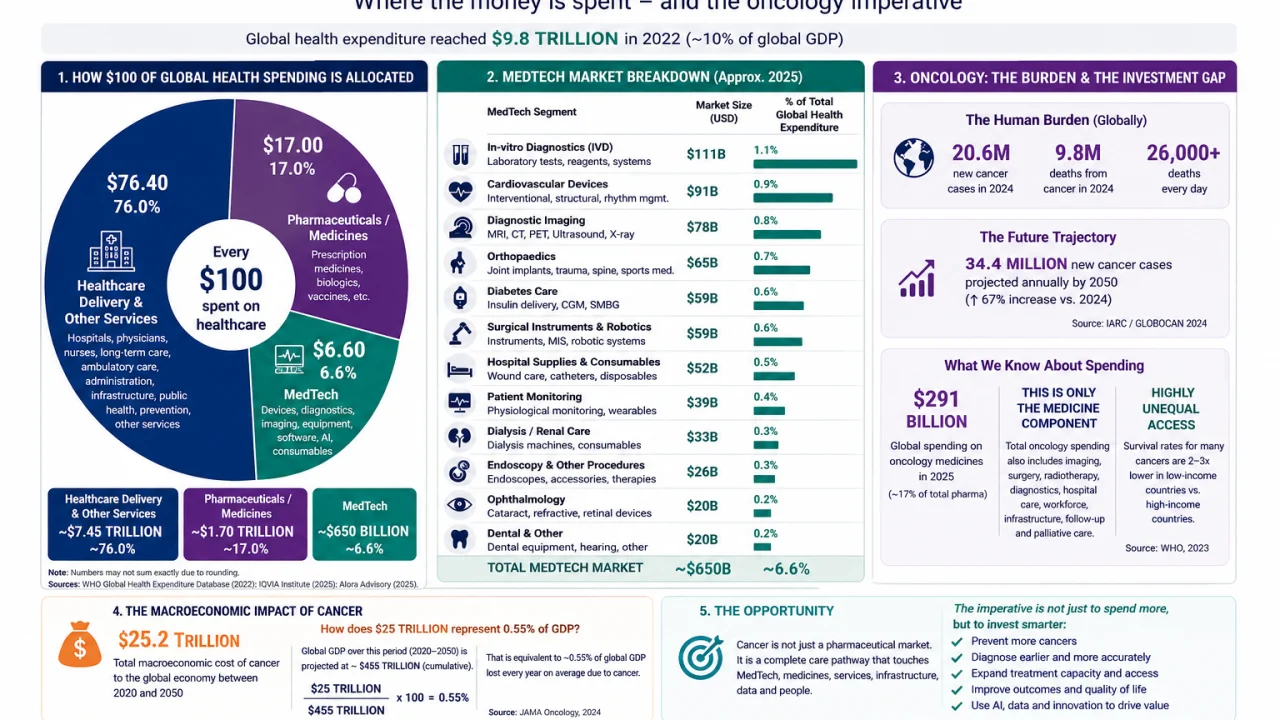
We spend almost $10 trillion a year on healthcare globally. But where does that money actually go? And, more importantly, how much of it is reaching the diseases that are creating the greatest human and economic burden? The numbers are striking. According to WHO, global health expenditure reached approximately $9.8 trillion around 10% of global GDP. Of this enormous healthcare economy, approximately:
~$7.4T goes to healthcare delivery and other services — hospitals, physicians, nurses, long-term care, administration and the infrastructure required to deliver care. ~$1.7T is spent on pharmaceuticals/medicines. IQVIA estimates the global prescription medicine market reached approximately $1.7T in 2025 at list prices. ~$650Brepresents the global MedTech market imaging, IVD, cardiovascular devices, orthopaedics, surgery, monitoring, diabetes technology, oncology equipment and other medical technologies.
So, very roughly, for every $100 spent on healthcare globally, around: $76 → healthcare delivery & services $17 → medicines $6.60 → MedTech
Now look at cancer. In 2024, an estimated 20.6 million people were diagnosed with cancer and 9.8 million died from the disease ; more than 26,000 deaths every day. Cancer is now the world’s second leading cause of death. And the trajectory is even more concerning. Without major changes in prevention and cancer control, the number of new cases is projected to reach 34.4 million annually by 2050 — a 67% increase from 2024. So how much are we spending on oncology?
There is no single reliable global figure for total cancer expenditure, because oncology spending is spread across pharmaceuticals, hospitals, surgery, radiotherapy, imaging, pathology, diagnostics, workforce, infrastructure, follow-up and palliative care. But one number is very clear: Global spending on cancer medicines reached ~$291B in 2025. That is already almost 17% of the global pharmaceutical market. Yet $291B represents only the medicine component of cancer care. It does not include the MRI, CT or PET scan. It does not include the biopsy and pathology. It does not include the surgeon, operating room or robotic system. It does not include the LINAC, MR-LINAC or brachytherapy. It does not include the radiation oncologist, medical physicist, radiation therapist or oncology nurse. It does not include the hospital infrastructure required to deliver the treatment. And it does not include prevention, screening, rehabilitation or palliative care.
Consequently, Cancer is not simply a pharmaceutical market. It is a complete healthcare ecosystem. And there is a profound global imbalance.
The countries that carry the greatest cancer burden are often those with the least capacity to diagnose and treat it. WHO reports that access to essential cancer services remains highly unequal, with survival rates for some cancers dramatically lower in low-income countries. At the same time, cancer is estimated to impose a $25.2 trillion macroeconomic cost on the global economy between 2020 and 2050, equivalent to an annual economic burden of around 0.55% of global GDP. So perhaps the question should not simply be:
‘Can the world afford to spend more on cancer?’ The better question is:
Can the world afford NOT to invest more intelligently in cancer prevention, early diagnosis, treatment capacity and access?”
Because the opportunity is not simply to spend more. It is to allocate better. To connect: Prevention → Screening → Diagnosis → Imaging → Pathology → Treatment → Radiotherapy → Surgery → Medicines → Monitoring → Follow-up and to use AI, data, technology, infrastructure and new financing models to make that pathway more accessible, more efficient and more affordable.
Conclusion:
The global healthcare economy is already ~$10 trillion. The question is whether we are allocating enough of that enormous economic resource to a disease that affects 20+ million people every year, kills almost 10 million, and could reach 34+ million new cases annually by 2050. There is certainly a case for doing more. The real opportunity is to make every dollar spent on cancer deliver more value, more patients diagnosed earlier, more patients treated, better outcomes and fewer lives lost.”
Other posts featuring Habib Nehmé on OncoDaily.