






Grant McGaugh, Founder and Lead Architect, AI Business Accelerator/ Chairman and CEO at 5 STAR BDM, shared a post on LinkedIn:
“We’re Not Getting Cancer More. We’re Dying More – Tisa Hardin
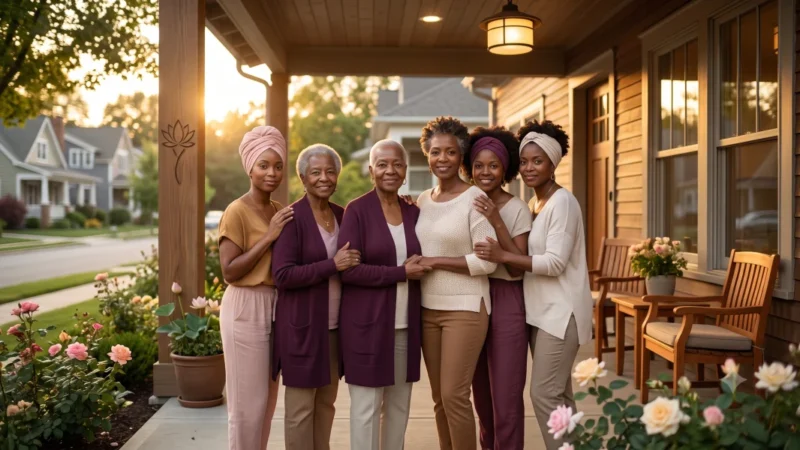
We’re Not Getting Cancer More. We’re Dying More. That Gap Is What Pink Lotus Project Nebraska Exists to Close.
Nine years. Eight annual health fairs. Six years of runway walks that started as a protest against being ignored. One founder who turned her own diagnosis into a movement – and a vision for a house that doesn’t exist yet, but should.
The Assignment She Didn’t Ask For
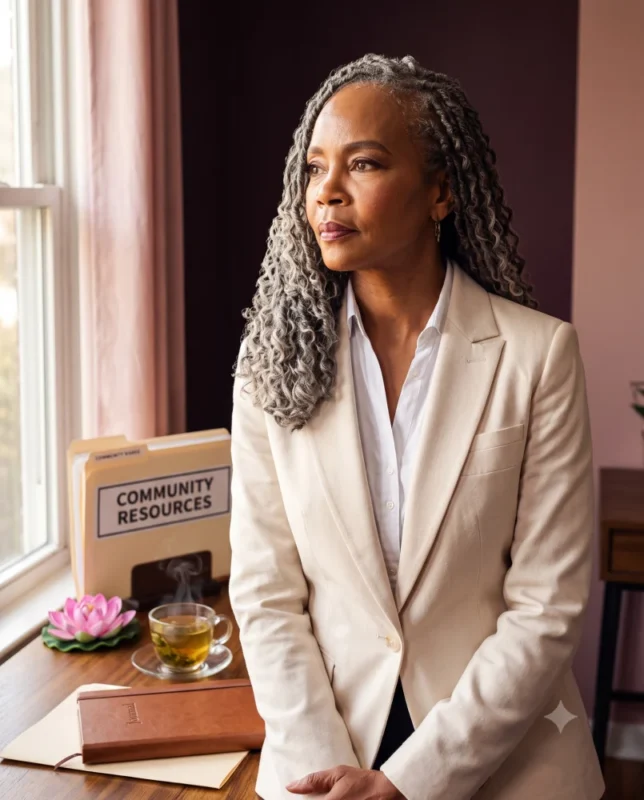
In 2017, Tisa Hardin-Partridge was 49 years old, a single mother of two, when she was diagnosed with invasive ductal carcinoma – the most common form of breast cancer in women. She wasn’t shocked. Years earlier, after watching an aunt die of the disease, she’d told her family, half-joking, that she’d probably be the next one. When the diagnosis came, she understood it differently: not as bad luck, but as an assignment.
At the time, the only dedicated support for African American women with breast cancer in the community was a single peer group. Tisa – a trained social worker who knew how to dig up resources – joined it, and joined another for financial assistance. Both helped. Neither was built for someone her age, at her stage of life, asking the questions she was asking about menopause, treatment, and what came next. When the leader of that first group passed away in 2016, Tisa didn’t wait for someone else to fill the gap. She built it herself.
Pink Lotus Project Nebraska was born in 2017 – not as a nonprofit with a five-year plan, but as an answer to a question nobody else was answering.
The Number That Should Stop Everyone in the Room
Here is the statistic Pink Lotus was founded to change, and it hasn’t moved nearly enough since:
Black women are diagnosed with breast cancer at a slightly lower rate than white women – yet the American Cancer Society’s most recent Breast Cancer Facts and Figures report puts their mortality rate 38% higher. For over a decade, that gap held at 40% or above. Tisa, drawing on the numbers she has tracked throughout her own survivorship, cites it even starker: 43%.
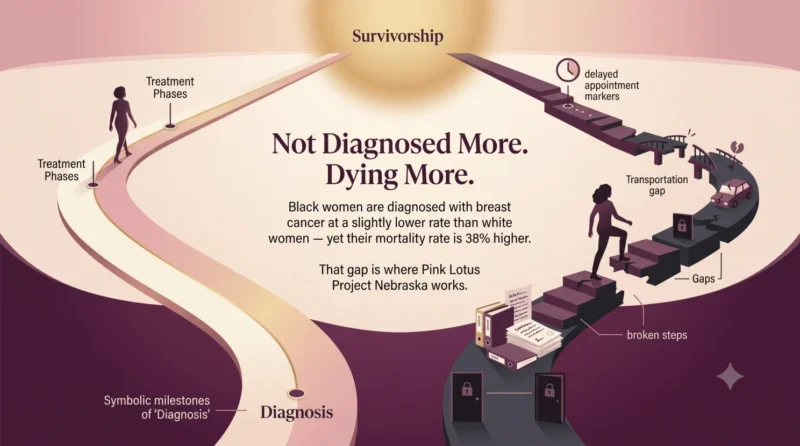
Sit with that. Not diagnosed more. Not exposed to more risk factors that show up cleanly in the data. Dying more. Tumor biology plays some role, but researchers point to something larger: later-stage diagnosis, uneven access to timely, high-quality treatment, and the cumulative weight of health disparities. Something between diagnosis and survival is failing Black women – and systems, timing, access, and trust largely determine who gets the best chance to live.
That gap is Pink Lotus Project Nebraska’s entire reason for being. As Tisa puts it plainly:
‘We’re not getting it more. We’re just dying more.’
What Pink Lotus Actually Does
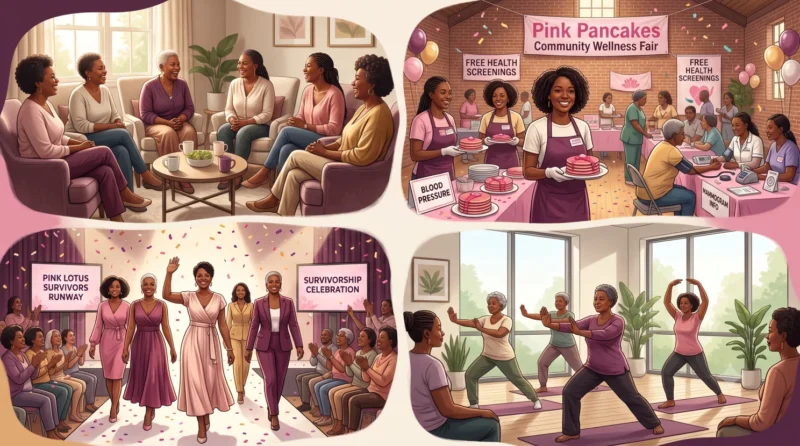
This isn’t an awareness campaign that shows up once a year with pink ribbons. It’s a working survivorship organization built around three pillars – mind, body, and soul – delivered through:
A monthly sisterhood support group, meeting every fourth Wednesday, that functions as an emotional lifeline and a practical safeguard against isolation, missed follow-up care, and the quiet drift back into old habits once active treatment ends. Survivors check in with each other, hold each other accountable, and – in Tisa’s words –
‘claim our victory’ together.
The Pink Pancake Feed and Health Fair – heading into its eighth annual year this October – which pairs a genuinely joyful community event (yes, the pancakes have a natural pink hue) with free health screenings: blood pressure, blood sugar, cancer screenings, and connections to primary care physicians through partners like Charles Drew Health Center. It’s deliberately held in neighborhood churches, not clinics, because – as Tisa says:
‘we’ve got a church on every corner.
No bus ride required. No appointment needed. Just walk in.
Strut for the Cure, now in its sixth year, born out of grief and stubbornness in equal measure. Tisa used to walk a 30-second survivor runway at a local fashion week – a nice gesture, but a small one. When that program quietly disappeared, she didn’t ask permission to bring it back. She built her own version and opened it to survivors of every cancer, not just breast cancer, because in nine years of doing this work, Pink Lotus has mourned nearly one woman a year. Strut for the Cure is how the organization insists on celebrating the ones still standing.
Wellness education that meets people where they actually live – Tai Chi, stretching, mindfulness, meditation, and stress management taught not as a spa amenity but as medicine. Tisa is direct about this: it’s not the ‘fan favorite’ part of the program, but it’s the part most likely to reduce stress, strengthen resilience, and help survivors sustain healthier habits after treatment.
And underpinning all of it, a growing web of community partnerships – Nebraska Medicine, CHI Health, Charles Drew Health Center, the Urban League of Nebraska, area churches, and local businesses – because, as Tisa says:
‘we are not living in a bubble.’
No single organization owns this problem, and no single organization is going to solve it alone.
The Vision: A House, Not a Waiting Room

Ask Tisa what’s next and she doesn’t describe a bigger program. She describes a house.
She calls it the Holistic House of Healing – once nicknamed ‘the Pink Palace’ – and she has thought through it room by room, because she has lived every version of the problem it solves.
A porch, because healing conversations often start before you even walk through the door. A wellness-intake office instead of an intake form – a place to talk about your life, your losses, your stress, before anyone talks about your treatment plan. A dining room, because her family sat down together at 5:30 every night growing up, and she knows what happens to people when they break bread instead of just exchanging paperwork. A learning space for cooking demonstrations and workshops. A living room, not a waiting room – pillows on the floor, not a clinical chair, because ‘the last thing we want to do as cancer patients is come back into a clinical setting.’
A meditation and prayer room. A nap room, because anyone who has been through radiation knows the fatigue is real and there is currently nowhere in this community to simply lie down. An imaging and beauty space where women can process the physical changes of mastectomy, hair loss, and reconstruction in a room built for dignity, not diagnosis. A massage room, because Tisa considers bodywork part of her healthcare budget, not a luxury.
This is not a wish list. It’s a blueprint from someone who has personally needed every single one of these rooms and found none of them in one place.
‘I don’t see a wellness center in our community that’s really just for cancer patients’, she says. ‘If they are out there, I need to know about them.’
Pink Lotus has already identified a property. In 2024, the organization received an early vote of confidence in the form of an $80,000 grant from THE BLK FUND, managed by I Be Black Girl – proof that funders are already recognizing the value of this work and its potential for growth across the Omaha and Lincoln metro areas. The team is now actively pursuing additional grant funding and philanthropic partnerships to turn the Holistic House of Healing from blueprint into an open door. What’s missing isn’t the vision – it’s the capital and the champions to build it.

Why This Is a Sponsor’s Moment, Not Just a Donor’s
Healthcare systems, medical device companies, and providers have already started stepping up – CHI Health has twice sponsored Strut for the Cure, and Nebraska Medicine has been a foundational partner through community outreach leadership on the Pink Lotus board. Tisa’s ask to that sector is direct: if your organization touches oncology in any way, this is your table.
But this isn’t only a healthcare-sector opportunity. It’s a community investment with a track record: nine years of consistent programming, a board built from social workers, oncology surgeons, nurses, retired medical school leadership, and survivors themselves, and a founder who has stayed in this work long after any ‘awareness month’ obligation would have expired.
Every dollar, every hour, every introduction moves Pink Lotus Project Nebraska closer to a building where a woman who just heard the word ‘cancer‘ for the first time has somewhere real to walk into – not a website, not a pamphlet, but a porch light on and someone who already knows exactly what she needs.
Partner With Us
In Tisa’s own words, this is a call to action:
‘Let’s do something about this statistic. Let’s provide programs that are proactive and preventative so we don’t even have to deal with the cancer. Partner with me.’
Here’s how:
- Sponsor an event. The Pink Pancake Feed & Health Fair (8th annual, October) and Strut for the Cure are both open to corporate and healthcare-sector sponsorship.
- Fund the Holistic House of Healing. Capital, grant partnerships, and philanthropic gifts bring this vision from blueprint to open door.
- Give directly. No gift is too small – every dollar supports free screenings, survivor programming, and outreach across North Omaha and beyond.
- Become a community or clinical partner. Health ministries, provider groups, and medical device companies are all encouraged to connect.
- Volunteer or make an introduction. Know someone who should be at the table? That’s how this organization has grown from day one.
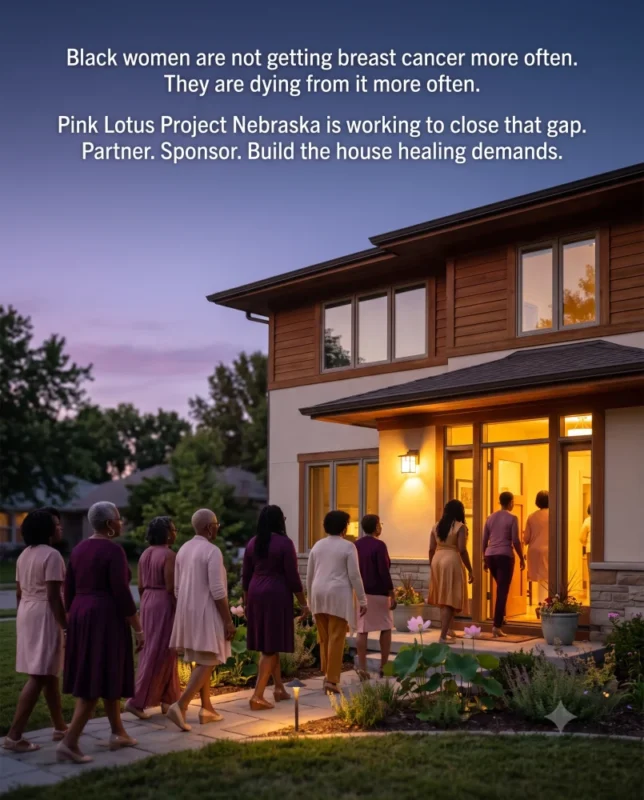
Black women are not getting breast cancer more often. They are dying from it more often. Pink Lotus Project Nebraska has spent nine years proving that number can move – with the right partners, it can move faster.
Other articles featuring Breast Cancer on OncoDaily.