





Global Health Otherwise shared a post on LinkedIn:
“COVID-19 exposed a critical gap between epidemic forecasts and the people who needed them most.
During health emergencies, decisions must be made fast, often before complete information is available. Epidemic forecasts, which are short-term probabilistic projections of disease spread, became central tools during COVID-19.
Yet a persistent gap existed between what modellers produced and what decision-makers could actually use. Christen and colleagues (2026) offer a critical mixed-methods study examining how 143 stakeholders across 46 countries perceived, used, and communicated epidemic forecasts during the pandemic.
The study finds that forecasts informed six key policy areas, from estimating epidemic size to planning vaccination strategies. The most valued metrics overall were projected intervention impact, epidemic peak, and prevalence.
However, what worked in high-income countries did not translate equally elsewhere. In lower-income settings, comprehension gaps were severe: 47% of low- and lower-middle-income country respondents reported that colleagues did not understand modelling methodology, compared to just 3% in high-income countries.
Forecast credibility depended more on interpersonal trust and contextual relevance than statistical precision. The authors recommend embedding modellers within response teams, co-developing decision-relevant metrics, and investing in local data infrastructure.
𝗖𝗵𝗿𝗶𝘀𝘁𝗲𝗻 𝗮𝗻𝗱 𝗰𝗼𝗹𝗹𝗲𝗮𝗴𝘂𝗲𝘀 (𝟮𝟬𝟮𝟲) 𝗳𝗶𝗻𝗱 𝘁𝗵𝗮𝘁 𝗲𝗽𝗶𝗱𝗲𝗺𝗶𝗰 𝗳𝗼𝗿𝗲𝗰𝗮𝘀𝘁 𝘂𝘁𝗶𝗹𝗶𝘁𝘆 𝗱𝗲𝗽𝗲𝗻𝗱𝘀 𝗹𝗲𝘀𝘀 𝗼𝗻 𝘁𝗲𝗰𝗵𝗻𝗶𝗰𝗮𝗹 𝘀𝗼𝗽𝗵𝗶𝘀𝘁𝗶𝗰𝗮𝘁𝗶𝗼𝗻 𝘁𝗵𝗮𝗻 𝗼𝗻 𝘁𝗿𝘂𝘀𝘁, 𝗰𝗼𝗻𝘁𝗲𝘅𝘁-𝗮𝗽𝗽𝗿𝗼𝗽𝗿𝗶𝗮𝘁𝗲 𝗰𝗼𝗺𝗺𝘂𝗻𝗶𝗰𝗮𝘁𝗶𝗼𝗻, 𝗮𝗻𝗱 𝘀𝘂𝘀𝘁𝗮𝗶𝗻𝗲𝗱 𝗹𝗼𝗰𝗮𝗹 𝗰𝗮𝗽𝗮𝗰𝗶𝘁𝘆, 𝗲𝘀𝗽𝗲𝗰𝗶𝗮𝗹𝗹𝘆 𝗶𝗻 𝗿𝗲𝘀𝗼𝘂𝗿𝗰𝗲-𝗰𝗼𝗻𝘀𝘁𝗿𝗮𝗶𝗻𝗲𝗱 𝘀𝗲𝘁𝘁𝗶𝗻𝗴𝘀.”
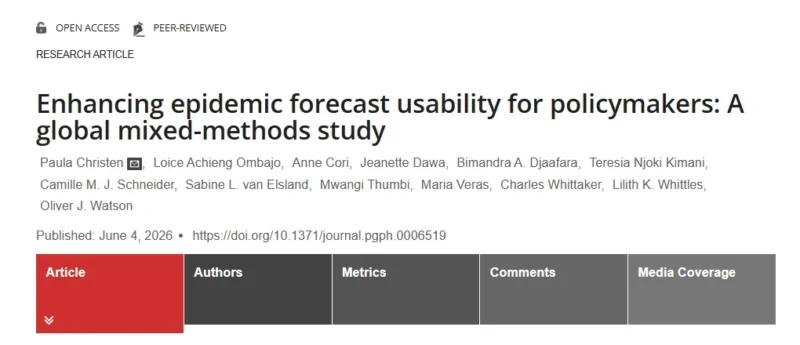
Title: Enhancing epidemic forecast usability for policymakers: A global mixed-methods study
Authors: Paula Christen, Loice Achieng Ombajo, Anne Cori, Jeanette Dawa, Bimandra A. Djaafara, Teresia Njoki Kimani, Camille M. J. Schneider, Sabine L. van Elsland, Mwangi Thumbi, Maria Veras, Charles Whittaker, Lilith K. Whittles, Oliver J. Watson
Other articles about Global Health Otherwise on OncoDaily.