





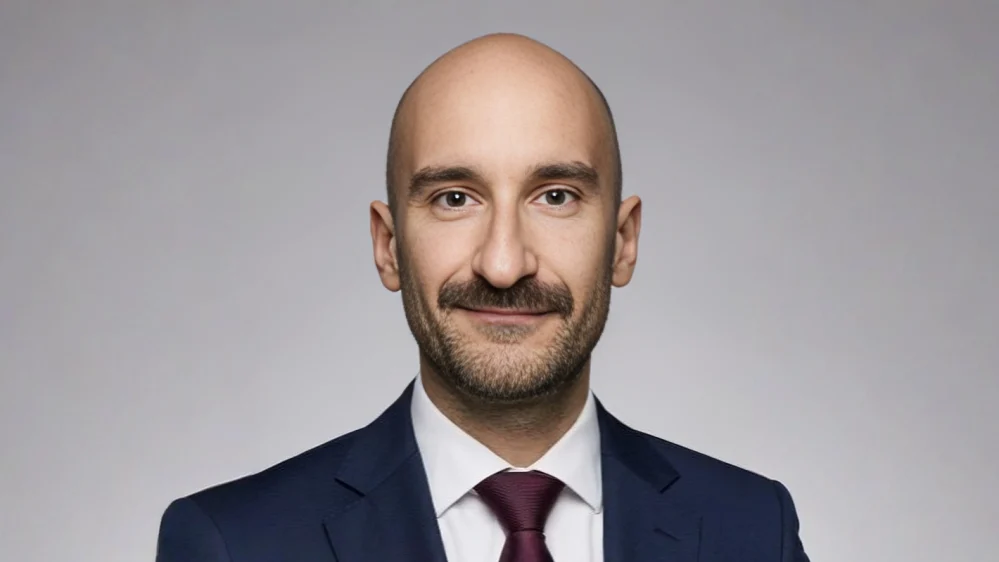
Giovanni Fucà, Medical Director, Early Global Development, Oncology RandD at AstraZeneca, shared a post on LinkedIn:
“The next generation of precision oncology may be built on molecular recognition rather than molecular inhibition.
For decades, cancer drug discovery has followed a familiar logic: Find the driver. Find the binding pocket. Design the inhibitor.
A new Nature paper from Jennifer Doudna‘s group proposes a fundamentally different paradigm.
Instead of targeting mutant proteins, the authors use cancer-specific RNA transcripts as triggers to activate CRISPR-Cas12a2-mediated cell killing.
The concept is remarkably elegant: from mutant transcript present = cell dies to mutant transcript absent = cell survives
Using this approach, the authors selectively targeted cells harboring:
- TP53 hotspot mutations
- EGFR exon 19 deletions
- MYC overexpression
and demonstrated preliminary antitumor activity following in vivo delivery.
What I find most interesting is not the CRISPR system itself.
It’s the shift in therapeutic logic. Traditionally, precision oncology has focused on targeting molecular function. This work suggests a future where we target molecular identity.
The therapeutic target is no longer necessarily the protein. It is the information that distinguishes a cancer cell from a normal cell. If clinically translatable, this approach could dramatically expand the universe of actionable alterations, including many that have long been considered ‘undruggable’.
Precision oncology may ultimately become less about inhibiting what cancer cells do, and more about recognizing what cancer cells are.”
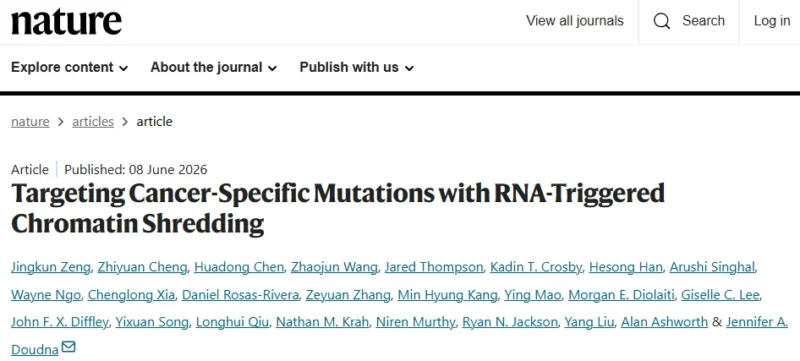
Title: Targeting Cancer-Specific Mutations with RNA-Triggered Chromatin Shredding
Authors: Jingkun Zeng, Zhiyuan Cheng, Huadong Chen, Zhaojun Wang, Jared Thompson, Kadin Crosby, Hesong Han, Arushi Singhal, Wayne Ngo, Chenglong Xia, Daniel Rosas-Rivera, Zeyuan Zhang, Min Hyung Kang, Ying Mao, Morgan Diolaiti, Giselle Lee, John Diffley, Yixuan Song, Longhui Qiu, Nathan Krah, Niren Murthy, Ryan Jackson, Yang Liu, Alan Ashworth, Jennifer Doudna
Read the Full Article.
Other articles featuring Giovanni Fucà on OncoDaily.