Gilberto Lopes, Chief of the Division of Medical Oncology at Sylvester Comprehensive Cancer Center, shared a comprehensive series of updates on X highlighting policy workshops, AI applications, and groundbreaking clinical trial data presented at World Conference on Lung Cancer 2026.
His post bridges the gap between global implementation of lung cancer screening and key oncology research insights, from AI performance in precision medicine to major overall survival results in advanced lung cancers.
“Starting for me and many friends with a policy workshop – How do we transform evidence into action?
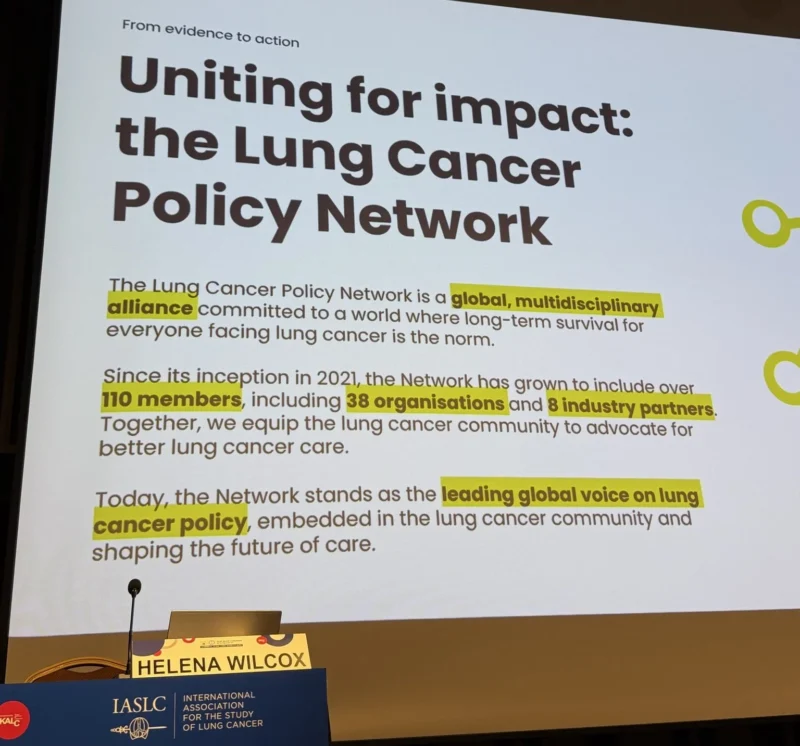
UICC own’s Yannick Romero starting the discussion – tobacco, national cancer plans, cervical cancer, childhood cancer, breast cancer and now finally lung cancer are in the global health agenda.
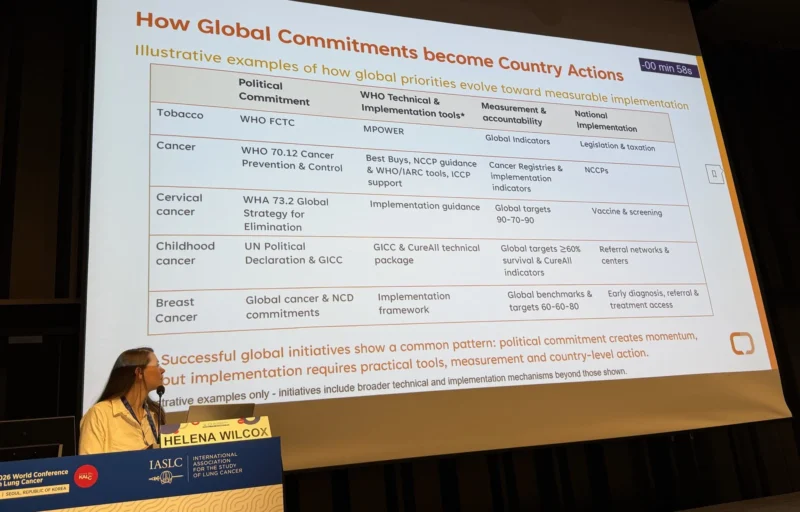
With WHA78 we are moving from commitment to implementation.
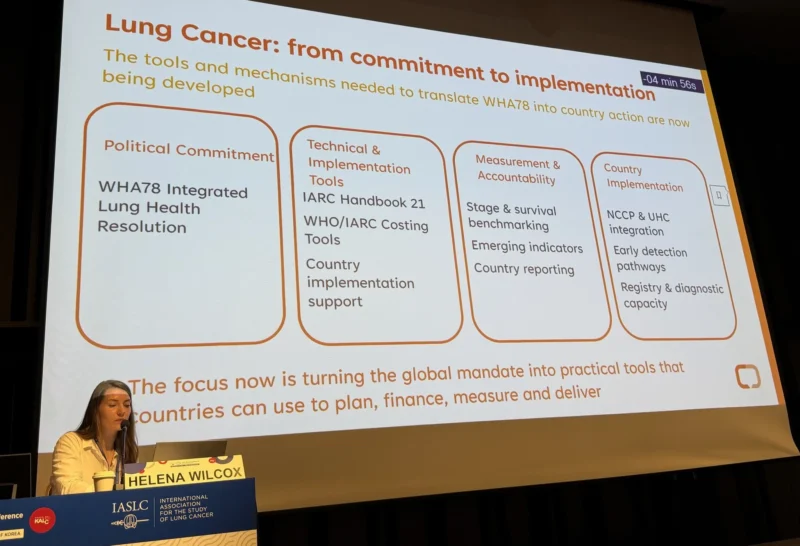
Hilary Robbins continued the session with the role of the researcher. Policy makers have a finite pile of money and need to prioritize. As such we need to focus our efforts. In screening there’s a substantial mortality reduction in high risk population, mostly smokers. Benefit is clear. But there are also limits.
We have to disclose those so we build trust. Cost and feasibilitymatter for impact and decision-making. The decisions are national and local.
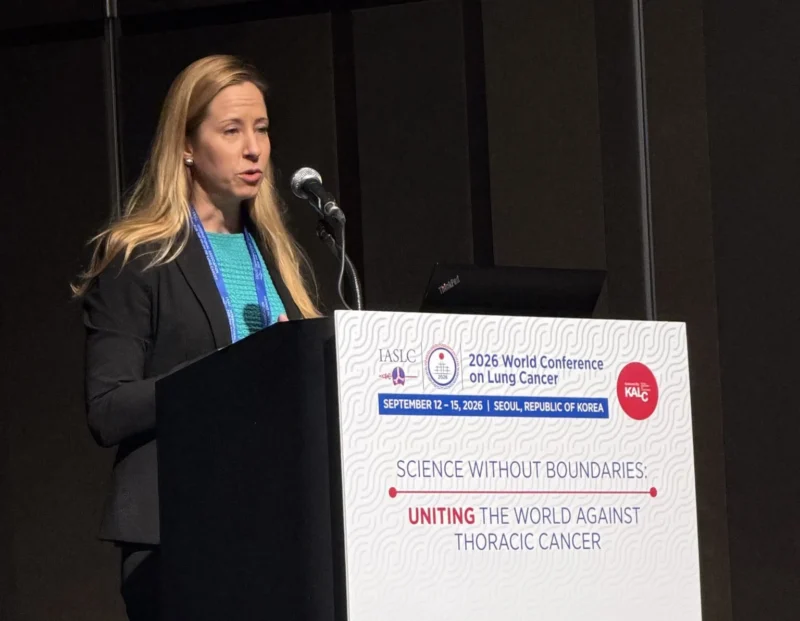
My good friend Ricardo Sales dos Santos showed the amazing work he’s been doing in Brazil for more than a decade. Screening is feasible in a large, diverse, middle income country. Evidence to Action has to be Global AND local.
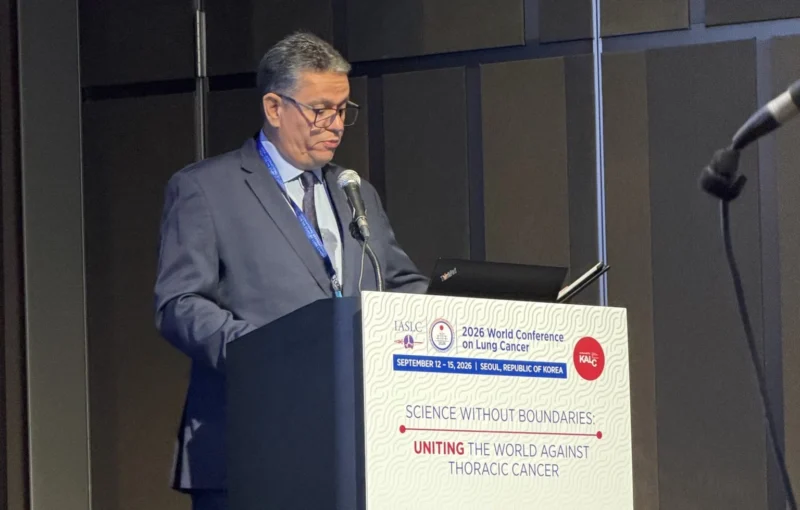
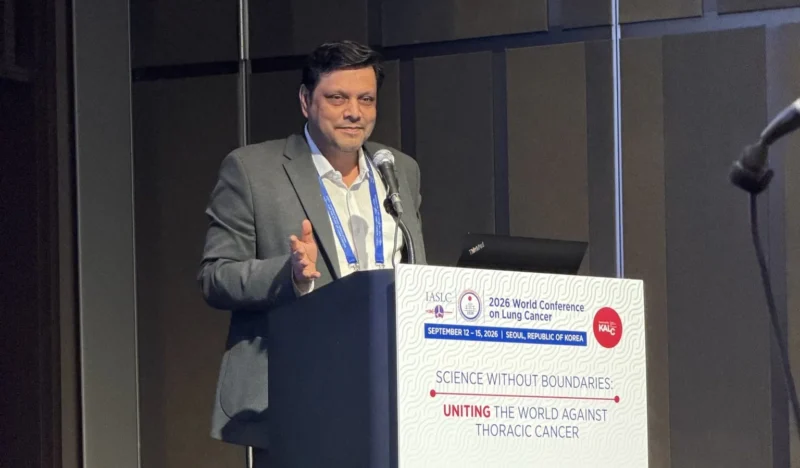
Abhishek Shankar discussed the Indian experience.
Sylvester Thoracic Working Group at WCLC26 – Presentation Spotlights
1. AI decision support in EGFRm, ALK+, and ROS1+ metastatic NSCLC:
- 16 expert-curated cases
- 6 AI systems
- ChatGPT highest vs experts: τ=0.63
- Experts disagreed in 3/16 cases
Take-home: AI shows promise as decision support in precision oncology, but outputs remain model-dependent and expert oversight still matters. Highest inter-LLM concordance: ChatGPT + Gemini τ=0.91.
2. When AI meets oncologist judgment in advanced NSCLC:
- 12 expert-curated cases
- 6 AI systems
- EGFRm, ALK+, KRAS G12C
Key findings:
- OpenEvidence highest expert concordance: τ=0.561
- Grok lowest expert divergence: JS=0.275
- Gemini + ASCO AI highest pairwise concordance: τ=0.876
- No single AI system was consistently superior
Most important point: AI agreement is not clinical accuracy. Two systems can agree strongly with each other and still diverge from expert oncologist judgment.
AI should augment-not replace-clinical decision-making.
3. Age and biomarkers in 14,246 real-world NSCLC patients:
- AYA tumors had more Tier 1 actionable alterations: 57.8% vs 44.9%
- AYA NSCLC was enriched for ALK/ROS1 fusions and EGFR alterations
- Older patients were more often KRAS/STK11-dominant
Older patients also showed higher TMB, LAG3 and TIGIT, suggesting a more immune-active but potentially resistant phenotype.
Take-home: age is a biologic variable in NSCLC, not just a demographic one. Incorporating age into biomarker interpretation and treatment selection may improve precision oncology care across the NSCLC population.
4. Cross-trial comparison in EGFR-mutant stage IV lung adenocarcinoma using reconstructed IPD.
When head-to-head trials are unavailable, can reconstructed IPD help inform treatment sequencing?
First-line:
- MARIPOSA vs FLAURA2: similar OS (HR 1.02)
- FLAURA2 PFS advantage: HR 0.70
- CNS mets subgroup: HR 0.63
- No CNS mets: HR 0.96
Second-line:
- OpiTROP-Lung04 OS advantage vs MARIPOSA-2: HR 0.60
- vs pooled TROPION-Lung01/05: HR 0.47
- vs HARMONi-A: HR 0.66
Take-home: reconstructed IPD can strengthen cross-trial comparisons when head-to-head evidence is lacking-but should inform, not replace, clinical judgment.
Quick take from WCLC26:
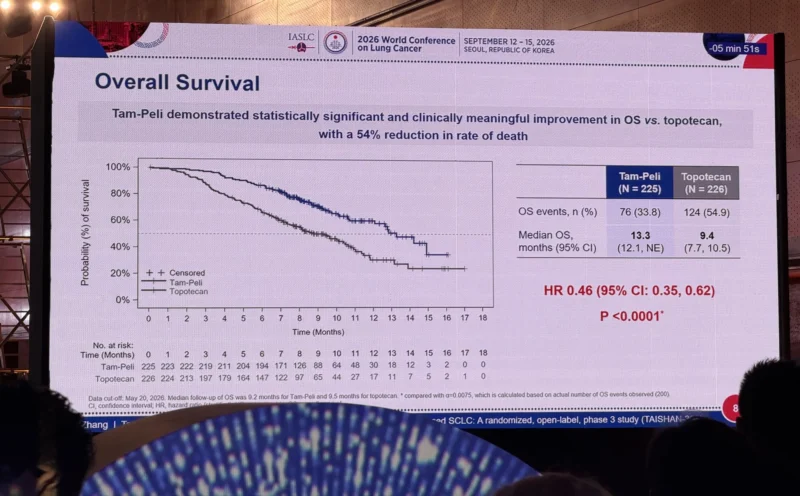
Tam-Peli showed a clear overall survival advantage vs topotecan on the slide presented today:
- Median OS: 13.3 vs 9.4 months
- HR: 0.46 (95% CI 0.35–0.62)
- P < 0.0001
- Reported as a 54% reduction in the rate of death
Striking OS signal. More detailed thoughts soon.
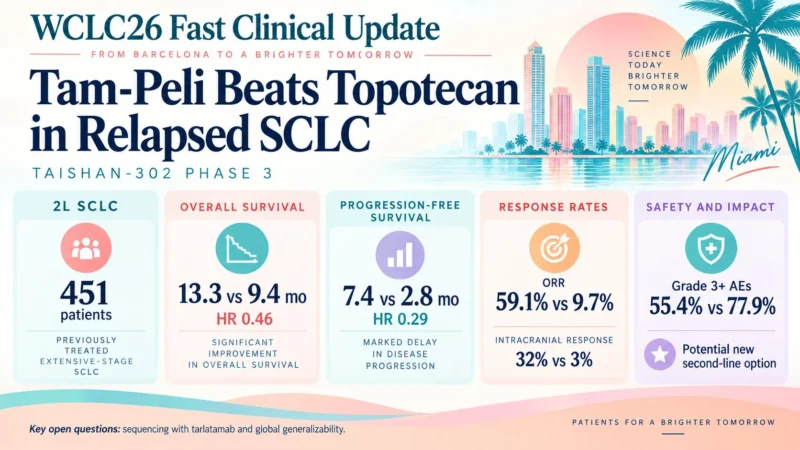
Major positive WCLC26 result in relapsed SCLC: TAISHAN-302
Tambotatug pelitecan (Tam-Peli) vs topotecan:
- OS 13.3 vs 9.4 mo, HR 0.46
- PFS 7.4 vs 2.8 mo, HR 0.29
- ORR 59.1% vs 9.7%
- intracranial response 32% vs 3%
- grade 3+ AEs 55.4% vs 77.9%
My take: a major positive randomized phase 3 trial and a potential new 2L option in SCLC.
Important caveat: this was a China-only study, so broader global validation still matters. Sequencing vs tarlatamab also remains an open question.
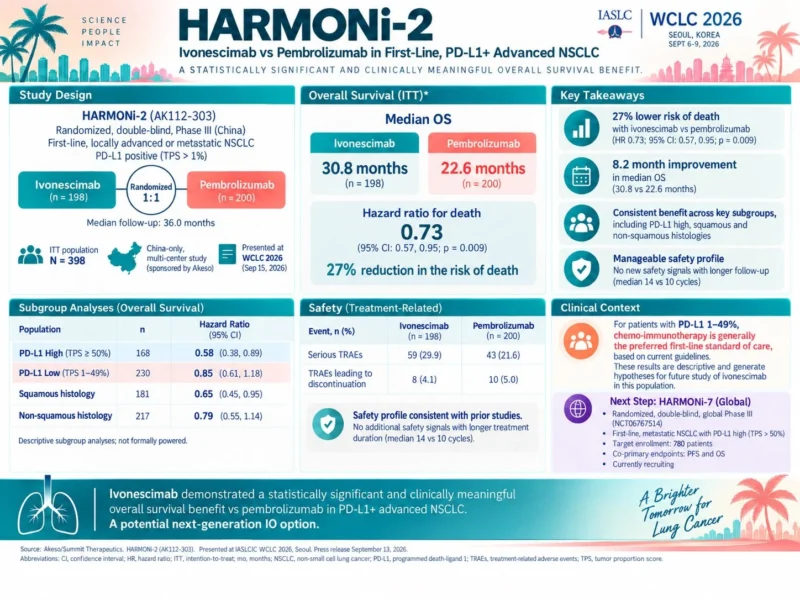
Preliminary WCLC26 preview: HARMONi-2
Based on the company press release, ivonescimab vs pembrolizumab in first-line PD-L1+ advanced NSCLC showed:
- Median OS: 30.8 vs 22.6 months
- HR 0.73 (95% CI 0.57–0.95; p=0.009)
- Median OS gain: 8.2 months
Subgroups reported:
- PD-L1 ≥50%: HR 0.58
- PD-L1 1–49%: HR 0.85
- Squamous: HR 0.65
- Non-squamous: HR 0.79
Also notable: prior PFS HR 0.51.
Important caveats: single-region China study results currently from press release / pre-presentation disclosure for PD-L1 1–49%, chemo-immunotherapy is usually preferred, so pembrolizumab monotherapy is not the ideal comparator there.
Encouraging signal, especially in PD-L1-high disease, but fuller interpretation should wait for the full presentation.
You can also read:
WCLC 2026 Opens in Seoul: Targeted Therapy Moves Earlier as SCLC Enters a New Therapeutic Era