Calculators
 OncoCalendar





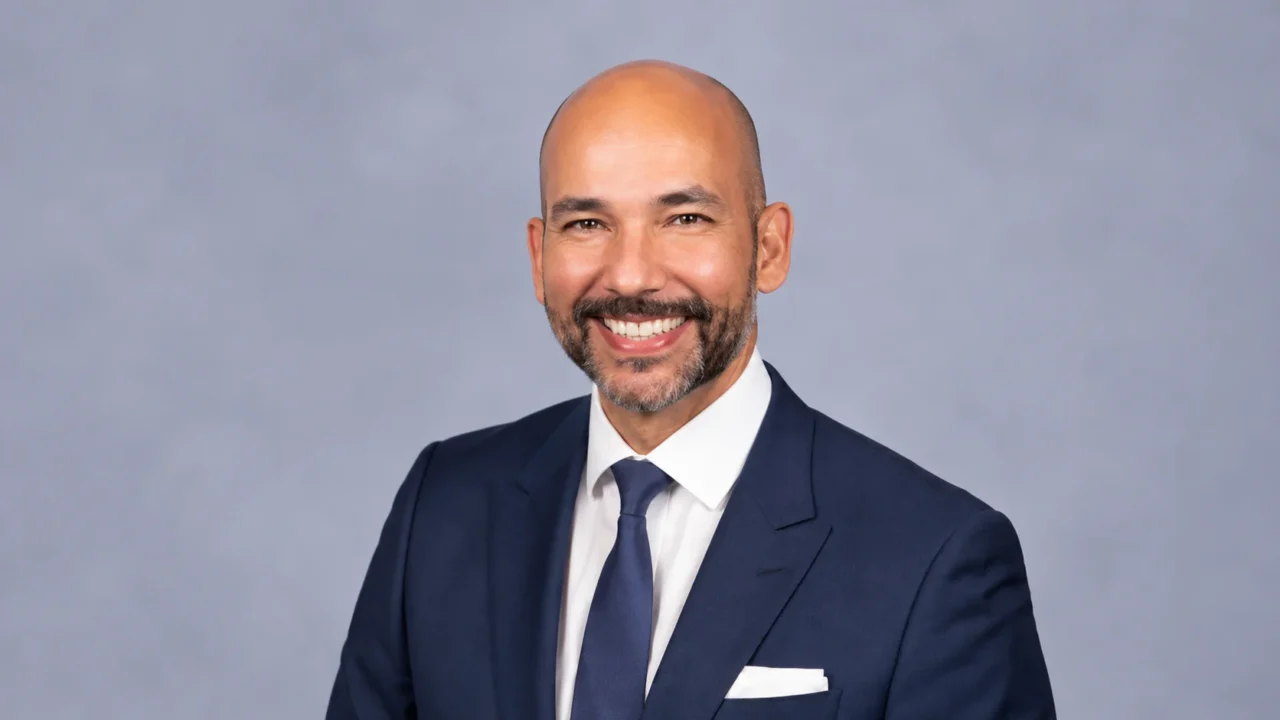
Gilberto Lopes, Chief of Division of Medical Oncology at Sylvester Comprehensive Cancer Center, shared on LinkedIn:
“In a few days I will be returning to Seoul for the World Conference on Lung Cancer almost two decades after the last one there in 2007.
That earlier meeting was my second WCLC, but my first as an attending physician. I was working at Johns Hopkins Singapore and presenting a poster on gemcitabine plus oxaliplatin as second- and third-line therapy for advanced non-small cell lung cancer. Twenty-two patients. A 10% confirmed response rate. At the time, that was a reasonable question to ask.
As I prepared to return, I went back through the 2007 abstract book. The exercise became more interesting than I expected. The meeting sat at a remarkable hinge point in lung cancer history: after decades dominated by cytotoxic chemotherapy, but just before molecular oncology changed almost everything.
And Seoul is an unusually fitting place to think about that kind of transformation.
A walk through the city compresses centuries of upheaval, destruction, reinvention and acceleration into a few miles. At Gyeongbokgung Palace, you stand in the world of the Joseon dynasty, founded in the late 14th century. The palace was built as a seat of royal power, damaged by invasion, rebuilt, dismantled again during Japanese rule, and restored over decades. Its courtyards and gates are not simply remnants of an intact past. They are evidence of repeated loss and reconstruction.
A short distance away, Seoul tells a very different story.
The early 20th century brought Japanese colonial rule. Liberation in 1945 was followed almost immediately by division of the Korean Peninsula and then by war. During the Korean War, Seoul changed hands several times and was devastated.
To see photographs of the city in the early 1950s and then look at Seoul today is to understand how inadequate the word ‘development’ can sometimes be. South Korea moved from war and poverty to industrial power, from authoritarian government to democracy, from aid recipient to major donor, and from technological follower to technological leader in little more than a generation.
By the time Seoul hosted the Olympic Games in 1988, the city had become a symbol of the country’s arrival on the global stage. By 2007, when WCLC returned to Seoul, Korea was already a major center of clinical research and biomedical science. And now, in 2026, it is part of an Asian research ecosystem that no oncologist involved in drug development can afford to treat as peripheral.
That arc makes Seoul an appropriate place to ask a simple question: What does progress look like when you are living through it? Usually, it does not feel dramatic.
Lung cancer in Seoul, 2007
In 2007, several presentations at WCLC pointed toward the field we practice in today.
Peter Goldstraw and colleagues from the IASLC Lung Cancer Staging Project presented proposals that helped shape the seventh edition of the TNM staging system. Staging can sound like classification for classification’s sake. It is not. We stage cancer primarily because patients with similar anatomic extent of disease tend to share prognosis, and because that information helps guide treatment. The system presented in Seoul was part of a broader transition toward increasingly international, data-driven staging. Today we use the ninth edition. The labels have changed. The basic purpose has not.
Another important presentation came from Giorgio Scagliotti, who reported the phase III comparison of cisplatin plus pemetrexed with cisplatin plus gemcitabine. The larger lesson was not simply which chemotherapy doublet performed better. It was that histology mattered. For years, ‘non-small cell lung cancer‘ had been treated almost as one disease. The pemetrexed data helped make clear that squamous and nonsquamous cancers were biologically and therapeutically different. That distinction remains embedded in treatment today. Pemetrexed is still a backbone of therapy for nonsquamous NSCLC, now commonly combined with platinum and pembrolizumab.
At the same 2007 meeting, a Japanese phase III trial compared gefitinib with docetaxel in previously treated patients. What is striking in retrospect is what the trial did not do: select patients by EGFR mutation. That was still a field searching for clinical clues. Asian ancestry. Adenocarcinoma. Never-smoking status. These characteristics seemed to enrich for patients who responded dramatically to EGFR inhibitors, but we had not yet fully crossed the bridge from phenotype to genotype.
One year later, at ESMO 2008, Tony Mok presented IPASS. That trial became one of the defining moments in modern lung cancer. EGFR mutation status, not simply clinical appearance, identified the patients most likely to benefit from an EGFR tyrosine kinase inhibitor.
The conceptual shift was enormous. We stopped asking, “Who looks like the kind of patient who might respond?” We started asking, “What molecular alteration is driving this tumor?” Today, testing comes before treatment. And EGFR-mutant lung cancer is treated as a distinct disease.
There was also early randomized work in CT screening presented in Seoul. At the time, screening with low-dose CT was still an open question. Could we detect more early lung cancers? Certainly. Would doing so actually save lives? That was not yet established. NLST and later NELSON eventually answered that question. Annual low-dose CT is now standard for appropriately selected people at high risk. Again, what looks obvious now was not obvious then.
My own poster. And then there was my very minor contribution. Gemcitabine and oxaliplatin as second- and third-line treatment of advanced NSCLC. It is easy to smile at the modest scale of that question from the vantage point of 2026. But science advances by asking the best question available at the time. In 2007, options after first-line chemotherapy were limited. A small study asking whether another combination might provide benefit was not trivial.
What strikes me now is less the treatment than the distance between that poster and the conversations we will have in Seoul this year. We now discuss targeted therapies across multiple genomic subsets. We use immunotherapy in metastatic, locally advanced and increasingly perioperative disease. We debate antibody-drug conjugates.
We follow circulating tumor DNA. We identify resistance mechanisms that would have sounded almost science-fictional when I stood beside that poster. For some molecularly defined metastatic lung cancers, survival is now measured in years. For others, cure is increasingly the ambition.
The disease did not become simple. It became divisible. And therefore, increasingly, treatable. Progress is rarely linear. Seoul’s history is useful here because it discourages a simplistic view of progress. Cities do not move steadily upward. Neither does science. There are false starts, negative trials, abandoned hypotheses, political disruptions, economic crises, technologies that fail, and ideas that arrive before the systems needed to use them.
Korea’s development was not inevitable. Neither was the transformation of lung cancer treatment. The EGFR story required molecular biology, pathology, drug chemistry, clinical trial infrastructure, regulatory systems and patients willing to participate in research. Screening required randomized evidence. Modern staging required international cooperation and massive datasets. Immunotherapy required decades of basic science that initially seemed far removed from routine lung cancer care.
Progress often becomes obvious only in retrospect. That may be the most useful lesson from returning to a place after 19 years. A different Seoul, a different oncologist. I am not returning to Seoul as the same physician either. In 2007, I was a young attending working in Singapore, still relatively early in a career in clinical trials and thoracic oncology. Since then I have had the privilege of participating in studies that changed standards of care, watching targeted therapy and immunotherapy reshape the field, and working increasingly at the intersection of clinical research, global oncology, access, health economics and policy.
The questions have changed with the field. Early in a career, the question is often: Can this treatment work? Later, other questions become equally important. Can we deliver it? Can patients afford it? Can health systems absorb it? Can trials activate quickly enough to keep innovation moving? Can advances that reach Miami, Seoul or Singapore also reach patients in places with far fewer resources?
Scientific progress creates new ethical and economic obligations. A treatment that does not exist cannot be distributed. But once it exists, access becomes part of the problem we are responsible for solving.
Walking through time. Before WCLC begins, I plan to spend time walking through Seoul. Gyeongbokgung and the older city. Sites connected to occupation and war. The neighborhoods that reflect Korea’s industrial and democratic transformation. The Olympic legacy. And the Seoul of today: dense, technologically sophisticated, globally connected and still changing quickly.
I suspect the most interesting part will be the contrast. History becomes more tangible when different centuries remain visible beside each other. Medicine works the same way. The chemotherapy era has not disappeared. We still use platinum. Histology still matters. Staging still matters. Screening still matters.
But each has been layered with molecular classification, immunology, genomics, targeted therapy and increasingly sophisticated detection. The old field was not replaced. It was rebuilt. That is why returning to Seoul feels meaningful.
In 2007, I stood beside a poster asking whether another chemotherapy doublet might help a small group of patients with advanced lung cancer. In 2026, I return to a conference discussing questions that would have been difficult to imagine then. Nineteen years can feel short in a career. In science, it can be an era.
And in Seoul, it can feel like only the latest chapter in a much longer story of destruction, rebuilding and reinvention. Progress rarely looks dramatic while we are living through it. Sometimes we have to return to where we started to see how far we have come.”
_____
Gilberto Lopes was recognized among OncoDaily’s ‘Top 100 Xfluencers in Lung Cancer: Key Opinion Leaders to Follow on X (Twitter) in 2024‘, highlighting their contributions to the field of oncology.
Nominations for ‘100 Influential People in Oncology 2026’ are now open, recognizing leaders, researchers, clinicians, innovators, advocates, and other individuals making a meaningful impact on oncology and cancer care.
Don’t miss the opportunity to nominate yourself, a colleague, or someone whose contributions deserve to be recognized.
Submit Your Nomination by September 15.