





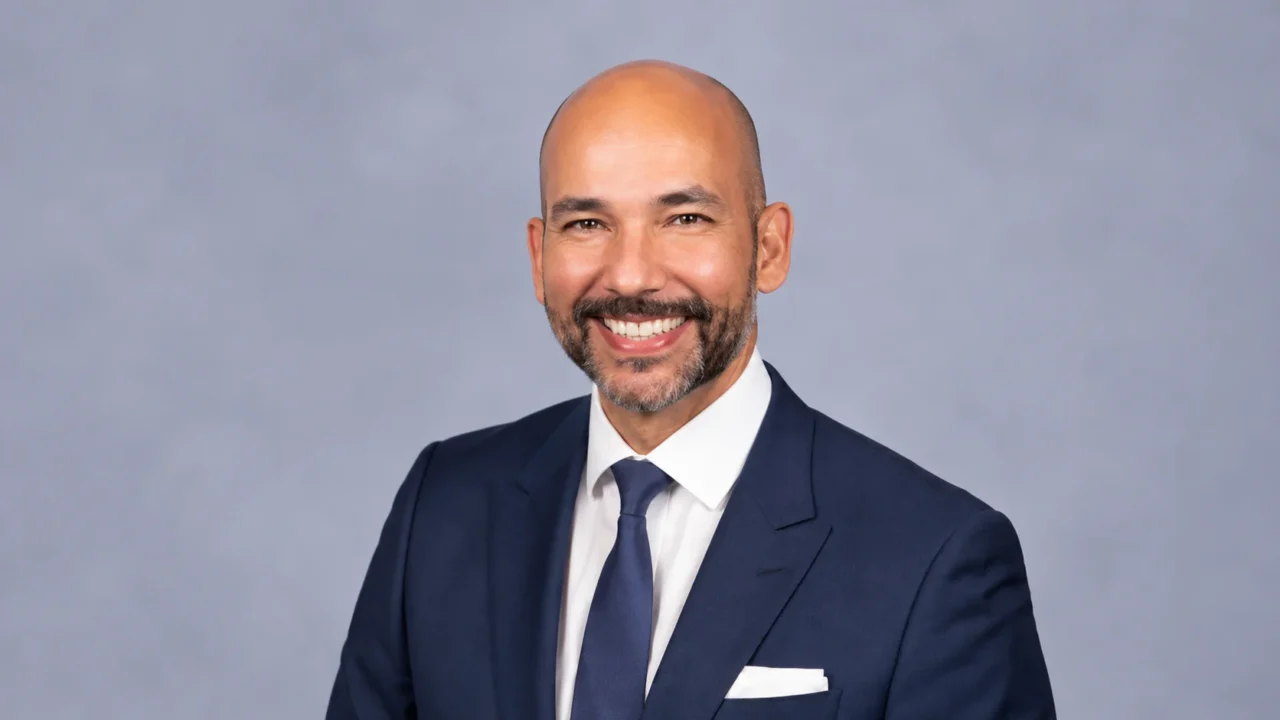
Gilberto Lopes, Chief of the Division of Medical Oncology at Sylvester Comprehensive Cancer Center, shared on LinkedIn:
“I conduct early-phase cancer trials, including first-in-human studies. For decades, the United States was the natural place to do this work because it combined groundbreaking and frontier science, venture capital, robust pharmaceutical and biotechnology clusters, experienced investigators, sophisticated regulators and patients willing to participate in research. Those advantages remain considerable, but when a company now decides where to start a new phase 1 trial, the answer is no longer automatically America.
China has transformed itself from a relatively minor participant in innovative drug development into a powerhouse for clinical research. A 2025 Nature Medicine analysis of the World Health Organization’s clinical-trial registry shows where we have been and where we are going. Historically, the United States accounted for nearly one-third of registered cancer trials, compared with 19% for China. But among trials recruiting when the dataset closed in December 2022, China accounted for 21%, compared with 16% for the United States. The direction and speed of travel is what concerns me.
Well-designed Chinese trials can produce rigorous evidence. But faster development is valuable only if the trial answers the question regulators and clinicians need answered. The FDA’s 2022 consideration of sintilimab, based largely on the China-only ORIENT-11 trial, illustrates the distinction. The FDA raised questions about the comparator, endpoint strategy and applicability to U.S. clinical practice. We should neither dismiss Chinese data nor assume speed makes evidence interchangeable.
Washington increasingly treats China’s biotechnology rise as a national-security problem. Protecting intellectual property, constraining strategic investment and preventing Chinese competitors from rapidly following American discoveries treat only one side of the problem. If a biotechnology company can conduct a credible first-in-human trial faster somewhere else, we should ask why it did not choose us.
The answer is more complicated than our regulatory environment alone. When the FDA receives a complete investigational new drug application, the conventional waiting period before a study can proceed is 30 days unless the agency places it on clinical hold. Yet the Association of American Cancer Institutes’ 2023 benchmarking survey found that industry-sponsored cancer trials took a median 170 days from submission for institutional scientific review to opening for accrual. Only 9% of responding cancer-center clinical-trial offices reported meeting a 90-day activation timeline for industry studies, the aspirational target suggested by the NCI.
Those clocks measure different parts of development, but that is precisely the point. The FDA clock is only one of several we watch: contract, budget and Medicare coverage analysis, scientific and ethical review, pharmacy, ancillary requirements and eventually enrollment. That distinction matters. Each step usually exists for a reason. Nobody owns the cumulative delay.
This complexity is legitimate. Coverage analysis exists partly because America’s fragmented payment system requires institutions to distinguish routine clinical costs from research expenses. Pharmacy, radiation-safety or biosafety review may be essential. Independent ethical oversight is indispensable. But a rationale for each component does not mean every review must be repeated locally, occur sequentially, or take as long as it does.
The U.S. Department of Health and Human Services’ Operation TrialBlazer, announced in June, recognizes part of the problem. The FDA says companies preparing first-in-human Phase 1 studies sometimes complete chemistry, manufacturing and controls work appropriate to much later development. The agency now emphasizes phase-appropriate requirements, and the FDA estimates this could save up to 12 months of development time in some programs. That has not yet been independently demonstrated, but the principle is sound: mandate what is necessary to expose the first patient responsibly, not information needed years later for commercial manufacturing.
The FDA is also proposing an expedited IND pilot involving qualified research institutions and rolling submission of application components. But even a much faster IND pathway will have limited effect if the study then spends months navigating an American research institution.
Three reforms could matter most. First, cancer centers should make trial activation a measured institutional performance metric, with one accountable leader able to see the entire process. Reporting a 170-day average is less useful than knowing where those days are spent. NCI-designated centers and organizations such as AACI could benchmark these intervals in a public and timely manner.
Second, sponsors and institutions should standardize and parallelize startup. Clinical research still involves repeatedly negotiating familiar contract provisions and moving budgets, pharmacy preparation and institutional reviews through serial workflows. Multicenter trials already use central and reliance IRB models extensively. The remaining challenge is often the ancillary stack around them. Necessary reviews should occur. But duplication should not be confused with rigor.
Third, protocols accumulate eligibility criteria, imaging, biopsies and exploratory endpoints around a question that is often simple, and HHS reports that 45% of protocol amendments were avoidable. The FDA has said so itself: in July it finalized three guidances telling oncology sponsors that performance status, laboratory value and washout criteria carried from one protocol into the next are not scientifically justified. Project Pragmatica has already shown that a registration-quality trial can be stripped down to overall survival and essential safety data. But guidance grants permission; it does not withhold it. Nothing tells a sponsor what it may not add, and no reviewer has ever been criticized for asking for one more scan. Until the schedule of assessments is justified the way eligibility criteria are, at the meetings where protocols are actually shaped, defensive design will remain the rational choice.
China has shown that biomedical leadership can move. The United States still has extraordinary scientific talent, deep capital markets, trusted regulation, world-class research institutions and a diverse patient population. We do not need weaker evidence or fewer safeguards to compete. America does not need to beat China by lowering its scientific standards. It can beat China by wasting less time.”
Other posts featuring Gilberto Lopes on OncoDaily.