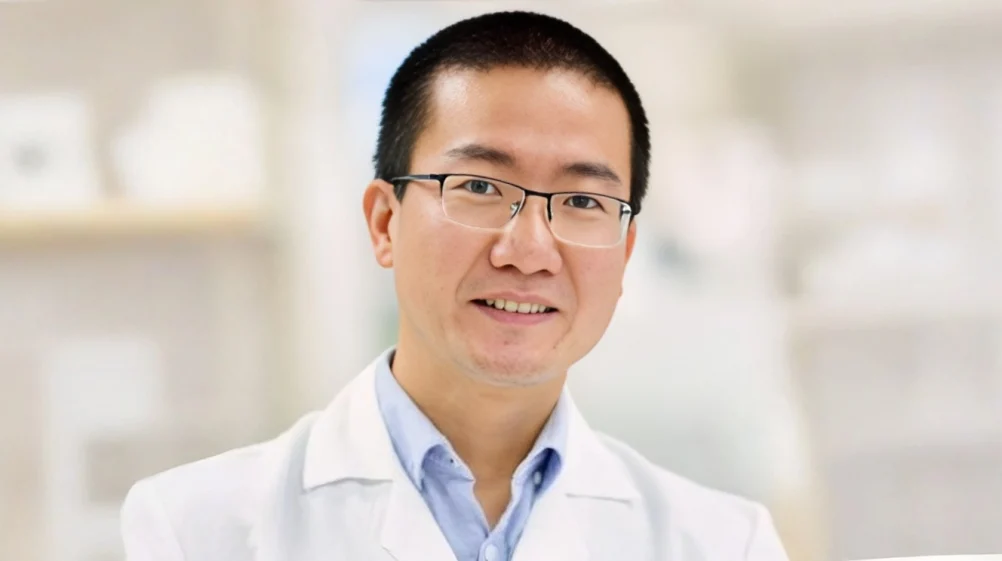
Gang Fang, Director, Center for Genomic AI and Microbiome Medicine at Icahn School of Medicine at Mount Sinai, shared on LinkedIn:
“Excited to share our new preprint!
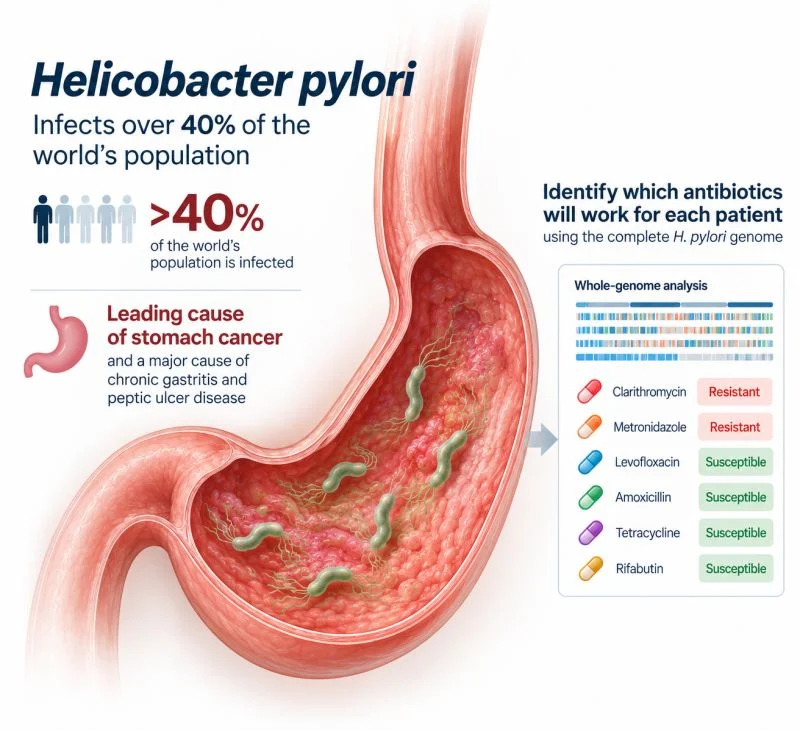
A genomic precision medicine approach for a bacterium that lives in the stomachs of more than 40% of people worldwide.
The most common chronic bacterial infection on Earth lives in the human stomach: Helicobacter pylori, the leading cause of stomach cancer.
The guideline is simple: anyone who tests positive should be treated with a combination of antibiotics to clear it. But treatment does not always work.
Let me first tell you a story about two patients.
One was treated and cleared on the first try.
The other was treated nine times, and every round failed.
The difference was hidden in the DNA of the bacteria each of them carried: which antibiotics each strain could resist, and what that meant for the regimen their doctor prescribed.
Every year, many patients go through treatment failures like the second case, because doctors usually have to choose antibiotics by guessing, without knowing the bacterium’s genome.
The ideal fix is to read the complete genome of the bacteria in each patient.
But this is hard. H. pylori DNA is a needle in a haystack in stomach samples, sometimes one in a million pieces of DNA!
Growing it in the lab often fails, and tests that look at only a few spots in the genome miss important information.
So we built uHp-seq, a new method that enriches H. pylori DNA thousands of times over and reads nearly complete genomes straight from a small stomach sample, with no lab growing step.
From the complete genome, we can predict the full antibiotic resistance profile, which can help match each patient to a regimen that is likely to work.
The same genome also carries virulence genes linked to different cancer risks across people, so the same approach can help us understand which infections are more dangerous.
This opens an opportunity to a more efficient and scalable approach to understand and eradicate this most common chronic bacterial infection, with the goal of preventing gastric cancer and other stomach diseases such as ulcers.
Big congratulations to co-first authors Yujie Liu and Mi Ni, who did outstanding work on this five-year study!
And thanks to our team and collaborators who made this project possible: Xuesong Zhang, Jessica Bass, Panchajanya Deshpande, Judith Romero-Gallo, Hao Chen, Yu Fan, Difei Wang, Wanjin Qiao, Yanchun Zhang, Edward Mead, Emmanuel Dias-Neto, Alejandro Corvalán, Rachel Brody, M. Constanza Camargorgo, Wendy Szymczak, Amy Klion, Richard Peek, Martin Blaser.”
Title: Culture-free Helicobacter pylori genomics reveals within-host virulence heterogeneity and antibiotic resistance
Authors: Yujie Liu, Mi Ni, Xue-Song Zhang, Jessica Bass, Panchajanya Deshpande, Judith Romero-Gallo, Hao Chen, Yu Fan, Difei Wang, Wanjin Qiao, Yanchun Zhang, Edward A. Mead, Emmanuel Dias-Neto, Alejandro Corvalan, Rachel Brody, Constanza M. Camargo, Wendy Szymczak, Amy D. Klion, Richard M. Peek, Martin J. Blaser, Gang Fang
To which Amanda Pullinger, Chief Executive Officer of Debbie’s Dream Foundation: Curing Stomach Cancer, added:
“Congratulations Gang Fang on this important preprint which will help us better understand and treat H. Pylori, a significant risk factor for stomach ulcers and in some cases, stomach cancer.
At Debbie’s Dream Foundation: Curing Stomach Cancer, we are focused on raising awareness of the need for early detection and diagnosis, especially for those at higher risk, such as military personnel.
More on this here: Protecting Military Families From a Preventable Cancer Risk: Announcing the H. pylori Get Tested campaign.”
You can also read: Key Updates in GI Oncology From ESMO 2026