





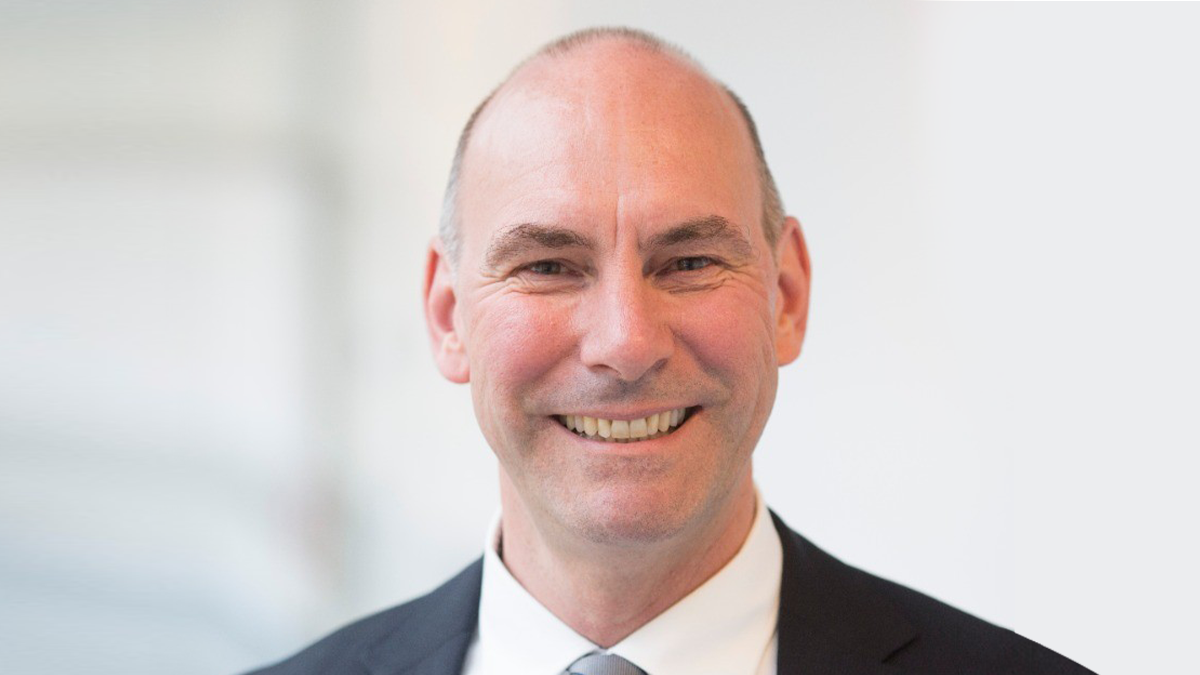
Florian Lordick, Oncologist, Professor of Medicine at University of Leipzig, Head of Medical Oncology, Director of the Comprehensive Cancer Center Central, Germany, shared a pot by Universitätsklinikum Leipzig AöR on LinkedIn, adding:
“We are proud and deeply honored to be re-certified as one of Germany’s Comprehensive Cancer Centers of Excellence. This recognition reflects the dedication, excellence, and team spirit of everyone contributing to cancer care, research, education, and innovation across our network.
At the same time, this distinction is a responsibility. It inspires us to continue advancing innovation and research, promoting equitable cancer care, expanding outreach throughout Central Germany, strengthening clinical trials and patient involvement, empowering oncology nursing, and educating the next generation of cancer researchers and clinicians.
A heartfelt thank you goes to all our colleagues in Jena for their outstanding partnership over the past years. In particular, I would like to thank my Co-Director, Professor Andreas Hochhaus, whose vision, friendship, and unwavering commitment have been instrumental to the success of our Comprehensive Cancer Center. Together, we look forward to the next chapter.”
Quoting Universitätsklinikum Leipzig AöR’s post:
“Central German Cancer Center Leipzig and Jena receives 4.8 million euros in funding from German Cancer Aid.
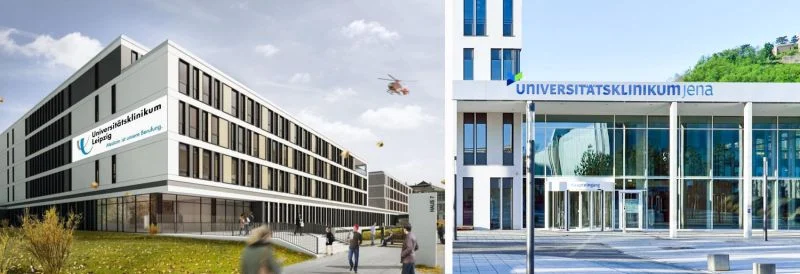
Top-level cancer medicine for patients in Central Germany continues to be secured: After a positive assessment by an international panel of experts, the Central German Cancer Center will receive renewed funding as an oncological center of excellence. The Deutsche Krebshilfe is providing 4.8 million euros for the next four years. The Comprehensive Cancer Center Central Germany (CCCG) is supported by the University Cancer Center of the Universitätsklinikum Leipzig AöR (UCCL ) and the University Tumor Center on Universitätsklinikum Jena (UTC).
The merger of the oncology centers in Leipzig and Jena, which was launched in 2019, is the first of the 14 centers of excellence for cancer medicine in Germany to operate across federal states. The goal: a central point of contact for those affected that offers modern interdisciplinary treatment with rapid integration of innovative findings from research into clinical practice.
‘The fact that we will continue to receive funding as an oncological center of excellence for the coming years is the highest recognition of our work for us’
says Prof. Florian Lordick, Director of the University Cancer Center at the UKL and board member of the CCCG.
‘It also shows that we can make an important contribution to cancer medicine as a whole with our development focus in recent years on cancer prevention and cancer survivorship, i.e. the scientific monitoring and clinical care of cancer survivors.’
Prof. Andreas Hochhaus, spokesperson of the University Tumor Center at the University Hospital Jena and board member of the CCCG, emphasizes:
‘We are very pleased that we were successful again and continue to be considered in the funding program of the German Cancer Aid. Among other things, this will enable us to significantly advance one of our current milestones of being able to offer patients the best possible and, above all, tailor-made treatment by means of personalized oncology, which is constantly up to date with the latest knowledge through research and innovation.’
Every year, the Center of Excellence treats and advises more than 24,000 patients with cancer at the two locations. In addition to access to over 600 ongoing clinical trials in cancer medicine, they also have access to state-of-the-art methods of individualized therapy and diagnostics. In certain cases, this also includes diagnostics and treatment planning in the molecular tumor board. There, possible individual treatment concepts are tested and developed based on the genetic characteristics of the respective tumor. This includes the entire range of modern cancer medicine, including gentle radiation procedures and immunotherapies through to the use of CAR-T cell therapies.”
Other articles about CAR-T cell therapies on OncoDaily.