





European Liver Patients’ Association (ELPA) shared on LinkedIn:
“October, Liver Cancer Awareness Month
PBC is a rare liver disease – but its impact goes beyond rare diseases.
PBC connects three major European health priorities: Rare diseases, liver cancer and liver transplantation.
Primary Biliary Cholangitis (PBC) is a rare, chronic autoimmune liver disease that progressively damages the small bile ducts.
Although many patients can live for decades with appropriate treatment, insufficiently controlled disease can progress to fibrosis, cirrhosis, liver failure and, in some cases, hepatocellular carcinoma (HCC) or the need for liver transplantation.
The facts matter. Liver cancer
Liver transplantation: PBC remains an indication for transplantation in advanced disease. In selected patients, severe treatment-resistant itching can also justify transplant assessment.
Treatment changes the future:
Cancer surveillance: Patients with PBC-related cirrhosis should receive appropriate HCC surveillance.
Early diagnosis and effective treatment are not only rare disease care. They are opportunities for cancer prevention, earlier cancer detection and reducing avoidable transplantation.
Why must PBC be part of Europe’s connected health agenda?
The development of an EU Action Plan for Rare Diseases offers an opportunity to strengthen early diagnosis, specialist care, access to innovation and patient-centred treatment.
Europe’s Beating Cancer Plan provides a framework for prevention, early detection, treatment and reducing inequalities in cancer care.
EU4Health supports stronger European health systems, prevention and improved access to healthcare.
European transplantation policy and cooperation are essential for patients whose liver disease progresses despite available treatment.
But these priorities must not remain disconnected.
A patient diagnosed with PBC should not have to wait until cirrhosis, cancer or liver failure develops before receiving the right care.
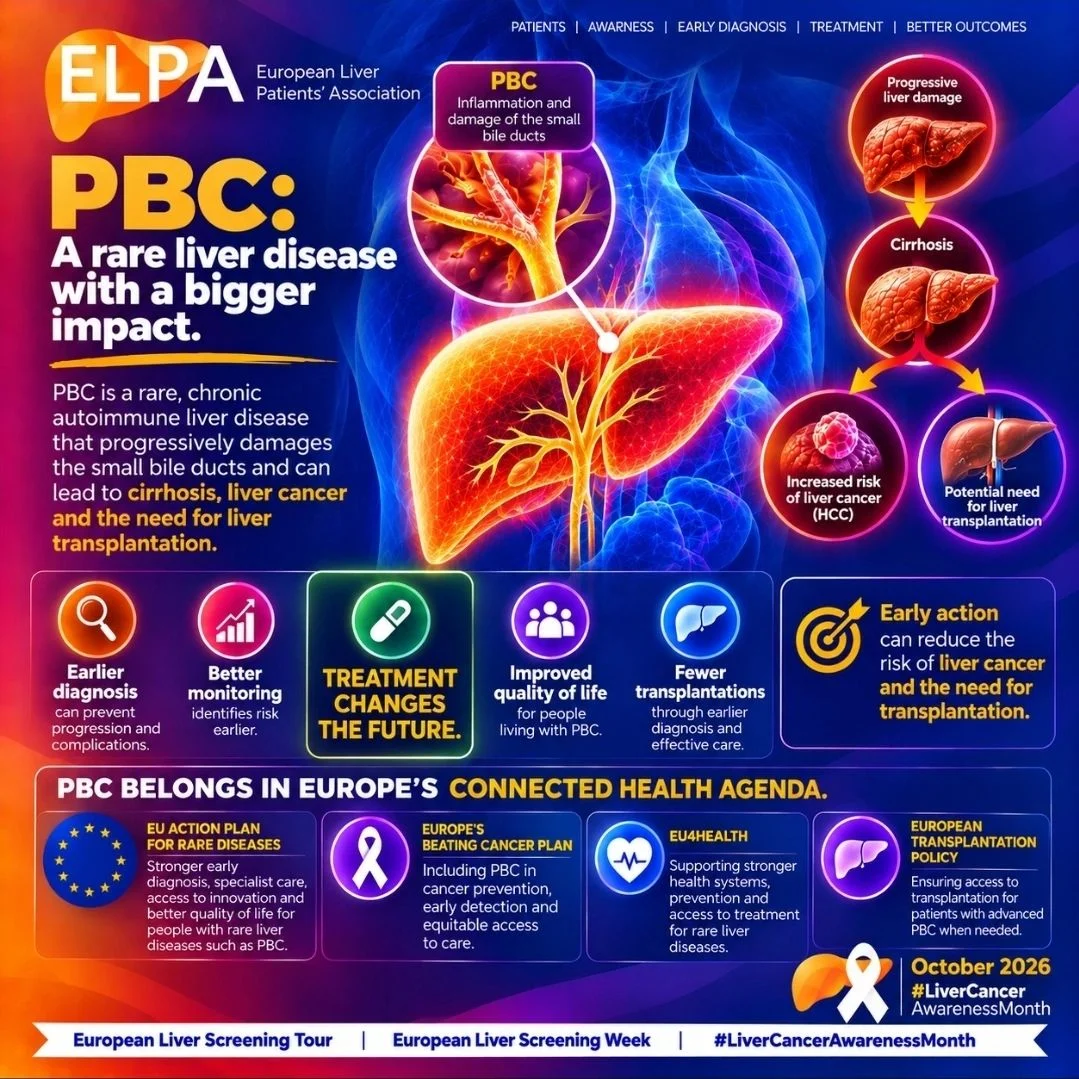
Europe needs a connected pathway:
- Early PBC diagnosis
- Right treatment
- Monitoring
- Cancer risk assessment
- Fewer preventable complications
- Better long-term outcomes.
For ELPA, the message is clear:
- PBC belongs in the rare disease conversation.
- PBC belongs in the liver cancer prevention conversation.
- PBC belongs in the transplantation conversation.
And these conversations must become One connected European health strategy.
Don’t wait for liver failure or cancer to recognise the importance of early PBC care.
The right diagnosis. The right treatment. The right patient. The right time.
One patient. One connected pathway.”