





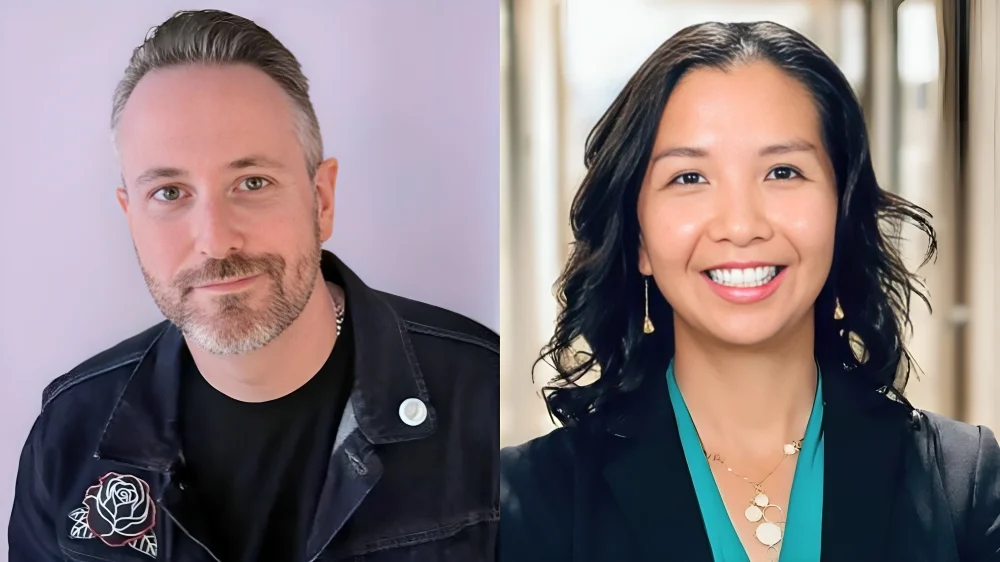
Dustin Etheridge, Director of Communications at Cancer Research Institute (CRI), shared a post by Alicia Zhou, Chief Executive Officer of the Cancer Research Institute, on LinkedIn, adding:
“Some personal news, and one of the most meaningful lessons I’ve learned about storytelling, science, and why our work matters.
Turns Out, I Was the Audience
The strange, beautiful collision of communication, science, and lived experience.
Every storyteller will tell you the same thing: the only way to truly understand your subject is to get as close to it as you can.
For nearly 20 years, that was my job.
As a photojournalist, I learned that the best stories weren’t found from a distance. They lived in the quiet moments after the interview ended. In the expressions people didn’t know they were making. In the trust you earned by listening a little longer than everyone else.
You get close enough, and abstractions disappear. People appear. That philosophy followed me to the Cancer Research Institute (CRI).
After losing my father to cancer, joining CRI didn’t feel like leaving journalism behind. It felt like continuing the same work in a different language. I was still listening. Still translating complexity. Still trying to help people understand something bigger than themselves.
The tools changed. The responsibility didn’t.
Over the last three years, I’ve had the privilege of helping tell the stories of scientists pursuing breakthroughs in immunotherapy, clinicians bringing those discoveries to patients, and the people who support this work because they believe tomorrow can look different than today.
I’ve also come to see communications differently.
A discovery doesn’t change the world the day it’s made. It changes the world when it reaches the people who need it, in a way they can understand and act on.
That’s the responsibility of good communications.
Recently, our team published The Science of Sun Safety, a piece about skin cancer prevention, early detection, and the extraordinary progress researchers have made through decades of scientific discovery, including advances in immunotherapy.
Earlier in the year as we were preparing the content, our social media manager proposed a series of companion graphics designed to encourage people to take a closer look at their own skin.
We had a simple goal:
Translate good science into something people could understand, trust, and act on.
The article was published. The graphics went live. We monitored the metrics and updated the content as needed, and then we moved on to the next project.
That’s the nature of the craft: you put your work into the world hoping it reaches the people who need it, rarely knowing whether it does. A short time later, I would find out.
One of those graphics appeared right here in my own LinkedIn feed.
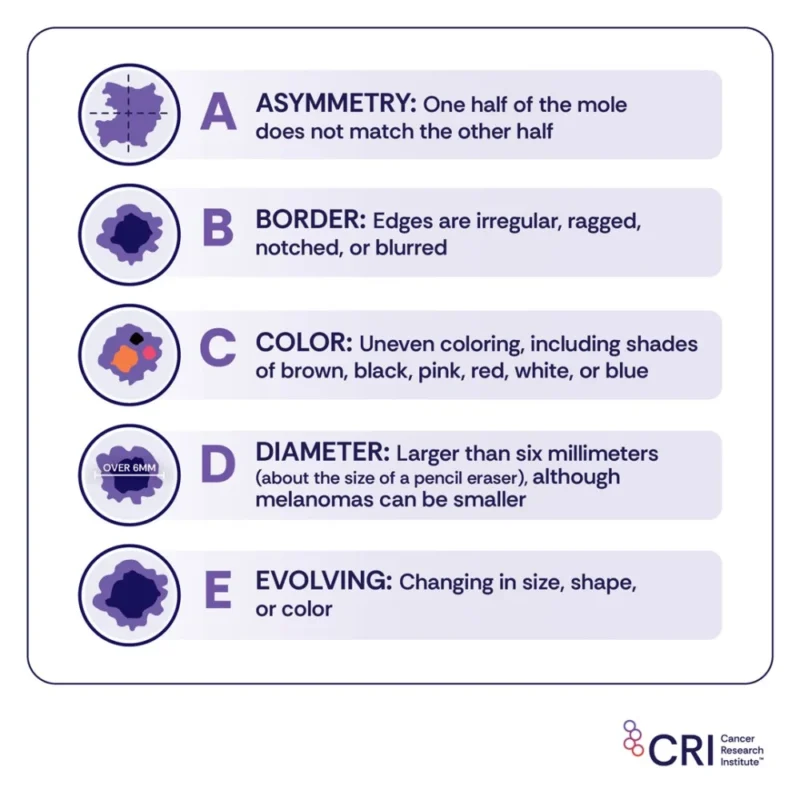
I’d seen it a few times while we were creating it. But this time I wasn’t thinking about audience segmentation or messaging strategy – I was just another person scrolling. I’d noticed a spot on my skin months earlier. I’d also ignored it for months.
Not because I thought it was nothing – because life gets busy and I could always find another reason to tell myself I’d get around to it next week.
Then I looked at the graphic. I really looked at it. And I realized I was doing exactly what we were asking other people not to do.
So, I made the appointment.
In early June, I was diagnosed with melanoma.
The initial diagnosis was melanoma in situ, but my pathology report revealed very strong evidence of prior invasion and also, regression. As someone who spends his days helping explain cancer immunology, it was indeed surreal to read that my own immune system had already been interacting with the cancer.
I’d spent the last few years helping explain the science. Now I was living it.
That’s a strange, beautiful, and quite humbling place to find yourself.
Thankfully, my medical team caught mine early and acted quickly. The melanoma was removed with surgery, and today I’m grateful to have clear margins, a gnarly scar, and a healthy recovery underway.
Sharing the news with my colleagues at CRI felt strangely uncomfortable.
I’m used to telling other people’s stories. Not becoming one.
What happened next told me as much about the organization as anything I’ve experienced since joining.
Our leadership didn’t hesitate. My teammates didn’t hesitate. Everyone’s response was the same: take care of yourself and we’ll take care of everything else. An organization’s values aren’t proven in easy moments. They’re revealed in the hardest ones. And once you’ve seen the difference, you never forget it.
As I’ve reflected on all of this over the last couple of months, I’ve realized something else changed: my definition of success.
Communicators spend a lot of time talking about reach. We celebrate impressions. Engagement. Media placements. Open rates. To be sure, those things matter. But they measure attention. I’ve become much more interested in measuring action.
Did someone schedule the appointment? Did they ask another question? Did they recognize themselves in the story? Did they do something different because they encountered our work?
Those are significantly harder questions to answer – something to aspire to. The article and graphics our team created accomplished exactly what we’d hoped they would. They changed someone’s behavior – it just happened to be mine.
That’s not a testament to me – it is what happens when an organization treats communications as part of its mission rather than an accessory to it.
At CRI, we don’t tell stories because stories are nice to have. We tell them because science deserves to be understood, progress should be celebrated, and patient experiences contextualize the research in a tangible way.
For years, I believed the purpose of storytelling was to help people understand the world around them. I still believe that.
I just think there’s another layer. The best stories don’t stop at understanding. They help people recognize themselves. Sometimes that’s all it takes to change what happens next.
If you’ve been putting off making an appointment, please don’t. Early intervention can truly change the course of a diagnosis, and knowledge is power. I’m living proof.
And don’t forget your sunscreen.”
Quoting Alicia Zhou’s post:
“I’m deeply grateful to Dustin Etheridge for the courage and vulnerability it took to share this story.
Cancer Research Institute (CRI) has been lucky to have Dustin as our Director of Communications for the past three years. Every day, he brings his infectious energy and dedication to his job: helping people see not only the complexity of cancer immunology, but also the human lives at the heart of it.
This summer, the story hit much closer to home when Dustin faced his own firsthand melanoma diagnosis. His experience is a powerful reminder that scientific progress creates impact only when it reaches people in ways that inspire action. It has also been an very personal reminder of why we invest in both discovery and communication at CRI – because when rigorous science is made understandable and personal, it can change behavior, change outcomes, and save lives.
Dustin, thank you for your bravery, your exceptional work, and your enduring commitment to our mission!”
Other articles about Melanoma on OncoDaily.