






Aydah AlAwadhi, Consultant Medical Oncologist and Division Chair of Hematology and Oncology Department at Sheikh Shakbout Medical City, shared on LinkedIn:
“The Evolution of Cancer Drug Approval: Innovation or Lowering the Evidence Bar?
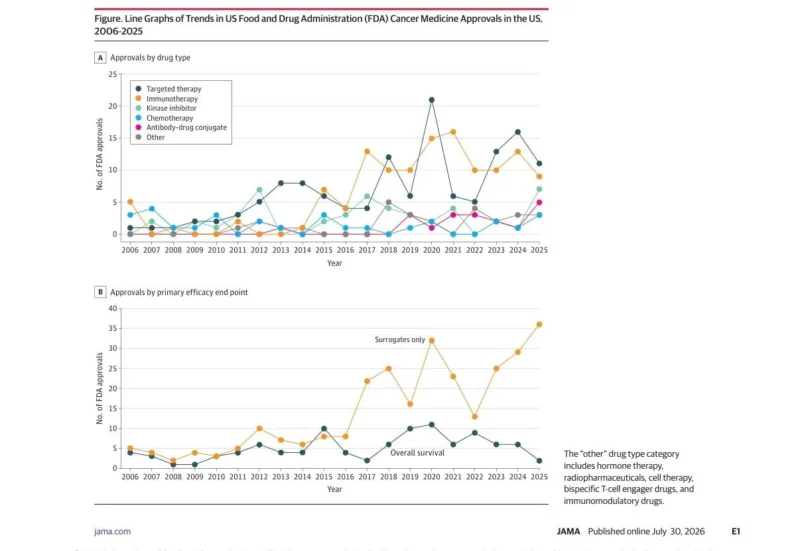
A new JAMA Oncology Research Letter reviewed 385 FDA approvals for adult solid tumors (2006–2025) and highlights a major shift in the evidence supporting oncology drug approvals.
My perspective:
- 385 approvals: 73% regular and 27% accelerated.
- Targeted therapies and immunotherapy have largely replaced chemotherapy.
- Overall survival (OS) supported only 26.5% of approvals, while approvals based on surrogate endpoints increased from 60% to 81.3% over the study period.
- Objective response rate (ORR) has overtaken PFS as the leading surrogate endpoint.
- Single-arm trials increased from 12.9% to 40%, with more surrogate-based drugs receiving regular approval.
My intake:
- A decline in approvals based on overall survival (OS) does not necessarily mean lower-quality evidence. It reflects modern oncology, where longer survival, effective subsequent therapies, crossover, and precision medicine make OS increasingly difficult to demonstrate.
- PFS and, in selected settings, ORR are not inherently inferior endpoints. When biologically plausible and well validated, they can provide meaningful evidence of clinical benefit.
- The real question is not OS vs. surrogate endpoints – it’s whether the endpoint is appropriate for the disease, unmet need, and expected treatment effect.
- Early access matters. For patients with life-threatening cancers, waiting years for mature OS data may unnecessarily delay access to transformative therapies.
- At the same time, regulatory flexibility must be matched by scientific rigor. When uncertainty remains, accelerated approval with timely confirmatory trials provides the right balance.
- A growing challenge is that confirmatory trials are not always straightforward. When single-arm studies show unprecedented, durable responses in biomarker-selected populations, identifying an ethical and clinically appropriate control arm can be difficult.
- Innovation is now moving faster than traditional trial designs. Targeted therapies, immunotherapies, ADCs, and rare molecular subgroups increasingly require more flexible regulatory and clinical trial approaches.
Ultimately, the goal is neither speed nor certainty alone – it is the right balance between timely patient access and robust evidence of meaningful clinical benefit.
Congratulations to the amazing authors on this work Brian Shkabari, Nicole Vorko.”
Other articles featuring Aydah AlAwadhi on OncoDaily.