





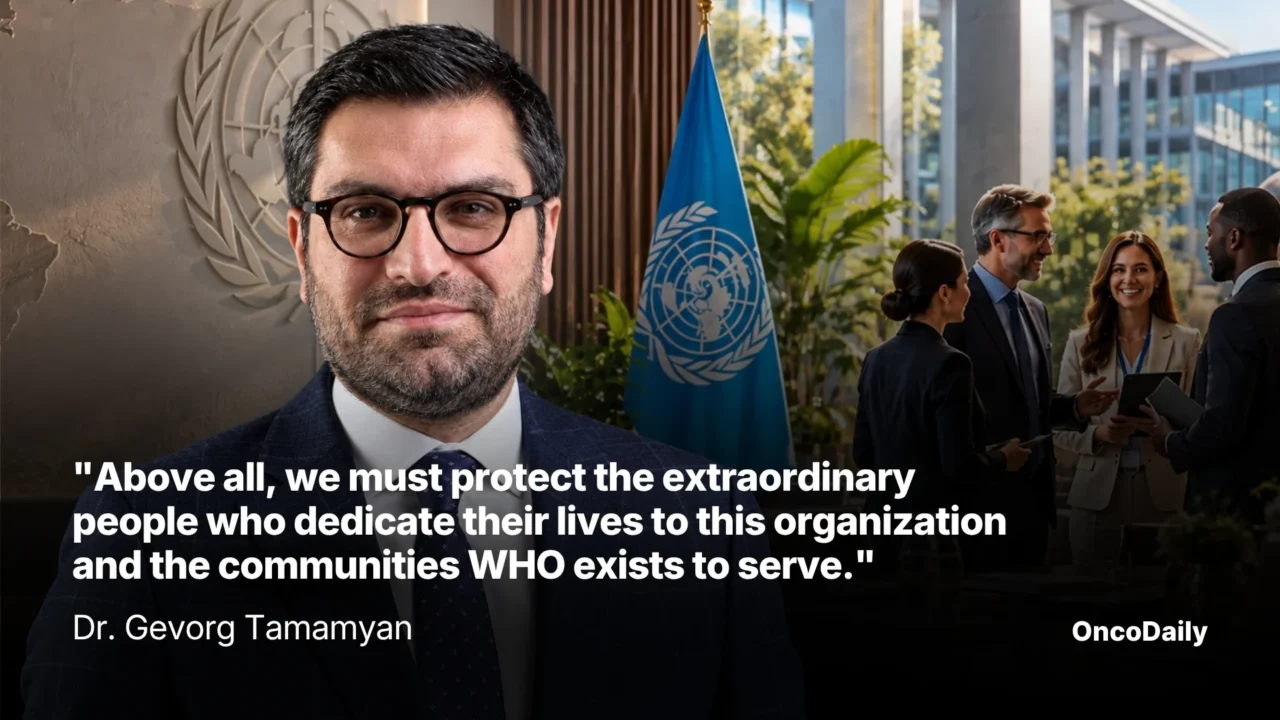
Dr Gevorg Tamamyan, Candidate for WHO Director-General, Professor and Chairman of the Department of Pediatric Oncology and Hematology at Yerevan State Medical University and Editor-in-Chief of OncoDaily, shared his views on accountability and transparency at WHO.
‘WHO has extraordinary people working under immense pressure. My first responsibility will be to empower them-making World Health Organization the best place to work, attracting the best global talent, and aligning responsibility with accountability.’
“This is how my vision statement opens, and it is one of my core beliefs.
A few days ago, Kieran Bligh raised some very difficult questions about misconduct, investigations and accountability inside WHO. I said I would take a closer look.
I did. My team also reviewed the publicly available data.
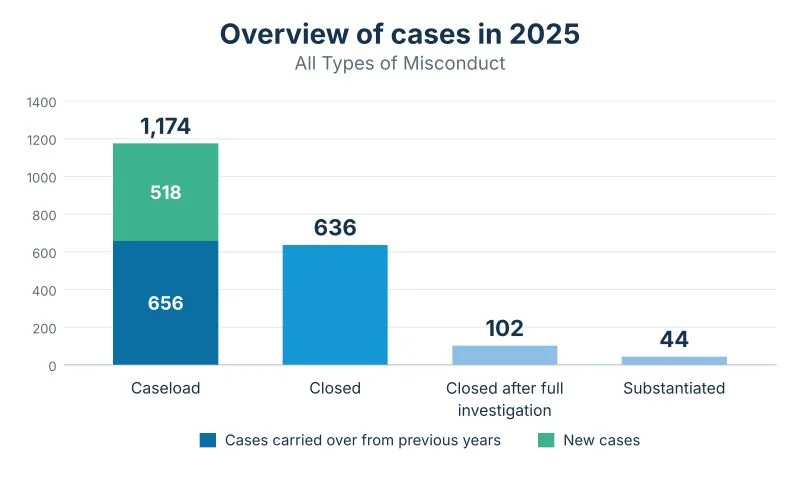
What we found deserves a serious conversation. WHO reported that its investigations function handled 1,174 cases in 2025 and closed 636, leaving 538 at year-end. Of the 636 cases closed, 102 went through a full investigation and 44 were substantiated. WHO dashboards report 269 financial misconduct cases and 361 sexual misconduct and abusive conduct cases open in the latest report.
The picture is complex. An allegation is not a finding of guilt. A case may be closed without a full investigation for legitimate reasons. The data may also be categorized differently, so simplistic comparisons can mislead. But one thing is clear to me: Hundreds of open cases, lengthy investigations, inconsistencies between publications and limited public visibility deserve questions, not silence.
WHO says that timeliness, responsiveness and fairness in misconduct investigations are essential to maintaining trust. I agree!
This cannot only be about punishment afterward. It must be about creating an organization where people feel safe to speak, whistleblowers are protected, victims and survivors are supported, investigations are independent and timely, and seniority never buys protection.
Zero tolerance cannot be a slogan. It has to be measurable: Do people trust the system enough to report? Are those who report protected? Do victims and survivors receive timely, effective support? And when something goes wrong, do we learn from it, or simply close the file? These are indicators I would want published transparently.
My objective is not to attack WHO. Quite the opposite. If we believe in WHO, we must be willing to make WHO better. The bigger question is how to prevent misconduct rather than deal with it afterward. How do we create a working environment where fewer cases happen in the first place? And above all, we must protect the extraordinary people who dedicate their lives to this organization, and the communities WHO exists to serve.
So I repeat my invitation. If you work or have worked with WHO and there are things I should understand, good or bad, please reach out. If you have concrete suggestions to strengthen the system, I want to hear them. I may not see everything from where I stand. Leadership starts with listening. Then comes action.”
Previously, Dr. Gevorg Tamamyan responded to concerns raised by Kieran Bligh, Senior Doctoral Researcher and Op-Ed Contributor at Health Policy Watch, regarding accountability and misconduct within the WHO, stating:
“Thank you, Kieran Bligh, for raising these important questions.
I have always believed that people are the greatest strength of any organization. Creating a culture where everyone feels respected, protected and empowered, and where integrity and accountability are NON-NEGOTIABLE, is something I care deeply about.
I will personally take a closer look at the concerns you have raised and the evidence behind them. I want to listen, understand the facts and hear from those affected.
I will not hesitate to address difficult and uncomfortable issues, even when others may prefer to avoid them. That I can promise! For me, the human side of leadership has always been, and will always remain, the most important.
WHO must be the best workplace for everyone.
I encourage everyone who has experienced or witnessed misconduct, or has ideas for making our organization better, to speak up and be part of this conversation.
We must have the courage to confront difficult realities and the determination to turn our words into action!”
About Dr Gevorg Tamamyan
Dr Gevorg Tamamyan, MD, MSc, PhD, DSc, FASCO, is a prospective candidate for the post of Director-General of the World Health Organization, nominated by the Republic of Botswana. He is a global leader in oncology, health systems strengthening, and international health cooperation, recognized for building bridges between countries and advancing equitable cancer care in resource-limited settings.
Dr. Tamamyan is Professor and Chairman of the Department of Pediatric Oncology and Hematology at Yerevan State Medical University and CEO of the Immune Oncology Research Institute (IMMONC).
He is the Co-Founder and Editor-in-Chief of OncoDaily, one of the world’s largest oncology media platforms, created to democratize access to reliable, independent, and evidence-based cancer information globally.
Dr. Tamamyan was elected and currently serves as President of two major international pediatric oncology organizations: the International Society of Pediatric Oncology (SIOP) Asia Continental Branch, representing pediatric oncology professionals across Asia, and the Pediatric Oncology East and Mediterranean (POEM) Group, uniting 28 countries and 110 cancer centers. He also serves as Co-Chair of the St. Jude EURO Regional Advisory Committee, encompassing 13 European countries.
At the age of 32, Dr. Tamamyan was appointed Head of the Pediatric Cancer and Blood Disorders Center of Armenia, where he led the consolidation of previously fragmented pediatric oncology and hematology services into a single national center. Under his leadership, the Center evolved into a regional reference point, with survival rates reaching up to 80%.
He also co-founded City of Smile, a national pediatric cancer charity that helps ensure universal coverage for the diagnosis and treatment of every child and young adult with cancer in Armenia.
Dr. Tamamyan is Chairman of the Board of the Institute of Cancer and Crisis and an adviser to the Rector of Yerevan State Medical University. He previously served as President of the Harvard Club of Armenia.
Educated and trained across seven countries in Europe, North America, and Asia, his professional journey spans frontline clinical practice, research, academic leadership, national cancer center management, global health diplomacy, and institution building.
He is the recipient of numerous international awards and distinctions, including Fellow of the American Society of Clinical Oncology (FASCO); ASCO LIFe and IDEA Awards; UICC and IARC Young Leader Awards; the 40 Under 40 in Cancer Award; the Latin American and Caribbean Society of Medical Oncology (SLACOM) Award for Global Oncology Leadership; and the Global Health Catalyst Distinguished Leader Award.
He is married and has two daughters, Charlize and Letizia.
Read more about Dr. Gevorg Tamamyan’s WHO candidacy:
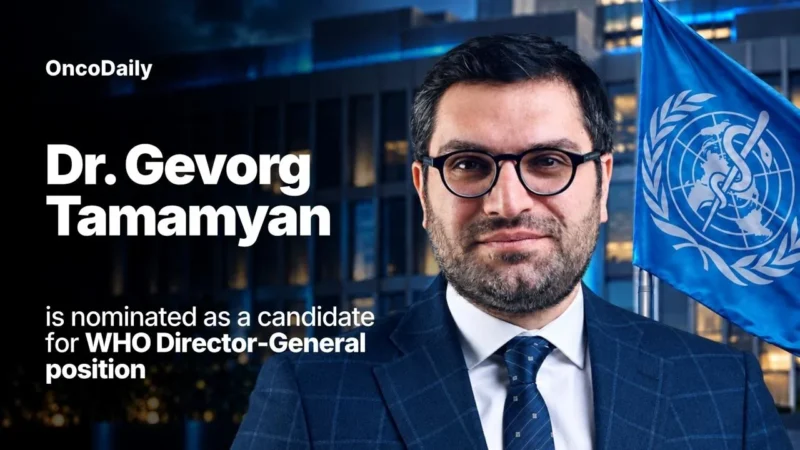
Dr Gevorg Tamamyan is Nominated as a Candidate for WHO Director-General Position
Watch HRH Princess Dina Mired’s interview with Dr. Gevorg Tamamyan: The Man Who Challenged Cancer Hierarchies