





Derek Yach, Global health consultant Global Health Strategies, shared on Substack:
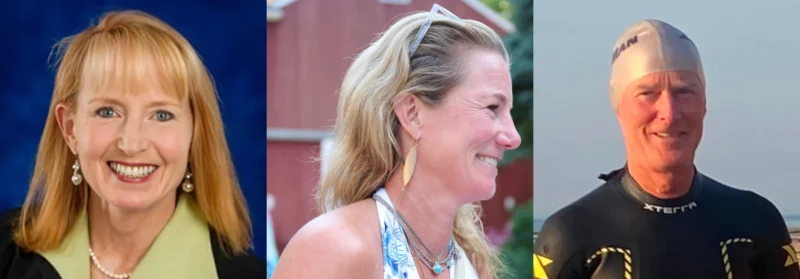
“On September 10, 2026, I will get into the water at Battery Park at 7 a.m. and try to swim 28.5 miles around the island of Manhattan. I will not be alone. Mary Money, Keith Kirkpatrick, and Leila Shields will be beside me – three of us bound together by something most people would rather not have in common: cancer.
Between the three of us who have been treated for it, Mary, Keith, and I have faced three of the four most common cancers diagnosed in Kenya – breast, prostate, and esophageal. We did not choose that overlap. But we cannot ignore what it means.
What saved us?
I was diagnosed with esophageal cancer in 2023. I remember being told the disease was caught early, that treatment could begin within days, that a port would be placed so the chemotherapy could enter my bloodstream safely, cycle after cycle, without a new needle search each time.
I remember a scan when I needed one. A surgeon who had done the operation many times before. Keith and Mary have their own versions of this story – different cancers, the same infrastructure of promptness and precision underneath them. None of us controlled any of that. We simply happened to be sick in a place built to catch it.
I also remember what treatment demanded of the body, and what helped me survive it. Swimming did.
On the days between infusions, when the cold sensitivity from chemotherapy made it hard to hold a glass of water, getting into open water was somehow the one thing that gave something back. I have written before about how those months in the water, with friends like Keith, Mary and Leila beside me, felt like a lifeline through treatment.
That is part of why we swim now, and why we swim together – because we know, in our own bodies, both what cancer takes and what carries a person through it.
What most people in Kenya do not get
In Kenya, breast, cervical, prostate, and esophageal cancers together account for most of the country’s cancer burden. Esophageal cancer alone is diagnosed disproportionately often in Kenya, linked to the day-to-day consumption of very hot beverages and to tobacco.
But diagnosis is only the first hurdle.
Studies from Kenyan cancer registries describe patients who wait years – not weeks – between first symptoms and a confirmed diagnosis. Some travel hundreds of kilometers to reach a facility that can test for what is wrong with them. Research comparing breast cancer survival across sub-Saharan Africa and the United States has found 5-year survival rates in the region running tens of percentage points below rates in high-income settings – a gap driven not by biology, but by everything that stands between a diagnosis and finished treatment: distance, cost, delay, and a chronic shortage of the basic tools and expertise that make treatment tolerable enough to complete.
One of those tools is a chemotherapy port.
It is a small device, implanted under the skin, that gives cancer patients reliable access for their infusions across months of treatment. Deepika Karki and I wrote about this gap recently in The Lancet Oncology: medicines are increasingly reaching low- and middle-income countries, but the infrastructure for delivering them safely often is not.
Without a port, patients face a new needle in a new vein at every single session – a source of pain, vein damage, and, for some, a reason to stop treatment they might otherwise have finished. It is what we called, in that letter, the last inch of cancer care: the small, solvable gap standing between a drug that exists and a patient who needs it delivered safely.
We have seen this gap close before
25 years ago, HIV was a death sentence for millions of Africans while patients in the United States were living full lives on antiretroviral therapy.
That gap did not close on its own. It closed because Americans decided the distance between Nairobi and New York should not decide who lived.
That decision became PEPFAR – the largest commitment any nation has made to fight a single disease abroad – and it is credited with saving more than 25 million lives since 2003. It worked because it treated solidarity as infrastructure: supply chains, trained health workers, financing mechanisms, and the unglamorous plumbing of care delivery, built and sustained over two decades.
Cancer in low-income countries has never had its PEPFAR moment.
It remains, in too many ways, a neglected disease of the tropics – not because the science is unknown, but because the same collective will that transformed HIV care has not yet been mobilized for oncology. The tools that closed the HIV gap – pooled procurement, tiered pricing, demand aggregation, training support – are not new inventions. They are proven. They are simply waiting to be pointed at the last inch of cancer care the way they were once pointed at antiretrovirals.
Why we are swimming around Manhattan?
Manhattan is a city built on the belief that hard things can be organized into solvable ones.
We chose to swim around it because a 28.5-mile open-water circuit is itself a kind of argument: that distance and difficulty are not reasons to stop, they are reasons to prepare, to pace yourself, and to keep going with people who will not let you quit.
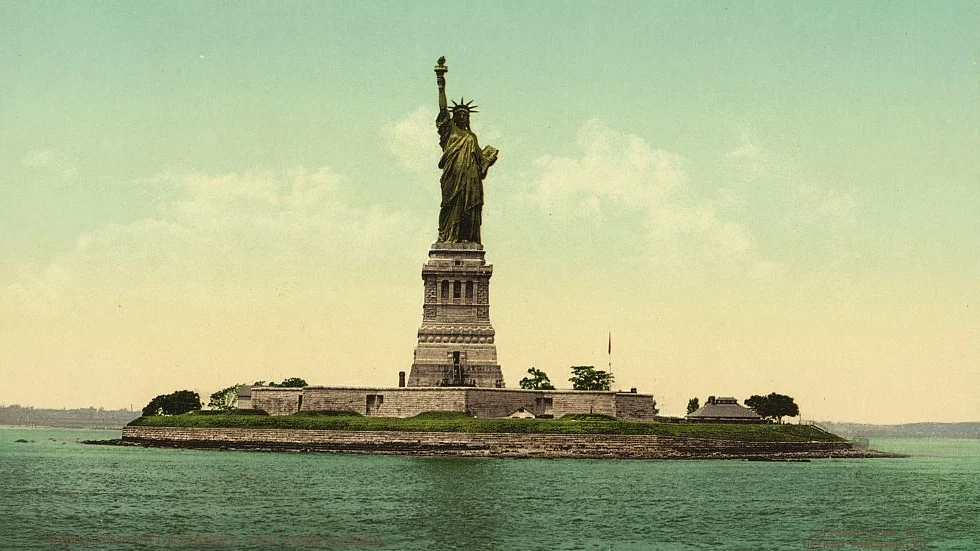
We swim to reflect on the meaning of liberty as we pass Lady Liberty, the meaning of international solidarity as we pass the UN, and the innovations by private and public scientists hard at work across Manhattan that address the toughest and most personal challenges we face.
We are asking supporters to fund us to give life to others.
Working with CMMB – an organization with a long record of building durable health systems, not just delivering aid – funds raised through this swim will help equip the Phangisile Mtshali Cancer Center and surrounding clinics in Kitui County, Kenya, with chemotherapy and chemotherapy ports.
CMMB’s leadership on noncommunicable disease infrastructure is precisely the kind of work that can turn the ‘last inch’ from a policy phrase into a device in a patient’s chest and a completed course of treatment.
We are not doing this because we think a swim solves a global health system. We are doing it because Mary, Keith, and I know exactly what it feels like to be treated in time, with the right tools, by people who had what they needed.
We got to survive our cancers. We want that to stop being a matter of geography.
How to help
Every stroke of this swim is a stand-in for the access we were given and that most patients in Kenya are still denied. A donation in honor of our swim is a vote that treatment completion should not depend on which country a patient was born in.
September 10, 2026. Battery Park, NYC. 7 a.m. We will be in the water. We hope you will be with us in spirit or cheering from the shore – and that you will help close, for someone else, the same gap that once nearly closed in on us.”
Other articles about Kenya on OncoDaily.