





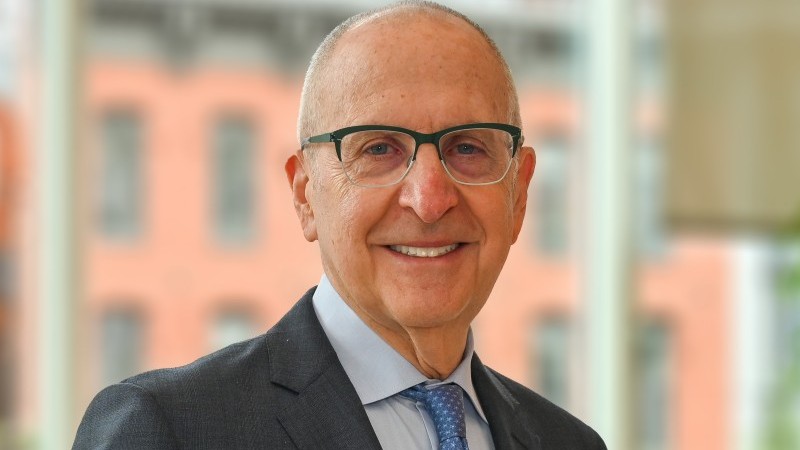
David J. Skorton, President and CEO of the Association of American Medical Colleges (AAMC), shared a post on LinkedIn:
“The AAMC at 150: How Far We’ve Come, and the Road Ahead
I recently had the joy of celebrating commencement at the University of Toledo College of Medicine and Life Sciences. I was reminded that life offers us periodic ‘way stations‘ like commencements at which to pause and consider our goals, aspirations, setbacks, and progress. Anniversaries are another such way station to consider the road we have covered so far, reflect on where we stand, and imagine the future.
Two years ago, I observed my 50th anniversary of graduating from medical school. I continue to feel medicine is one of the most rewarding careers, even if heartbreaking at times. In my practice field – congenital heart disease in adolescents and adults – we’ve seen a complete and inspiring reversal of outlook: the year I was born, less than 20% of children born with congenital heart disorders lived to adulthood. Now, 90% do. This is an amazing testament to what research, innovation, and teamwork in academic medicine can do.
Today, as we honor the 150th anniversary of the AAMC and the 250th anniversary of our nation, I’m reflecting on progress and the work still ahead across academic medicine. It’s easy to look back at the state of medical education, clinical care, and research in 1876, the year the AAMC was founded, and marvel at all we’ve collectively achieved. Back then, we didn’t have consistent medical education standards, which are necessary for ensuring quality and trust in the medical profession. This gap led to the need for a national, unifying association.
The AAMC has since become synonymous with medical education across the continuum from undergraduate to graduate medical education – and far beyond. We provide services for those just considering a medical career, to start. And throughout the many steps along their journeys, we provide continuing education, networking, professional development, and in-the-moment resources and connections to elevate their work.
The AAMC has also evolved into a broadly trusted voice of academic medicine, encompassing research, clinical care, and community collaboration alongside our medical education work. We champion academic medicine in the halls where policy is made, and we help the doctors, teachers, and researchers within our nation’s academic medical centers continuously grow into the work they were called to do.
But we have to be honest in facing areas where we have so much more to do: in some areas, academic medicine has fallen short, along with broader aspects of our society. Health inequities persist, and in places, they’ve grown deeper, despite years of recognition and good intent.
A few examples:
- Access to care remains a significant problem. Patients across the country increasingly struggle to access to care, with specialist wait times in major metropolitan areas averaging 31 days and nearly 15% of rural patients reporting they cannot always receive care due to a combination of workforce shortages, limited services, affordability challenges,(AAMC Consumer Survey of Health Care Access, 2022) and the closure of more than 195 rural hospitals since 2005.
- The quality of care has remained worse for people with low incomes, for those using public insurance or who are uninsured, and for many racial and ethnic groups, according to federal data. Outcome disparities persist. For example, pregnancy-related mortality ratios have been over 50 percent higher in rural areas than large urban areas. According to the Centers for Disease Control and Prevention, the likelihood of death from pregnancy-related causes among people who identify as Black, American Indian, or Alaska Native is three to four times higher compared to their White counterparts. Based on 2022 data, among high-income countries, the United States had the lowest life expectancy at birth, highest death rates for treatable conditions, and the highest maternal and infant mortality rates.. Additionally, children’s mental health remains a national emergency.
These are deep, tangled problems that involve not only academic medicine but the larger society in which we work and in which our patients live. But we must take our share of the responsibility, and our missed chances have fueled critics across the political and social spectrum. Quite separate from our critics, much of academic medicine, not just the AAMC, is looking inward and naming what hasn’t worked. Seeing ourselves honestly, without apology, even when we fall short of where we hoped to be, is what will ready us for the work ahead and for a future of stronger trust and deeper progress.
Our charge now is to face our unmet challenges together, working directly with those with whom we disagree toward the ultimate goal: service to our patients, families, and communities. The AAMC’s Principles of Trustworthiness can help us listen before acting, reflect with humility, and act with intention to identify common ground. As we do, let’s keep testing our rhetoric against the evidence, so that what we say stays true to what we know. And let’s continue to insist that all ideas – whether from us or others – meets the test of evidence.
I feel the weight of the work ahead, but I’m deeply hopeful, and ready to move into a brighter chapter of service to learners, leaders, and those we serve everywhere. Recently, I’ve been inspired by the move toward competency-based medical education, an enormous example of progress that works toward an ‘outcome measure,’ as opposed to the common ‘input measure’ of courses and lectures. Our continued progress in areas like this is exciting and invigorating.
Our way forward will require a balancing act in how we continue doing what’s working, while being open to new perspectives and approaches when needed. We must defend staunchly the need for evidence-based practices, no matter any pressure to abandon them. And we must hold fast to processes such as peer review of research grant applications and robust research funding, which have elevated our nation’s research infrastructure and delivered so many life-saving and life-changing advances to patients. At the same time, we must be flexible and adaptable, facing up to the areas where we need to make changes to better support the health of people everywhere.
Both of these commitments – holding steadfast to what works, while being open to change – carry equal weight, and we must adhere to both principles at once.
One hundred and fifty years have brought us further than we imagined. They’ve also shown us how far we still need to go.”
Other articles featuring David J. Skorton on OncoDaily.