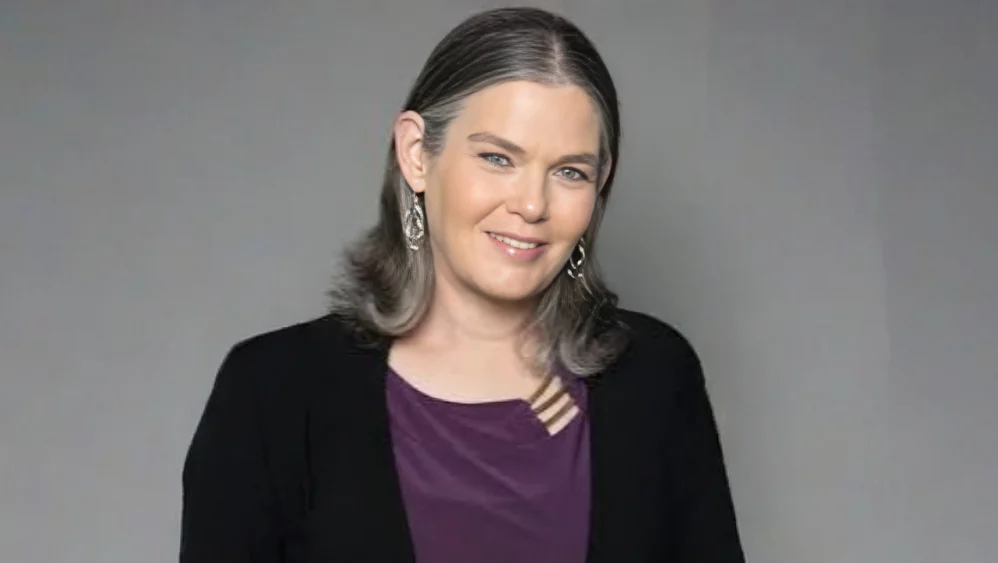
Daphne Koller, Founder and CEO of the insitro, shared on LinkedIn:
“Nine in ten drug programs that enter the clinic fail, most often when we first test for efficacy – when the mechanism did not drive the disease.
The best-validated fix has been known for a decade:
Targets with human genetic support are 2 to 4 times more likely to succeed in the clinic. Yet only 3.6% of genetically supported targets have ever been pursued for an indication the genetics supports. The genetic window is foggy. A disease map yields dozens or hundreds of associated genes, most with muted effects, because evolution selects against variants of massive impact.
Part 2 of my Deep Phenotype manifesto, out today, describes the AI we built at insitro to cut through that fog. Specialized ML models turn high-content measurements, from whole-body imaging in large human cohorts to genome-scale perturbation screens in human cells, into a library of precision phenotypes:
Quantitative traits that sharply raise the power of human genetics. In MASH, they surfaced over 30x more genetic associations than clinical staging.
On top of this library sits a causal AI model, our Virtual Human, that integrates evidence across data modalities, disease biologies, and physical scales. The premise is that this integration gives rise to higher conviction, which in turn we believe will give rise to higher clinical success rates.
To assess that hypothesis, we asked the model to predict success of historical phase 2 trials, zero-shot, with no trial outcomes in training. In its top decile of target-indication pairs, the false-positive rate was 10% in metabolic disease and 21% in cardiac, against a historical failure rate of 57% in both.
We recognize, of course, that a retrospective benchmark is no guarantee of prospective success.
Conviction is only half the value. Because the same phenotypes span from patient to cell, a genetic hit becomes an experiment we can run:
The platform tells us in which cells a gene acts, which pathways it perturbs, whether a drug should inhibit or activate it.
The assays that credential a target become the assays we optimize molecules against; the biomarkers that found the mechanism follow the drug into the clinic. The piece traces one example end to end: MASH, from the UK Biobank to a validated liver program.
If this works, the payoff arrives twice. The first is economic: every medicine that reaches a patient carries the cost of the failures behind it, and nothing lowers that burden more than mechanisms that survive phase 2.
The larger prize is measured in patients: the many diseases that still lack any disease-modifying therapy because we have not known which mechanisms drive them.
If we can generate causally credentialed targets repeatably, disease after disease, the question changes: from whether the next program will fare better to how many diseases we can take on at once.
That is the wager behind the Virtual Human: a repeatable path to medicines for the many who have none today.”
You can also read: Horizon Europe Mission Cancer: CANCER-01 Virtual Human Twin Models for Cancer Research