





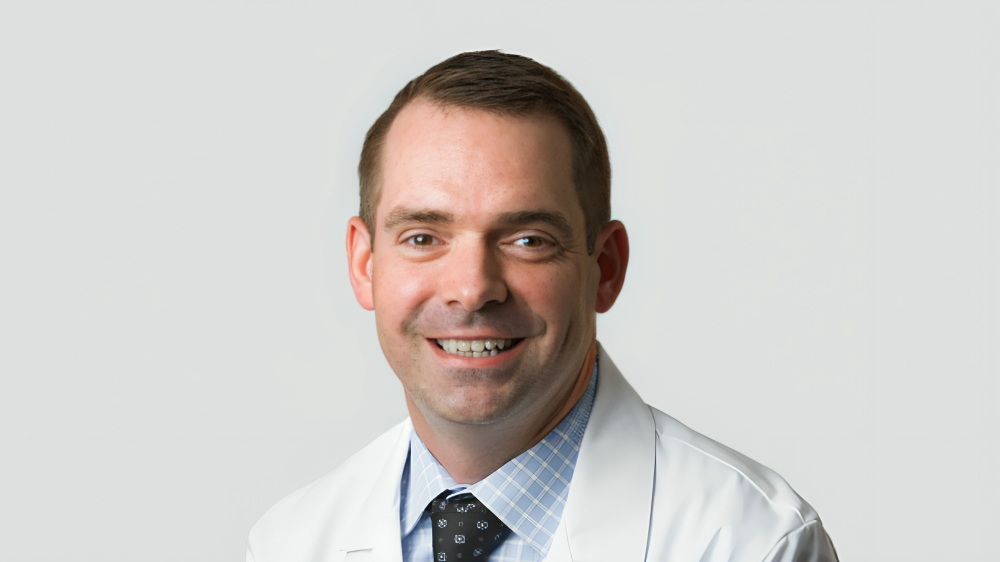
Daniel Flora, Medical Oncologist and Medical Director of Oncology Research at St. Elizabeth Healthcare, shared on Substack:
“Cancer prevention is something I care deeply about. If you have spent much time reading my earlier articles, you have probably noticed that many of them focus on lifestyle changes that may help reduce cancer risk.
A lot of us in oncology were drawn to this field after watching someone we love go through cancer. For me, it was watching my mom undergo breast cancer treatment when I was a teenager and eventually losing her to the disease. That experience made me think hard about how we might prevent this from happening to someone else in my family.
I have now had two immediate family members develop cancer, along with several close relatives. As I approach 50, I have started thinking more seriously about my own risk. If my goal were to reduce my lifetime burden of cancer, how should I invest my own time and energy to have the biggest impact?
Exercise, nutrition, avoiding tobacco, limiting alcohol, appropriate vaccination, sun safety, and regular cancer screening are all important. These recommendations form the foundation of cancer prevention, but they tell us relatively little about which risks deserve the most attention for a particular person. They also provide limited guidance about what someone might do differently based on their own biology, exposures, or family history.
The tools now being developed may allow us to understand cancer risk more clearly and, in some cases, act on it earlier. Genetics, family history, prior exposures, metabolic health, imaging, and emerging biomarkers can help us develop a more complete picture of a person’s individual risk.
I am increasingly convinced that a personalized approach to cancer prevention makes more sense than offering everyone the same general list of recommendations.
We already personalize cancer treatment
Over the past decade, I have watched cancer treatment become remarkably personalized.
When I meet a patient today, we may use genomic sequencing, immune biomarkers, pharmacogenomic testing, and genomic assays like Oncotype Dx to help select a treatment—or determine if treatment is needed at all. We can use circulating tumor DNA (ctDNA) and liquid biopsy to follow response or detect emerging resistance. These tools can increasingly find evidence of cancer remaining after treatment before it becomes visible on a CT or PET scan.
Two people with the same type of cancer may receive completely different treatments.
Cancer prevention is beginning to move in the same direction.
We are not yet at the point where we can predict with certainty who will develop cancer. But we are getting much better at understanding individual risk and using that information to make smarter decisions: which cancers may require urgent treatment and which can be followed safely, when screening programs should begin, and what type of screening procedure makes the most sense for that person.
Cancer risk is personal
We know cancer doesn’t develop because of one isolated factor. It emerges from what I think of as a person’s “cancer ecosystem”—the interaction among aging, inherited genetics, immune function, infections, metabolism, environmental exposures, and random chance.
That ecosystem looks different for everyone.
Someone with a BRCA1 mutation may need earlier breast screening. A person with Lynch syndrome may need frequent colonoscopy beginning at a young age. Someone without an inherited mutation may have decades of tobacco use, extensive sun damage, or significant workplace exposure to a carcinogen.
All three may benefit from exercise and a healthy diet. But offering them the same prevention plan would miss the risks that make each of them different.
Personalized prevention begins by asking a better question:
What is most likely to place this particular person at risk?
Genetics doesn’t tell us the whole story
Genetic testing has become one of the more familiar parts of personalized cancer prevention. If testing identifies an inherited syndrome, the result can meaningfully impact a patient’s plan. It may change the timing of initiating screening, or the cadence of surveillance, preventative medications, or sometimes prophylactic surgery to remove an at-risk organ.
However, genetics alone often provides an incomplete assessment of overall risk. Most cancers are not explained by a single inherited gene. Cancer can occur within a family even when testing does not reveal a recognized syndrome. Other contributing factors may include undiscovered genetic changes, the combined effect of multiple smaller genetic risks, shared environmental exposures within families, or a combination of these elements.
This is why family history remains so valuable, even though its often just lines that get copied and pasted from one preventative visit to the next. Simply knowing that “cancer runs in my family” doesn’t tell us very much. Which relatives developed cancer? What type? What was their age at diagnosis? Was genetic testing completed and how extensive was the testing?
We are developing increasingly sophisticated models that can estimate cancer risk. A careful family history helps those models become more accurate and the decisions that follow more useful.
Biomarkers may allow us to act earlier
The part of cancer prevention that I find most interesting is our growing ability to detect biological signals before someone develops an obvious cancer.
In my own practice, I have a habit of looking back through a patient’s chart and trying to identify the first changes that, with the benefit of hindsight, may have been an earlier sign. Sometimes we find the signal, but we simply did not understand its meaning at the time. A lot of our traditional risk assessments also look backward. We look at the genes someone inherited, cancers that have already occurred in the family, and the exposures a patient may have accumulated over a lifetime.
Emerging biomarkers may help us understand current and future changes in the body.
AI has now enabled the identification of new patterns in cancer development, including novel proteins, immune signatures, epigenetic modifications, and aspects of the microbiome, allowing us to detect alterations in an individual long before cancer appears on imaging or physical examination.
This leads to the idea of cancer interception. This the idea that we can identify a dangerous biological process while it is still reversible. Or we can we distinguish precancerous changes that are likely to progress from those that can safely be observed. We then may be able to design a personalized vaccine, immune therapy, or metabolic intervention to disrupt that process before cancer fully develops.
To me, these are some of the most exciting questions in medicine. But…they also require a lot of caution.
Finding these abnormal signals helps only if we understand what it means and leads us toward knowing what to do next. Otherwise, we may give a healthy person an expensive test, an invasive or risky workup, and potentially years of anxiety without improving the outcome.
A useful biomarker should do more than tell us that something might be wrong. It must lead to an action that has a reasonable chance of helping.
Personalized does not always mean more testing
I think this point needs to be emphasized. In this space, more is not always better.
For someone at high inherited risk, personalization may mean earlier screening, more frequent surveillance, preventive medication, or surgery. For someone else, it may mean choosing a different screening test or concentrating on a particular exposure.
And sometimes it will mean doing less. Personalized cancer interception may mean avoiding a commercial blood test that has not been shown to improve outcomes or declining a whole-body MRI without a clear indication. It may mean resisting the temptation to investigate every mildly abnormal biomarker or take multiple supplements marketed as a cancer preventative.
A personalized plan should not simply produce more testing. It should produce better decisions and, ultimately, better outcomes.
The plan should also be dynamic. Family histories do evolve, and new exposures become apparent. Better biomarkers are constantly being developed. As evidence improves, we may need to abandon tests or interventions that once appeared promising.
Personalized prevention should be revisited over time rather than treated as a one-time effort.
Prevention is never entirely under our control
We also need to discuss cancer prevention without turning it into a personal failure.
People who exercise, eat a healthy diet, avoid tobacco, limit alcohol, and complete all the recommended screening tests still go on to develop cancer. Other people live with mutliple known risk factors and never do.
Risk can often be reduced, but it can never be eliminated.
A person with cancer should never feel that the disease developed because they ate the wrong foods, or failed to exercise enough. It should never be because the patient missed the supplement stack that might have saved them. Cancer is influenced by inheritance, aging, exposures, and biology we are only beginning to understand. Chance is still part of this equation. Our growing ability to measure risk should allow people to make better choices. It should never leave them with a greater burden of guilt.
I cannot change the cancers that have occurred in my family, and I cannot reduce my own risk to zero. But I can try to better understand my risk more clearly and make thoughtful decisions with the information available today.
That is what personalized cancer prevention can offer.
A new perspective on cancer
Over the next few months, this is the direction I plan to explore more deeply through this Substack.
I will continue writing about cancer treatment and the human experience of caring for people with this disease. But I want to spend more time studying and learning what happens before treatment is needed: inherited risk, preventable exposures, metabolic health, screening, early detection, emerging biomarkers, and the science of cancer interception.
Some of this is already being used in clinical practice. We are working on a cancer interception clinic at our cancer center. But we are moving slowly. Some is this promising but still unproven. Distinguishing between the two will be an important part of this work. For most of my 15 years in Oncology, I have met cancer after it has already declared itself—after a symptom developed, a scan found a mass, or a biopsy provided the diagnosis.
I aim to spend more time now looking upstream. Can we better understand who is at risk? Can we recognize dangerous changes sooner? Can we intervene before cancer becomes much harder to cure—or perhaps before it fully develops?
We are still learning how to answer these questions. I would like Curative to be a place where we explore them honestly, without hype or false promises, while never losing sight of the human side of this.”
Other articles featuring Daniel Flora on OncoDaily.