





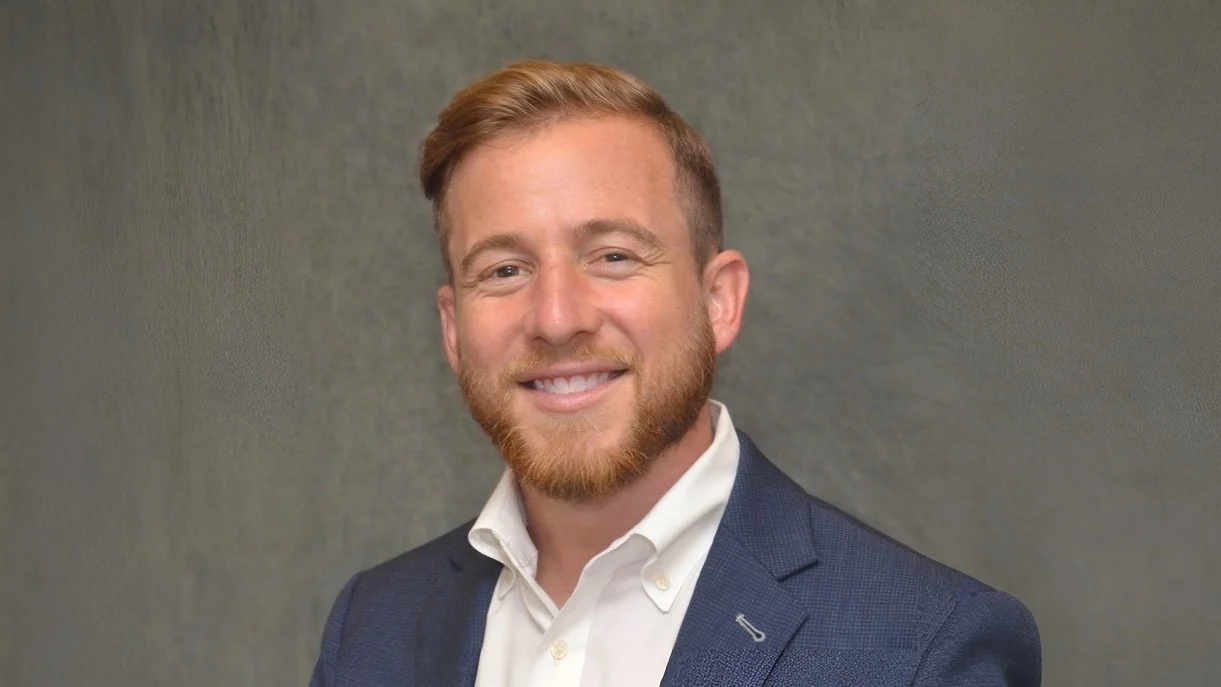
Daniel Faden, Associate Professor of Department of Otolaryngology-Head and Neck Surgery at Harvard Medical School, shared a post on LinkedIn about a recent article he and his colleagues co-authored, adding:
“Big news from our lab today — Our MRD paper on HPV-DeepSeek is out in Science Magazine!
HPV+ head and neck cancer is one of the fastest-growing cancers in the US, predominantly affecting relatively young, otherwise healthy patients. Surgery is the standard treatment for early-stage disease, followed by adjuvant radiation or chemoradiation. But those treatments carry life-long toxicities — and right now, the decisions about who gets them are based on pathology reports, not on whether disease actually remains in the patient’s body.
That’s the gap our Clear-HPVca trial was designed to address: open from 2020 to 2024. 103 patients. 560 blood samples. 27 months of follow-up.
Here’s what we found:
- Patients with detectable ctHPVDNA after surgery had 2-year DFS of 60% vs. 100% and OS of 73% vs. 98%
- MRD status blew every traditional pathologic predictor out of the water — stronger than ENE, margins, and lymph node number
- We detected molecular recurrence an average of 7 months before it showed up clinically — nearly double the lead time of ddPCR — and up to 18 months earlier in some patients
- MRD-positive patients who got adjuvant therapy had a 27% recurrence rate. Those who didn’t: 100%. MRD-negative patients? No benefit from adjuvant.
- We could even use viral SNP fingerprinting to tell the difference between a true recurrence and a second primary tumor — That one genuinely surprised us.
As a surgeon who treats this disease, not just a scientist who studies it, real-time visibility into whether a patient has residual disease gets me excited. Treatment decisions grounded in biology, not just pathology reports means less toxicity for patients who don’t need it and earlier intervention for patients who do.
We have a lot of work ahead — prospective multi-center interventional trials are the next step. But demonstrating a tissue-agnostic, ultrasensitive ctHPVDNA assay can accurately predict MRD is the first step forward and I couldn’t be more proud of the team that made it happen.
Enormous thanks to our co-first authors Shun Hirayama, Michael E. Bryan, Yana Al-Inaya, Dipon Das, and Ling Aye — and to our clinical and scientific teams at Massachusetts Eye and Ear, Massachusetts General Hospital , Broad Institute of MIT and Harvard, Broad Clinical Labs.
Thank you to Andrea Anderson at GenomeWeb and Laura Cowen at Inside Precision Medicine, amongst others for covering this so thoughtfully.”
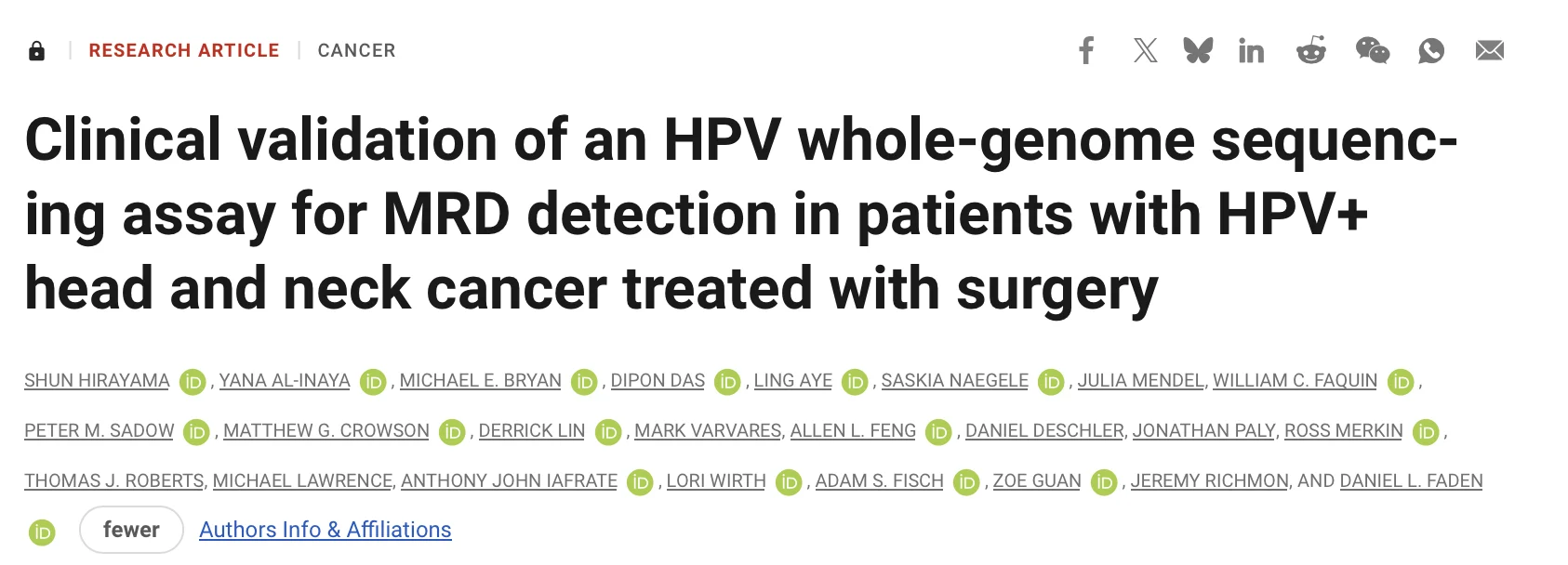
Title: Clinical validation of an HPV whole-genome sequencing assay for MRD detection in patients with HPV+ head and neck cancer treated with surgery
Authors: Shun Hirayama, Yana Al-Inaya, Michael Bryan, Dipon Das, Ling Aye, Saskia Naegele, Julia Mendel, William Faquin, Peter Sadow, Matthew Crowson, Derrick Lin, Mark Varvares, Allen Feng, Daniel Deschler, Jonathan Paly, Ross Merkin, Thomas Roberts, Michael Lawrence, Anthony Iafrate, Lori Wirth, Adam Fisch, Zoe Guan, Jeremy Richmon, Daniel Faden
Read the Full Article on Science Magazine
More posts about HPV.