





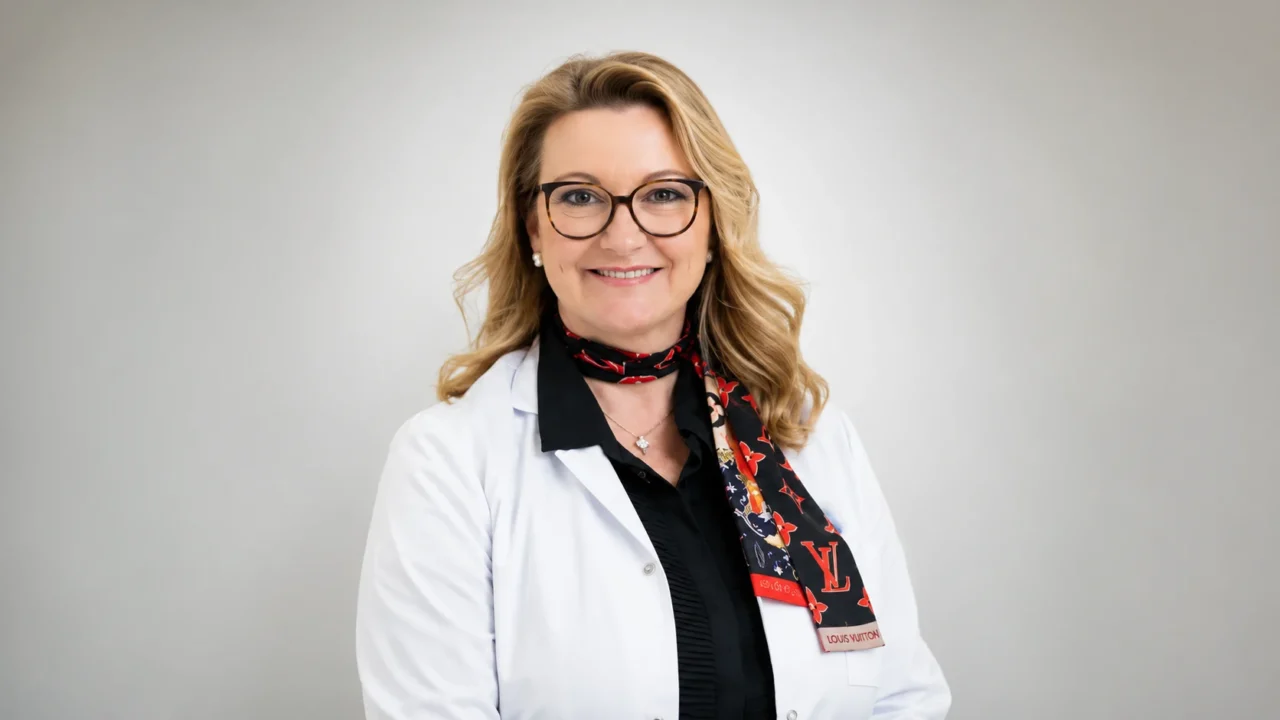
Catherine Alix-Panabières, Full Professor of Oncology at the Faculty of Medicine of the University of Montpellier, shared on LinkedIn:
“What if a blood test could tell us something about how breast cancer will behave – not only from the tumor, but from the host?
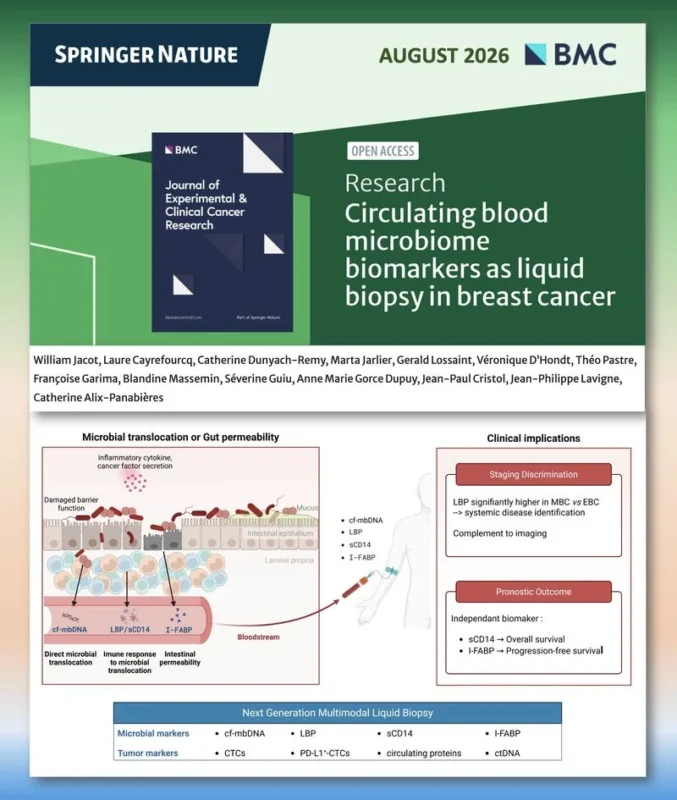
Our new study introduces the concept of a ‘liquid microbiopsy‘, exploring the host–microbiota–barrier axis as a new layer of liquid biopsy.
In 136 individuals, we found that markers of gut barrier integrity and microbial translocation were strongly associated with disease stage and prognosis:
- LBP distinguished early-stage from metastatic disease with an AUC of 0.92.
- LBP + sCD14 + I-FABP increased this to 0.94.
- sCD14 and I-FABP predicted progression-free survival, while sCD14 also predicted overall survival.
Perhaps most importantly, the prognostic signal was not the microbial DNA itself, but the host response to microbial translocation.
This is exploratory work requiring validation – but it opens a fascinating new avenue for liquid biopsy and precision oncology.
Full paper: Circulating blood microbiome biomarkers as liquid biopsy in breast cancer
Good reading!
And a big thank you to all coauthors involved in this project.”
CHU de Montpellier, Recherche et innovation – CHU de Montpellier, Renan Targhetta, Liquid Biopsy LCCRH Lab – Laboratoire Cellules, Circulantes Rares Humaines, Université de Montpellier, Faculté de Médecine Montpellier-Nîmes, European Liquid Biopsy Society Admin, PANCAID, GUIDE.MRD, MedVallée Montpellier, RAFAL Réseau d’Affaires Franco-Allemand, OncoDaily, Paris Saclay Cancer Cluster (PSCC), Fondation ARC pour la recherche sur le cancer.”
Other articles about breast cancer on OncoDaily.