Cardio-Oncology Bulletin shared on LinkedIn:
“Cardio-Oncology Bulletin – Issue #6
A monthly evidence update at the intersection of cardiology and oncology.
Novel Highlight: Imaging the vascular biology of cancer therapy
Cardio-oncology imaging has traditionally focused heavily on what treatment does to cardiac function. But cardiovascular toxicity does not begin – or end – with a change in ejection fraction.
This month’s Novel Highlight caught our attention because it looks somewhere different.
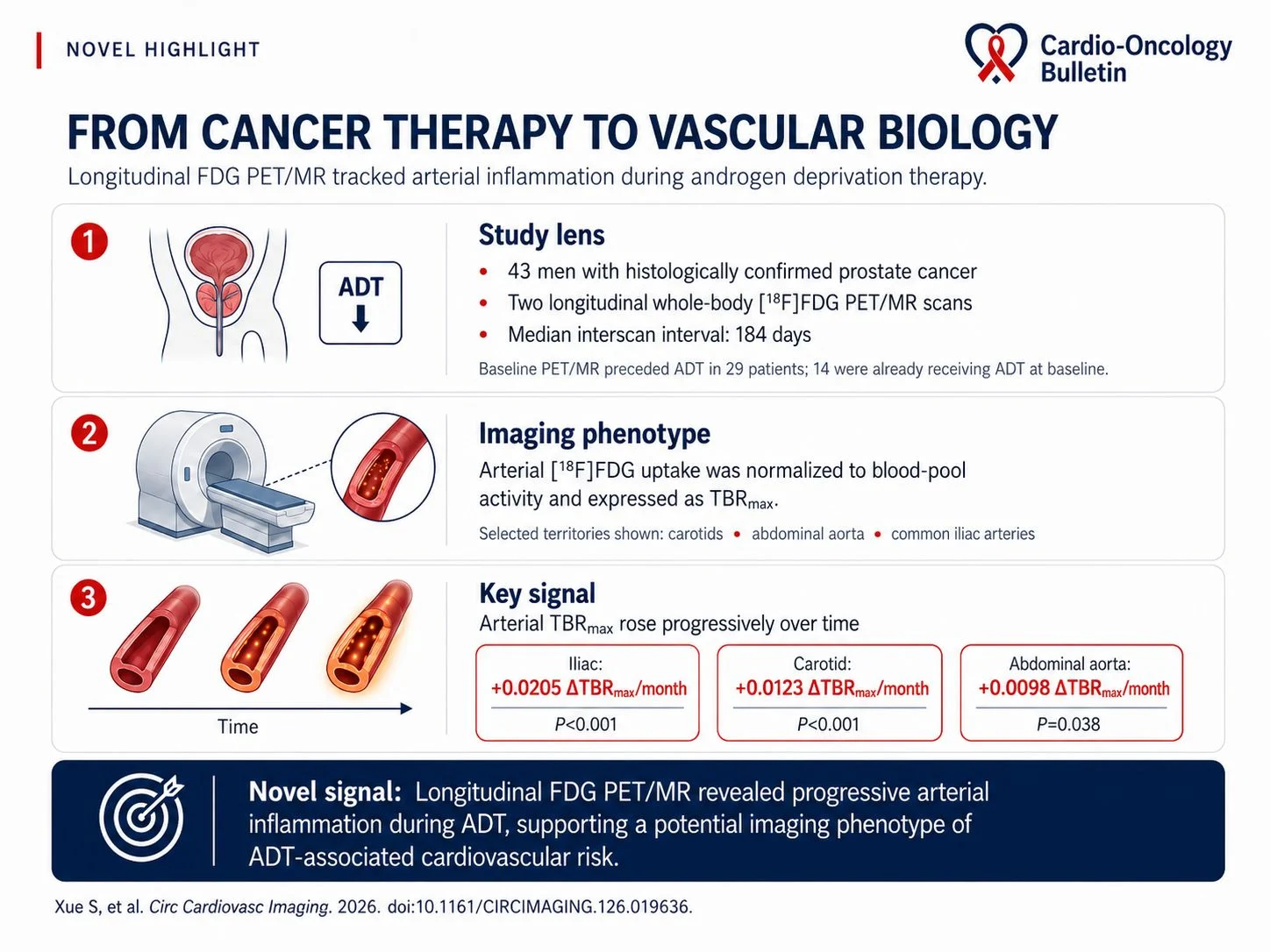
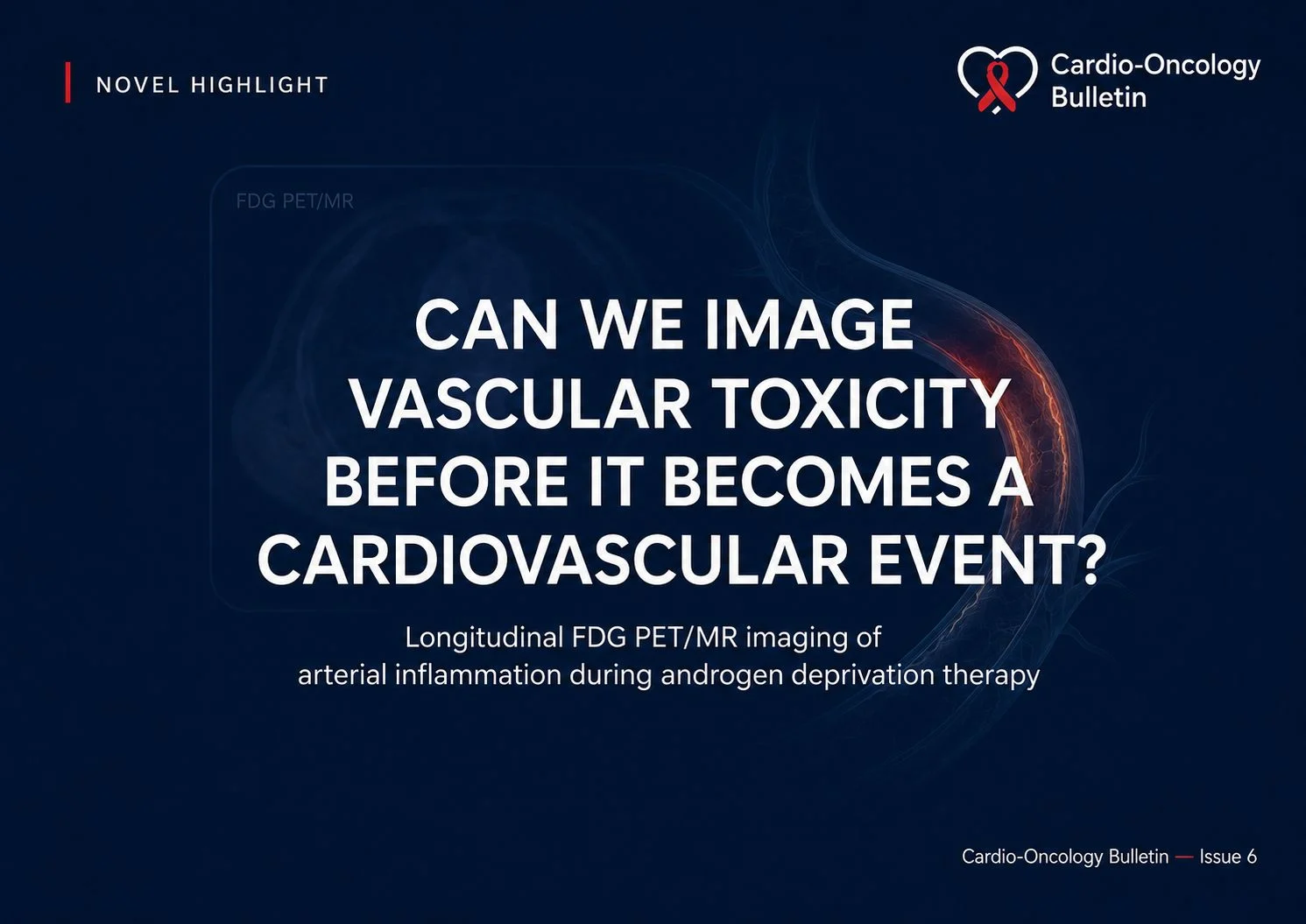
Xue and colleagues used longitudinal FDG PET/MR to examine arterial inflammatory activity during androgen deprivation therapy in patients with prostate cancer. Rather than identifying another functional marker of cardiotoxicity, the study raises the possibility that treatment-associated cardiovascular risk may carry a vascular molecular imaging phenotype of its own.
That distinction is what makes the work particularly interesting to us.
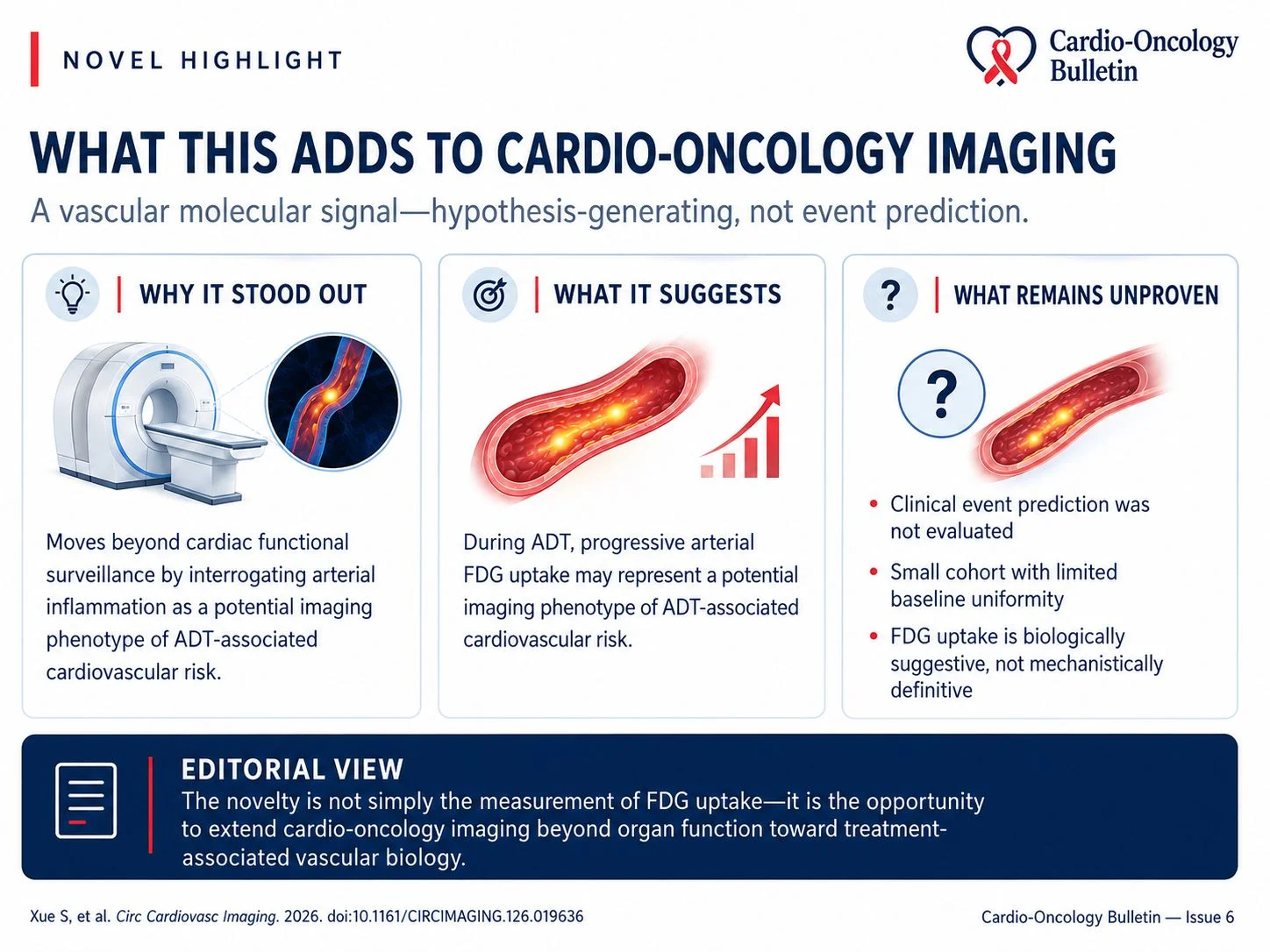
The findings should not be interpreted as evidence that FDG PET/MR predicts cardiovascular events, nor do they establish a causal vascular mechanism of ADT toxicity. The cohort was relatively small, and baseline imaging was not uniformly obtained before treatment initiation.
Still, the study opens a broader question for cardio-oncology imaging: Could imaging eventually help us characterize the biology of cardiovascular toxicity while it is evolving – not only document the organ dysfunction that follows?
Our editorial view: The novelty here is less about measuring FDG uptake itself and more about expanding the imaging target – from cardiac performance toward the vascular response to cancer therapy.”
Other articles about Cardio-Oncology Bulletin on OncoDaily.