





Cardio-Oncology Bulletin shared a post on LinkedIn:
“Cardio-Oncology Bulletin | Practice Perspective
Guidelines have significantly shaped the modern field of cardio-oncology, but one of the most important challenges remains their implementation in daily clinical practice.
In our recently published letter, we reflected on a gap that many cardio-oncology teams encounter in real-world settings: the distance between guideline-based recommendations and what can be consistently delivered across diverse clinical workflows.
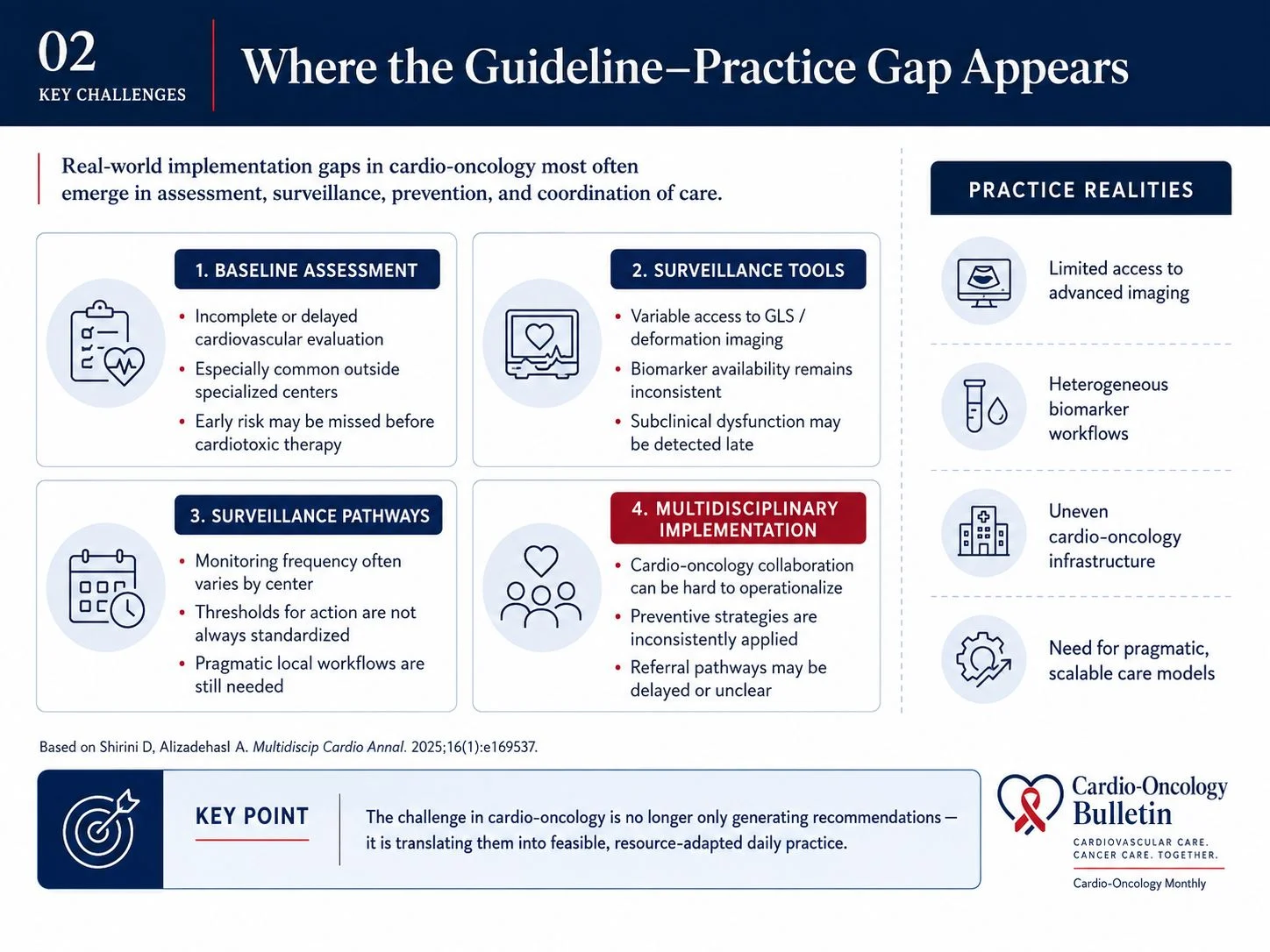
Where the gap appears
- Incomplete or delayed baseline cardiovascular assessment
- Variable access to strain imaging and cardiac biomarkers
- Heterogeneous surveillance pathways
- Delayed or fragmented multidisciplinary referral
- Inconsistent implementation of preventive strategies
Why this matters
Cardio-oncology care should not depend only on ideal guideline conditions or highly specialized centers. Practical, resource-adapted models are needed to support earlier risk identification, standardized monitoring, and timely cardio-oncology involvement.
Practical direction
Bridging this gap will require simplified risk assessment tools, structured surveillance protocols, stronger interdisciplinary collaboration, validated enabling technologies, and implementation-focused research that reflects real-world complexity.
Take-Home Message
The next step in cardio-oncology is not only generating recommendations — it is translating them into feasible, scalable, and resource-adapted daily practice.”
 More posts about Cardio-Oncology.