





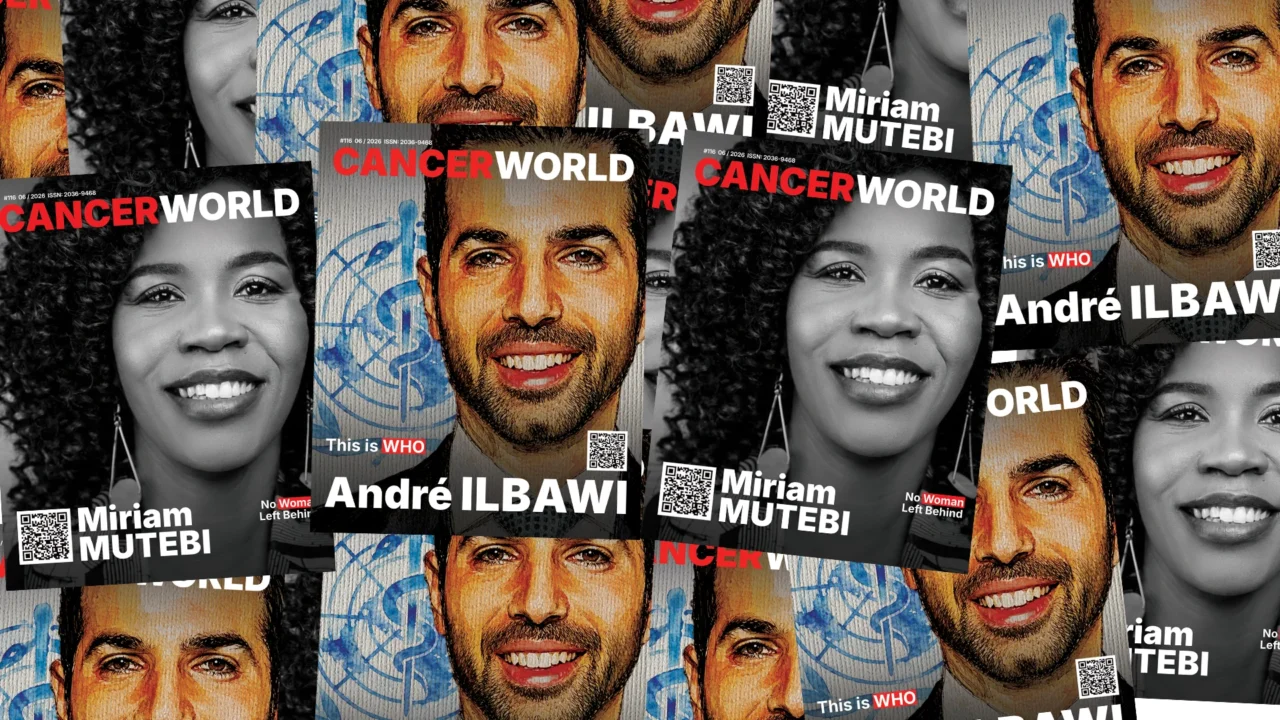
CancerWorld shared a post on LinkedIn:
“CancerWorld Issue #116 (June 2026) is live!
We tend to talk about cancer in the language of progress-new therapies, wider prevention, smarter models of care. It is a comforting vocabulary. It is also incomplete.
Because progress in oncology is never only scientific. It is institutional, social, and deeply human. What ultimately defines impact is not what medicine can do, but how reliably that knowledge crosses systems, borders, and the messy realities of a single life.
This issue of CancerWorld asks a simple but uncomfortable question:
When can we truly call something progress?
Is it when a discovery is made—or when it finally reaches the patient who needs it?
We open with global health at a moment of real scrutiny. As the World Health Organization faces renewed questions about its role and performance, Dr Gevorg Tamamyan turns to a quieter truth: institutions are defined not by their structures, but by the people who carry the mission. Through the work of Dr André Ilbawi, WHO’s cancer lead, he traces the sustained, largely invisible leadership that holds global cancer control together.
Equity runs through everything here. In her profile of Dr Miriam Mutebi, Knarik Arakelyan shows how progress in cancer care is constrained less by what we know than by the systems that decide who gets access at all. Mutebi’s work places surgical oncology inside a larger argument about fairness.
From prevention and survivorship to systems building, nursing, culture, and palliative care, every story in this issue returns to the same challenge: turning scientific possibility into lived reality.
Even at oncology’s biggest stages, the question remains the same: what counts as a breakthrough if it doesn’t reach the people who need it?
Because a discovery changes medicine only when it changes a life.
Read the full issue and explore the stories shaping the future of cancer care.”