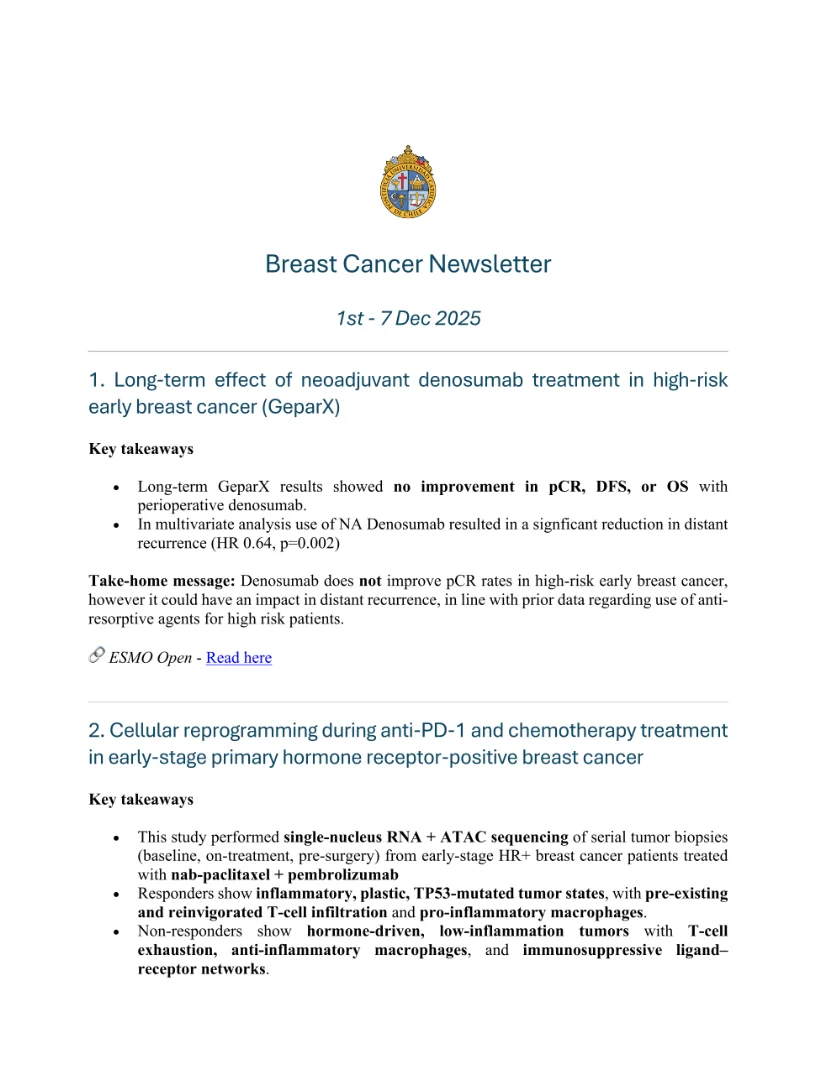
Benjamin Walbaum, Medical Oncologist at Pontifical Catholic University of Chile, shared a post on LinkedIn:
“SABCS kicks off and ahead of the meeting these are my last weeks takeaways.
1. Long-term effect of neoadjuvant denosumab treatment in high-risk early BC (GeparX)
· No improvement in pCR, DFS, or OS with perioperative denosumab.
· MVA use of NA Denosumab resulted in a signficant reduction in distant recurrence
ESMO Open
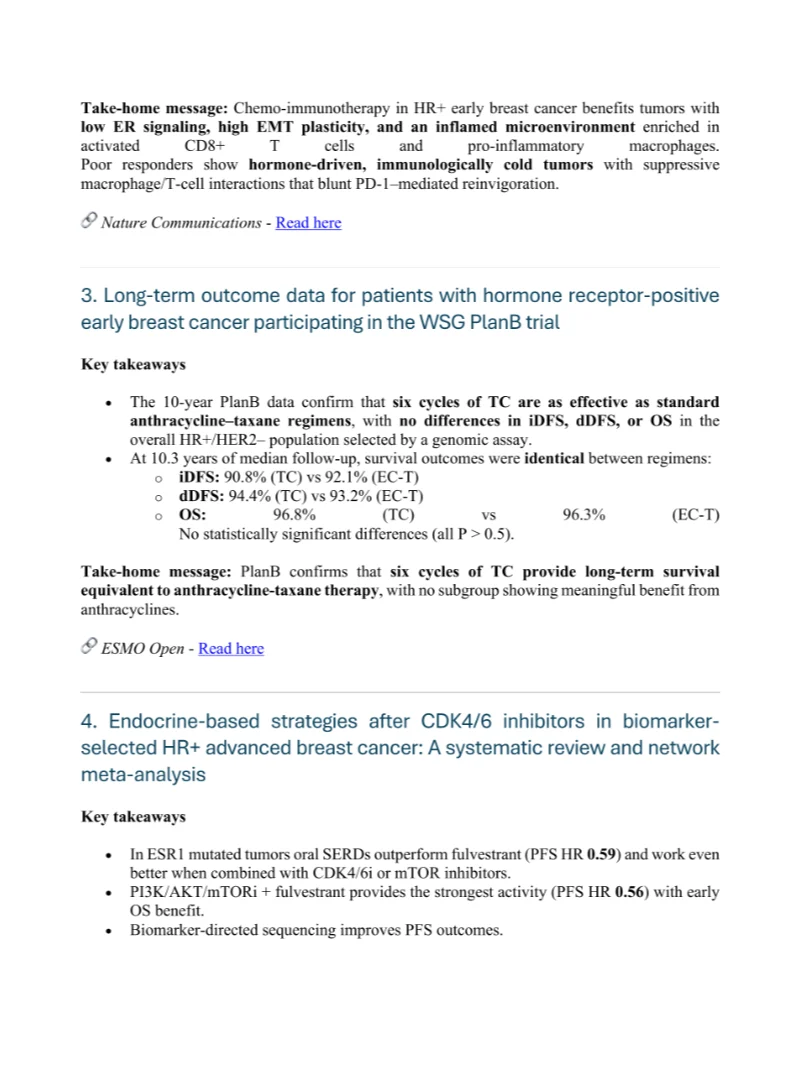
2. Cellular reprogramming during anti-PD-1 and chemotherapy treatment in early-stage primary hormone receptor-positive breast cancer
· Responders: TP53-mutated tumor states, with pre-existing and reinvigorated T-cell infiltration and pro-inflammatory macrophages.
· Non-responders show hormone-driven, low-inflammation tumors with T-cell exhaustion, anti-inflammatory macrophages, and immunosuppressive ligand–receptor networks.
Nature Communications
3. Long-term outcome data for patients with hormone receptor-positive early breast cancer participating in the WSG PlanB trial
· The 10-year PlanB data confirm that TCx6 are as effective as AT regimens, no differences in survival.
ESMO Open
4. Endocrine-based strategies after CDK4/6 inhibitors in biomarker-selected HR+ advanced breast cancer: A systematic review and network meta-analysis
· In ESR1 mutated tumors oral SERDs outperform fulvestrant (PFS HR 0.59) and work even better when combined with CDK4/6i or mTOR inhibitors.
· PI3K/AKT/mTORi + fulvestrant provides the strongest activity (PFS HR 0.56) with early OS benefit.
Cancer Treatment Reviews
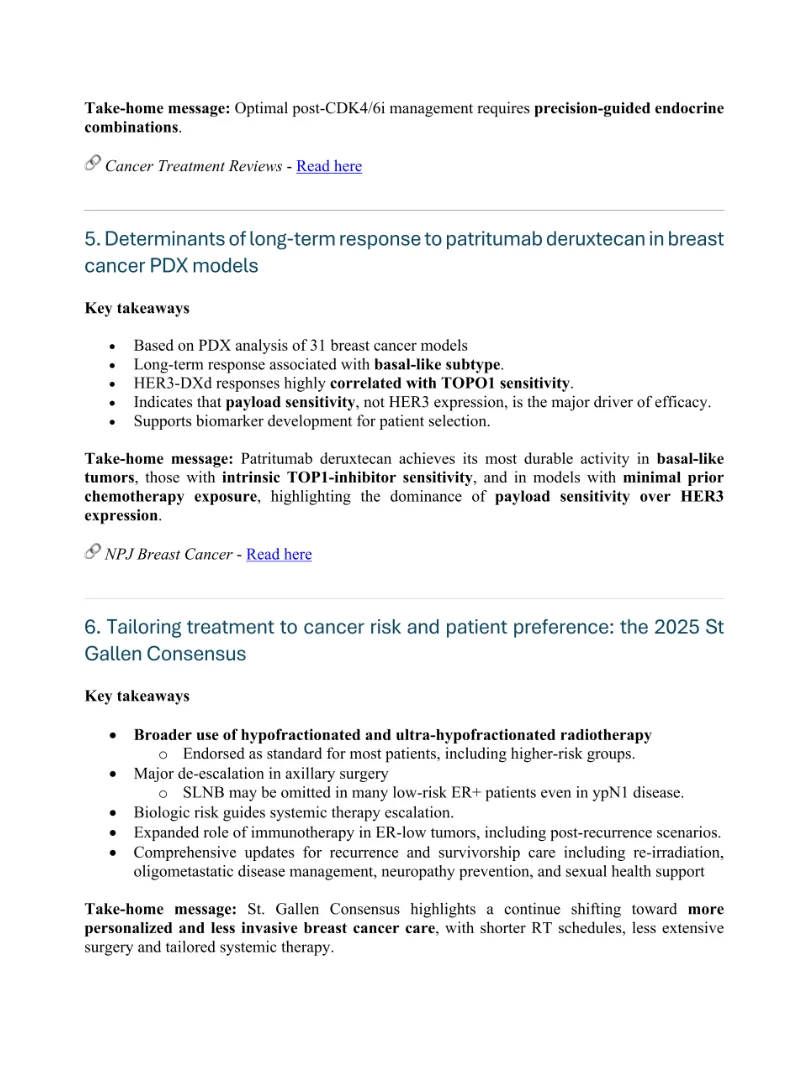
5. Determinants of long-term response to patritumab deruxtecan in breast cancer PDX models
· Long-term response associated with basal-like subtype.
· HER3-DXd responses highly correlated with TOPO1 sensitivity.
NPJ Breast Cancer
6. Tailoring treatment to cancer risk and patient preference: the 2025 St Gallen Consensus
· Broader use of hypofractionated and ultra-hypofractionated radiotherapy
· Major de-escalation in axillary surgery
· Biologic risk guides systemic therapy escalation.
· Expanded role of immunotherapy in ER-low tumors, including post-recurrence scenarios.
Annals of Oncology
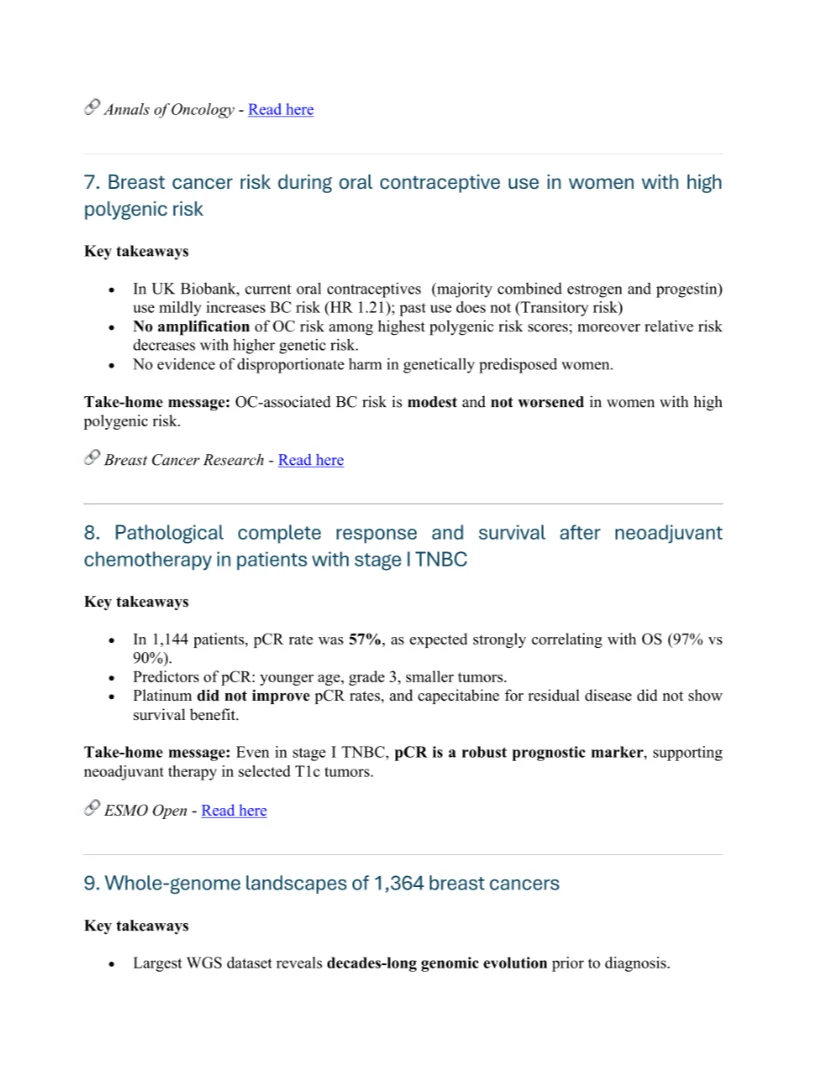
7. Breast cancer risk during oral contraceptive use in women with high polygenic risk
· OC use mildly increases BC risk (HR 1.21); past use does not
· No increased OC risk among highest polygenic risk scores
Breast Cancer Research
8. Pathological complete response and survival after neoadjuvant chemotherapy in patients with stage I TNBC
· In 1,144 patients, pCR rate was 57%, as expected strongly correlating with OS (97% vs 90%).
· Predictors of pCR: younger age, grade 3, smaller tumors.
· Platinum did not improve pCR rates, and capecitabine for RD did not show survival benefit.
ESMO Open
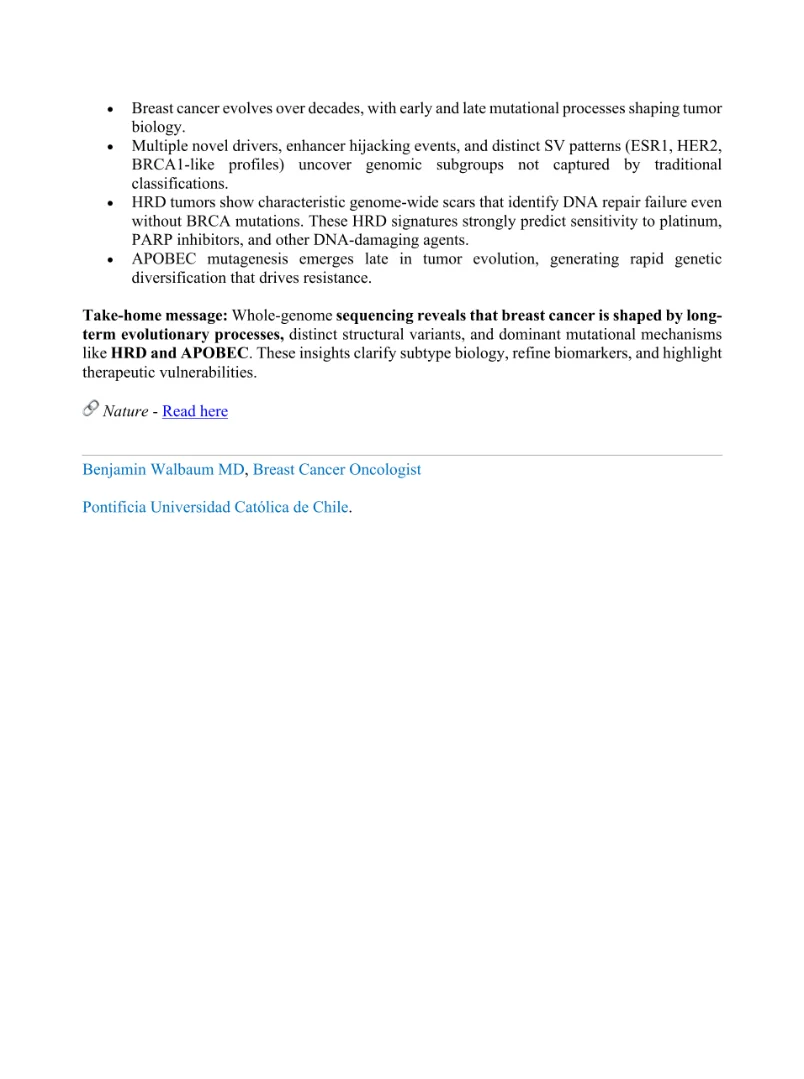
9. Whole-genome landscapes of 1,364 breast cancers
· Breast cancer evolves over decades.
· HRD tumors show characteristic genome-wide scars that identify DNA repair failure.
· APOBEC mutagenesis emerges late in tumor evolution.
Nature.”
More posts featuring Benjamin Walbaum on OncoDaily.