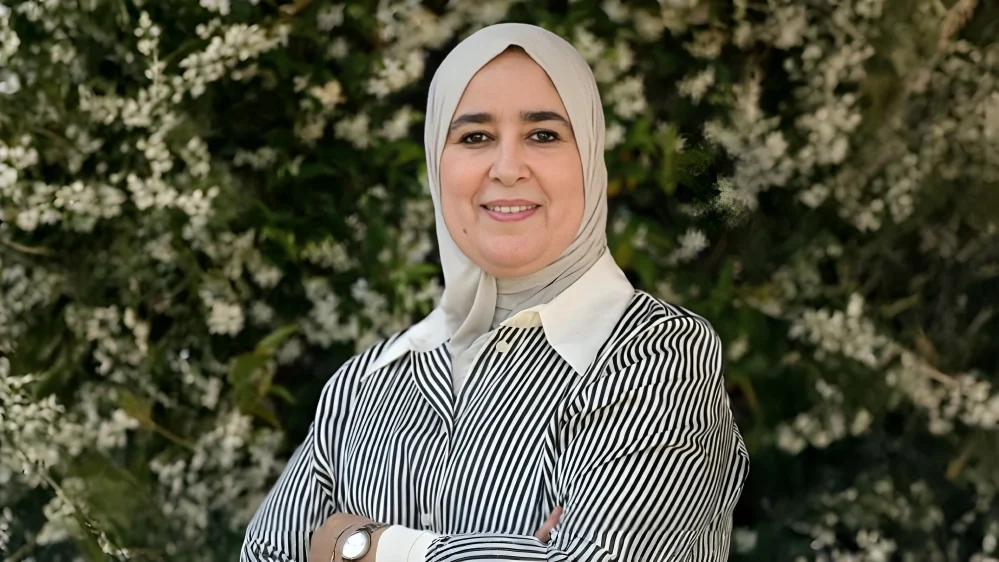
Bahija Gouimi, Founder and President of the National A.M.A.L. Association, shared a post on LinkedIn:
“The World Health Organization (WHO) has launched the Global Status Report on Cancer 2026, which provides a comprehensive assessment of the global cancer burden, progress in cancer prevention and control, and the systemic challenges that continue to prevent equitable outcomes.
While remarkable scientific advances are transforming cancer care, the report reminds us that far too many people still do not benefit from these innovations simply because of where they live or the resources available to them.
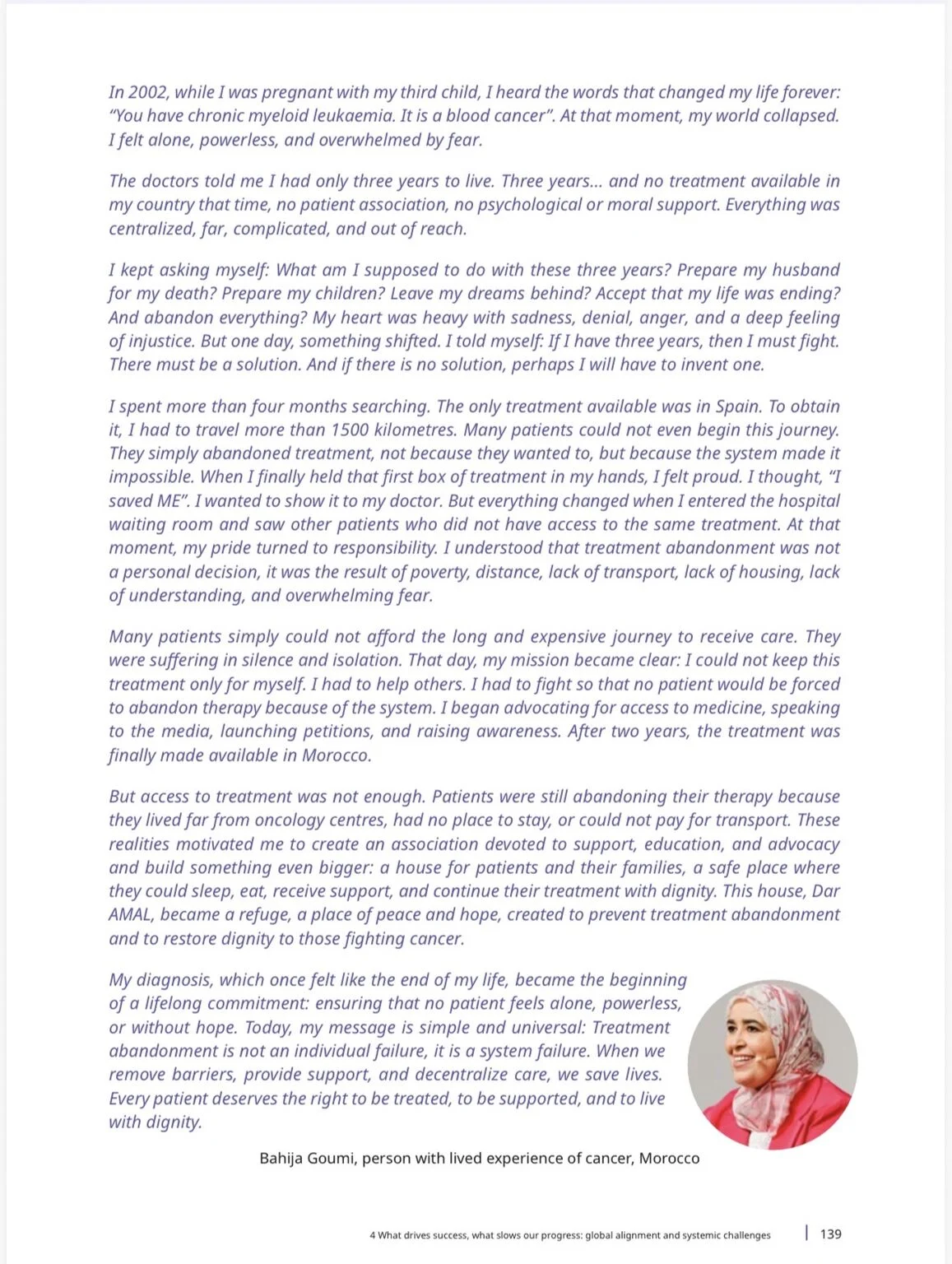
I am extremely honored to have contributed to the Global Status Report on Cancer 2026 by sharing the realities experienced by patients and their families, particularly in low- and middle-income countries.
One of the challenges that resonates most deeply with me is treatment abandonment. Through my work with patients and families at AMAL Organization in Morocco, I have witnessed how financial hardship, long travel distances, lack of accommodation, loss of income, and other social barriers force many people to interrupt or abandon life-saving treatment.
This is not simply a medical issue, it is a social and equity issue that affects survival, dignity, and hope. I was grateful to share this perspective as part of my contribution to the report.
The report strongly recognizes the value of lived experience. Patients are not only beneficiaries of health systems—we are partners in shaping them. Meaningful engagement of people affected by cancer is essential for designing policies and services that truly respond to people’s needs.
The report also reinforces the commitments of the Union for International Cancer Control (UICC) World Cancer Declaration 2025–2035, calling for stronger national cancer control plans, better cancer information systems, investment in research and innovation, universal health coverage, and people-centred care.
My sincere congratulations to the World Health Organization (WHO) and all the experts, researchers, clinicians, patient advocates, and people with lived experience who contributed to this important publication.
The evidence is clear. Now, we must turn knowledge into action. Together, we can build stronger, more equitable cancer systems where no one is forced to abandon treatment because of circumstances beyond their control, and where every person, regardless of where they live, has the opportunity to receive timely, high-quality cancer care.
You can also read: WHO Global Status Report on Cancer 2026: The Future We Choose Together