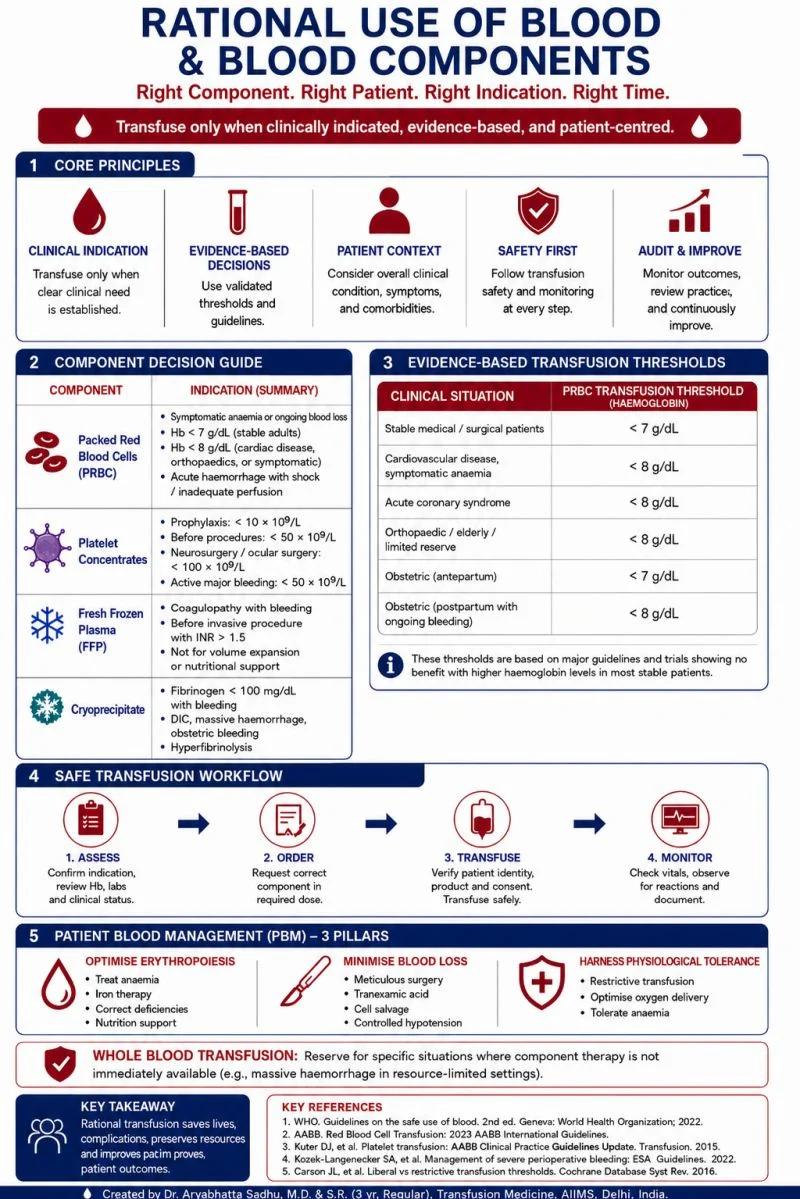
Aryabhatta Sadhu, Attending Consultant and Head Transfusion Medicine Fortis Hospital Shalimar Bagh New Delhi at Fortis Healthcare, shared on LinkedIn:
“The platelet count didn’t rise. The next unit probably isn’t the answer.
One of the most common calls to a Transfusion Medicine service goes something like this:
‘The patient has already received two platelet transfusions, but the platelet count is still low. Can you send another Single Donor Platelet (SDP)?’
My first question is usually different.
‘Is this true platelet refractoriness – or are we treating the wrong problem?’
A poor post-transfusion platelet increment is not a diagnosis. It is the beginning of a structured clinical investigation.
Most patients with poor platelet increments do not have immune refractoriness. The common culprits are non-immune causes such as sepsis, active bleeding, disseminated intravascular coagulation (DIC), fever, splenomegaly, and drug-related platelet consumption.
This distinction is critical because management differs completely.
- A patient with uncontrolled sepsis needs source control rather than repeated platelet transfusions.
- A patient with immune platelet refractoriness may benefit from HLA-selected or crossmatch-compatible platelet support after appropriate evaluation.
Repeated empirical transfusions without identifying the underlying mechanism increase platelet utilization, donor exposure, and healthcare costs, while often providing little clinical benefit.
Practical message for primary physicians:
When platelet increments remain poor, involve your Transfusion Medicine team early and share:
- Indication for platelet transfusion
- Pre- and post-transfusion platelet counts (1-hour and 24-hour)
- Recent transfusion history
- Clinical evidence of sepsis, bleeding, DIC, splenomegaly, or relevant medications
- Often, these details are far more valuable than requesting ‘one more SDP.’
Modern Transfusion Medicine is not defined by the number of blood components issued. Its greatest value lies in helping primary physicians understand why a transfusion did not achieve its intended effect – and identifying the most appropriate strategy for the next clinical decision.”
Other articles about Transfusion Medicine on OncoDaily.