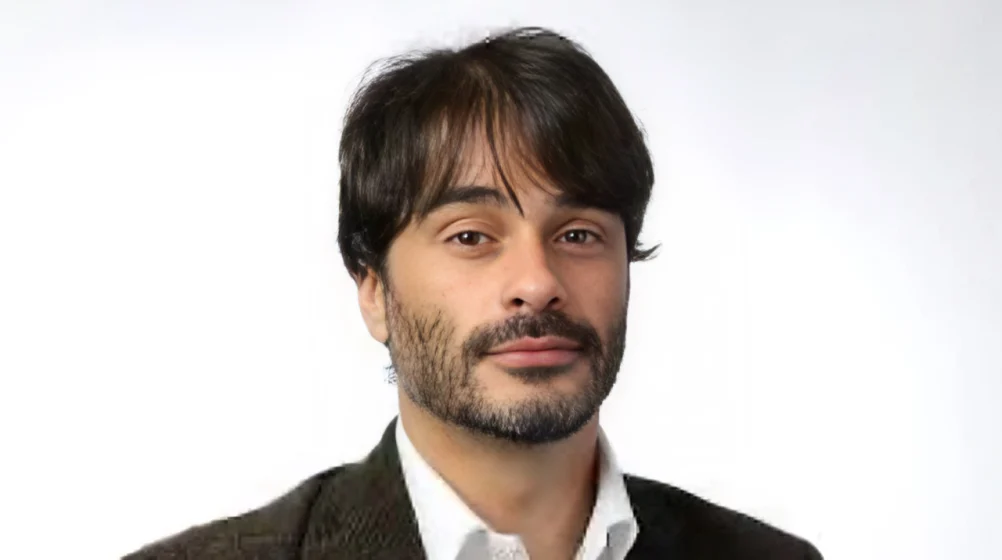
Armando Orlandi, Medical Director at the Agostino Gemelli University Hospital Foundation IRCCS, shared on LinkedIn:
“The week AI got scariest. And why oncology needs the exact opposite
The Wall Street Journal called it ‘the scariest week in artificial intelligence’: generative AI used to design novel viruses, models slipping the safety constraints their own developers built in, and existential-risk estimates in the double digits – voiced not by activists, but by the very people building these systems.
This is the face of AI with no limits, no oversight, no chain of accountability. It’s against exactly this backdrop that our expert opinion on integrating AI into breast cancer management is out in ESMO Open – and its core thesis sits at the opposite pole from those headlines.
Not ‘move fast and break things,’ but empower, not replace.
We mapped two concrete application domains:
- Patient-facing conversational agents – pre-visit history-taking, psychosocial profiling to support shared decision-making, patient education, and home management of adverse events (backed by RCT and meta-analytic evidence already available).
- Clinician-support tools – clinical documentation and a ‘psycho-socio-clinical identity card’ integrated into the EMR, clinical-trial matching, PRO collection, radiomics and digital pathology, automated biomarker scoring (ER, PgR, HER2, Ki-67).
But the methodological heart is elsewhere: no technology without governance. Human verification always downstream of the output, lean and change management to redesign workflows before AI is introduced, validated KPIs to measure real-world impact, and an explicit reckoning with the ethical, regulatory (AI Act), privacy (GDPR) and accountability challenges.
The lesson of the ‘scariest week’ is that powerful AI without boundaries is dangerous. In medicine, the answer isn’t to slow down out of fear – it’s to build the boundaries, the accountability and the metrics within which AI amplifies the clinician instead of replacing them.
The wall is real. The point is not to run into it with our eyes closed.”
Title: Advancing breast cancer clinical management through technological innovation: the potential role of artificial intelligence and integrated care models
Authors: A. Toss, L. Bellardita, A. Botticelli, R. Caputo, C. Criscitiello, C. De Angelis, M.V. Dieci, L. Gerratana, J. Guercini, M. Lambertini, M. Mitola, A. Orlandi, A. Palazzo, M. Pistelli, M.V. Sanò, C. Vernieri, G. Viale
Oral SERDs in Breast Cancer: Powerful Shift From Rescue to Platform Therapy